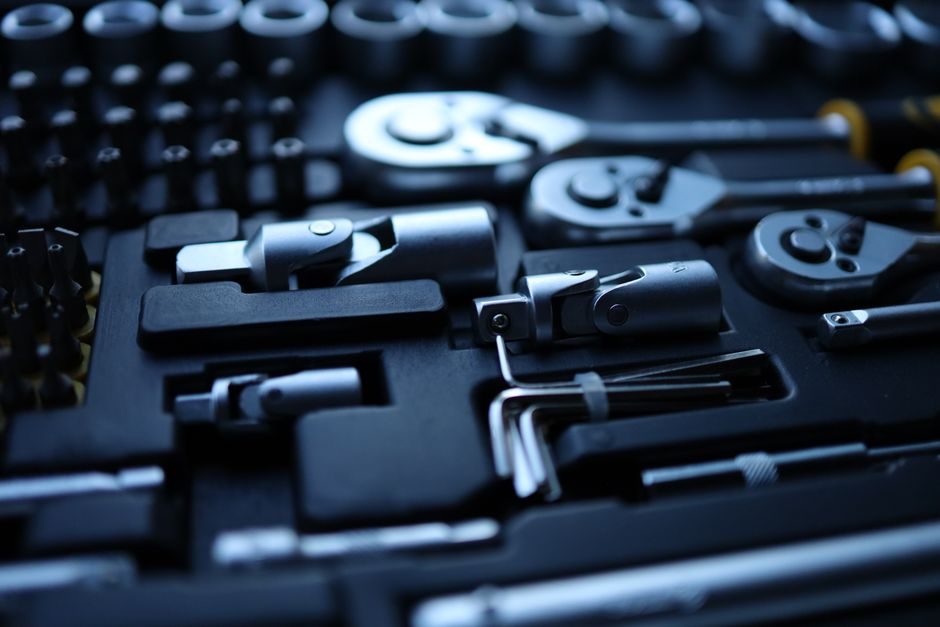
Investment casting (lost-wax) cells are built around four coupled equipment decisions — pattern/wax injection, shell building (slurry + sand), dewax/autoclave + burnout furnace, and melt-pour — and the wrong pick on any one of the four cascades into scrap on the other three [S2][S6].
At the supplier tier visible on 2026-07-12, China's largest precision casting groups run roughly 30,000 t/yr of installed capacity per major site (e.g. Zhejiang HuaShen's Ningbo Tongda operates a 33,000 m² plant with 550 employees and water-glass + EPC lines) [S3], while North-American job shops such as RLM Industries (Oxford, MI, ISO 9001:2015, operating since 1975) position on small-to-medium components with shorter changeover [S1]. That gap — high-tonnage dedicated cells vs flexible short-run job-shop cells — is the first fork the buyer must resolve.
Gate 1: Alloy Family and Tolerance Class
Investment casting routinely covers aluminum, bronze, brass, carbon steel, alloy steel, ductile iron, and gray iron, with stainless/carbon/bronze runs at roughly US$0.10–0.45/kg MOQ 1,000 pieces on Asian sourcing platforms as of 2026-06-08 [S1][S9].
Alloy choice sets three equipment requirements: melt furnace type (medium-frequency induction for steel/iron, gas/electric crucible for non-ferrous), shell refractory selection (fused silica for steel above ~1,600 °C pouring, mullite or alumino-silicate for aluminum/brass), and dewax autoclave pressure rating. Specifying an austenitic stainless at 1,550 °C while the cell only carries a 1,400 °C-class induction furnace is a guaranteed melt-rate bottleneck. For reference, the casting mold choices in higher-temperature alloys demand fused-silica refractories, which 3M Technical Ceramics distributes into the lost-wax supply chain alongside Christy Minerals STKO® [S2].
Gate 2: Shell-Building Process — Water-Glass, Silica Sol, or Lost-Foam
Three shell systems dominate the supplier base in 2026: water-glass (sodium silicate, lowest cost, roughest surface), silica sol (colloidal silica binder, best surface and dimensional control), and lost-foam/EPC (polystyrene pattern vaporized in-mold, no ceramic shell) [S3].
Nalco Water — the original patent holder on colloidal silica and the supplier of the first water-based ceramic shell — sells eight differentiated shell systems and fifteen colloidal silica products into this market, with on-shell diagnostics covering modulus of rupture (MoR), permeability, slurry physical properties, and SEM casting analysis [S2]. A buyer picking silica-sol to chase Ra ≤ 3.2 µm but pairing it with a low-grade fused-silica sand will not hit the surface target; the die-casting die and shell system must be specified as a matched pair, not independently. Water-glass remains the right pick for carbon-steel engineering and mining parts where surface finish is secondary to cost [S3].
Gate 3: Wax and Pattern Injection Capacity
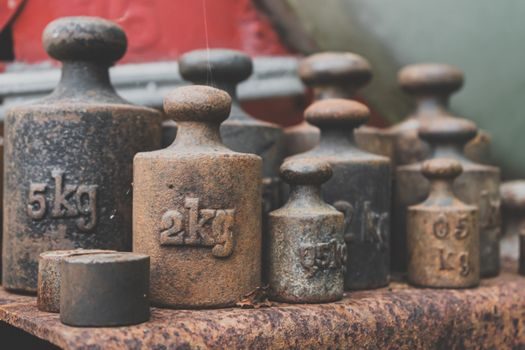
Wax injection machines come in four build classes visible in the current supplier list: single-station pneumatic, single-station hydraulic, double-station hydraulic, and C-frame hydraulic — all listed as standard catalog items by Changshun/Changrui Investment Casting Equipment as of 2026-07-12 [S6].
Match the injection class to pattern size and cycle-time target: single-station pneumatic handles small patterns (typically < 5 kg wax) at low capital cost, double-station hydraulic is the workhorse for medium parts where one operator can run two tools, and C-frame hydraulic is the only practical choice for large or thick-walled patterns where clamp force and shot control matter. Wax temperature control (thermostat wax tank, wax container) is sold as a separate line item but is non-optional — wax viscosity drift of 2–3 °C at the nozzle is enough to crack thin trailing edges on turbine blades. Pattern-shop throughput ultimately sets the dewax-autoclave loading schedule downstream.
Gate 4: Dewax, Burnout, and Melt-Pour Line
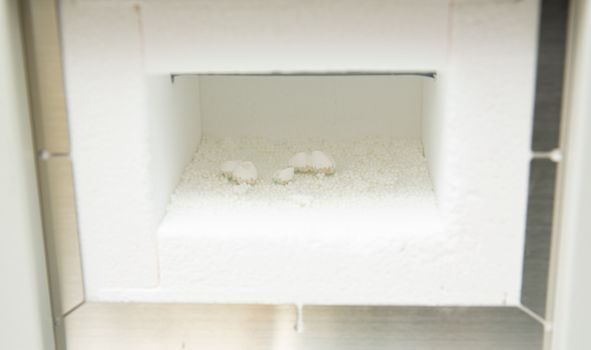
The post-shell line is a serialized chain: dewax autoclave (steam or high-pressure), roasting furnace for burnout of residual wax and pre-sintering, and melting furnace feeding pour stations; sand-blasting, sand-mixing, dust-collection, and shell-drying auxiliaries round out the cell [S8].
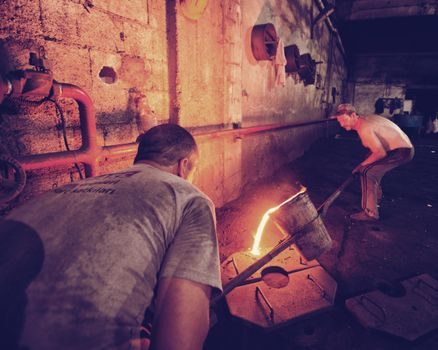
Foundry buyers should size the autoclave to the wax-inventory target (typical 6–8 bar steam dewax at 180–200 °C for 10–20 min), then size the roasting furnace to handle the autoclave's batch output without queueing — a 30 % mismatch is a common cause of cell-wide throughput loss. A standard catalog split for 2026 lists dewax autoclave, roasting furnace, melting furnace, sand-blasting machine, sand-mixing machine, dewatering machine, sand-floating machine, dust collector, and shell drying line as separately purchasable modules [S8]. When transferring molten metal, casting ladle selection has to be matched to pour-basin height and stopper-rod reach, or the operator will be pouring from a dangerously high position.
Selection Criteria Compared: Water-Glass vs Silica-Sol vs Lost-Foam
The three shell systems compare on four buyer-critical criteria: surface finish (silica sol best, typically Ra 1.6–3.2 µm; water-glass roughest at Ra 6.3–12.5 µm; lost-foam variable and pattern-dependent), dimensional tolerance (silica sol ± 0.1–0.3 mm typical, water-glass ± 0.3–0.5 mm, lost-foam ± 0.5–1.0 mm), alloy range (all three span carbon steel to stainless, but lost-foam is favoured for ductile/gray iron runs above 1 t/d [S3]), and unit cost (water-glass is the low-cost baseline, silica sol carries a binder premium, lost-foam eliminates shell cost but consumes more pattern material per kg of casting).
Rule of thumb: specify silica sol for aerospace, medical, and any part with < 1 mm wall sections or Ra ≤ 3.2 µm; specify water-glass for engineering, mining, marine, and agricultural parts where cost-per-kg rules and surface finish is secondary; specify lost-foam (EPC) for short-run ductile/gray iron where pattern cost must be minimized [S3][S1]. Cross-reference the broader alloy-process-property logic in the cast aluminum alloy selection guide when aluminum castings are in scope.
Who This Cell is FOR and Who it is NOT For
Investment casting cells are FOR: parts with complex internal geometry, thin walls (down to ~0.8 mm in aluminum), tight as-cast tolerances, low post-machining allowance, and short-to-medium run lengths (50–50,000 pieces/yr) where the pattern tooling amortizes [S1][S5].
Investment casting cells are NOT for: very high-volume automotive stampings (die casting or stamping wins on cycle time), very large parts above the autoclave/melt-furnace capacity of the available cell, and parts where the alloy is not on the foundry's melt list — substituting a non-listed alloy onto an existing shell system is the single most common cause of dimension-shift defects. For high-volume parts, the die casting die route or sand-casting route is usually a better CAPEX fit than forcing investment casting into a tonnage envelope it was not built for.
Verification, Standards, and Sourcing Watch-Outs
Specifying an investment casting cell at any meaningful tonnage requires ISO 9001:2015 certification (the de facto baseline for North American job shops such as RLM Industries [S1] and Chinese suppliers including Highco Metal [S5]), plus a per-alloy chemistry and MoR/permeability test plan on the shell room [S2].
Buyer pitfalls in the 2026 sourcing market: (1) the lowest-priced silica-sol quote on Asia-platform MOQ 1,000-piece listings (US$0.10–0.45/piece as of 2026-06-08) often drops the SEM-analysis or MoR-certification step, which is the only way to catch shell-microcracking before it reaches the melt line [S9][S2]; (2) capacity claims of "30,000 t/yr" are plant-level, not line-level — confirm the cell-level tonnage you will actually book [S3]; (3) confirm the foundry's classification-society certificates (e.g. marine) separately from its ISO certificate, since they are issued against different audits [S3]. For buyers cross-shopping processes, the aluminum extrusion profile cost guide is a useful reference for what comparable non-cast aluminum parts cost on the same 2026 market.
Two trackable signals to watch through the rest of 2026: the spread between water-glass and silica-sol per-kg pricing (currently narrow at the 1,000-piece MOQ tier [S9], but binder-energy costs could widen it), and any 2026 H2 capacity additions by major Chinese groups, which historically reset global short-run lead times by 2–4 weeks when new 30,000 t/yr-scale cells ramp [S3]. Lock the alloy-and-process pair, then size wax-injection, shell, and post-shell modules to the same annual tonnage — that single line of discipline separates a workable cell from a 30 %-scrap cell.