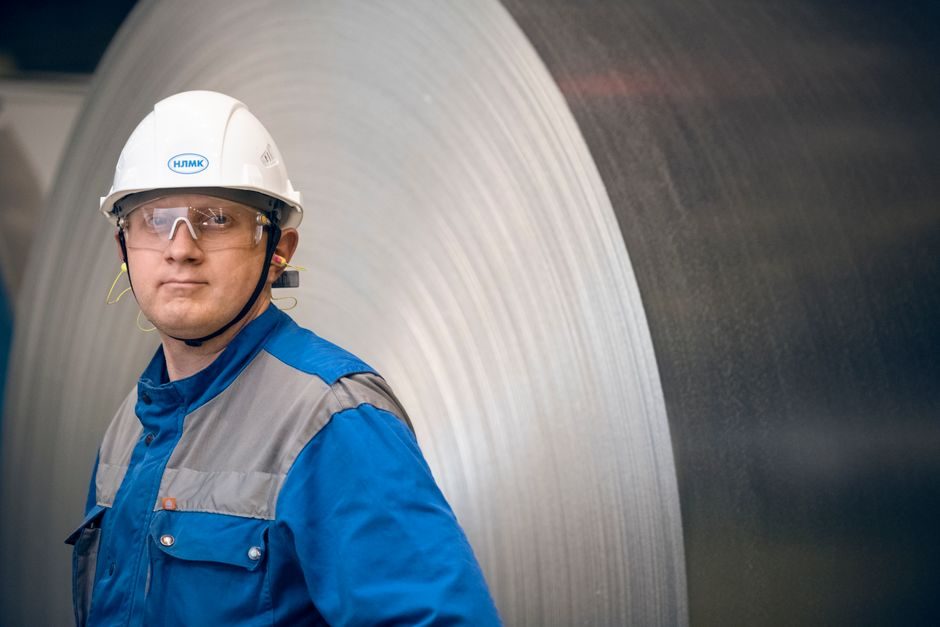
Spot export quotations for aluminum coil in the second week of July 2026 cluster between US$2,200 and US$4,200 per tonne for stucco and color-coated product, with an observed low of US$2.59/kg and a high of US$10.00/kg for anodized/embossed specialty coil on Made-in-China [S3][S6].
Most Chinese mills gate orders behind a 5–15 tonne minimum order quantity and publish a 1,000–10,000 t/month supply capability, with payment terms almost universally TT (telegraphic transfer) or LC (letter of credit) at FOB China main ports [S2][S5][S9].
Alloy families and the grades that drive price
Four alloy families cover roughly 90% of the Chinese export coil catalog: 1xxx (1050/1060/1070/1100, ≥99% Al, soft/decorative/foil stock), 3xxx (3003/3004/3105, Mn-strengthened, roofing and ACP core), 5xxx (5005/5052/5083/5754, Mg-alloyed, marine and tread plate), and 6xxx (6061, T4/T6, structural) [S2][S5][S8].
1xxx coil is the cheapest tier and is sold as foil stock at MOQ 5 t with 10,000 t/month capability [S2]. 5xxx coil carries a premium for magnesium content; 5005/5052 stucco coil was listed at US$2,200–2,600/tonne FOB Shandong with 1,000 m² MOQ on July 3, 2026 [S3]. 6061-T4 coil from Shanghai suppliers carries a 15 t MOQ and 2,000 t/month capability, with temper T3–T8, O-H112, T351–T651, and T351–T851 all available on request [S9].
Price bands by product form (July 2026 spot data)
Stucco/embossed coil from Jinan Zhaoyang Aluminum quoted US$3,500–4,200/tonne with 5 t MOQ, while Shandong Standard Metal Products priced the same product at US$2,200–2,600/tonne at 1,000 m² MOQ — a ~90% spread driven by alloy, thickness, and surface finish, not geography [S3].
Anodized diamond-tread and sublimation-painted finished coil runs US$6.00–10.00/kg (100 kg MOQ) versus US$1,490–1,690/tonne (3 t MOQ) for bare aluminum alloy sheet — a 3–5× value-add from surface treatment alone [S6]. 1050 temper polished coil lists at 10 t MOQ and 1,000 t/month capability for decoration, door/window, heat-sink, and transport-tool applications [S5].
MOQ and supply-capability logic across mills
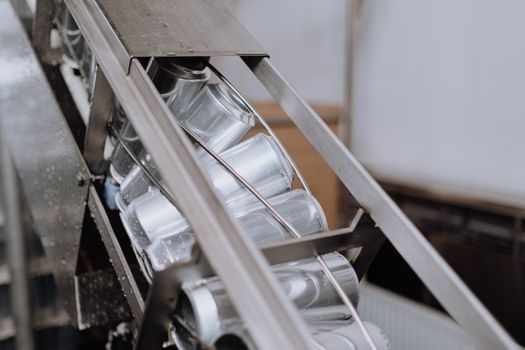
The standard Chinese mill MOQ sits at 5 t for commodity foil/wood-grain/pattern coil and 1,000 t/month declared capacity, while industrial casting coil stock jumps to 100 t MOQ and 1,000,000 t/month [S2]. Color-coated aluminum coil (PVDF/PE) commonly lists at 5 t MOQ and 10,000 t/month, with thicknesses between 0.1 mm and 500 mm cited for the product class [S2].
Smaller specialty suppliers — 1,000 m² MOQ stucco coil from Shandong, 100 kg MOQ anodized coil from finished-goods exporters — give buyers a route around full-container loads, but unit price per tonne or per kg runs higher than mill direct [S3][S6]. For a 25 t Europe-bound container, the price spread between a 5 t MOQ mill quote and a 100 kg MOQ distributor quote can exceed 15% once surcharges and small-lot fees are added.
Comparison matrix: 4 main coil types by 4 decision criteria
For spec-driven sourcing, the four dominant export coil types align against the four criteria most buyers apply: [S1]
1xxx (1050/1100): cost US$1,490–1,690/t (bare sheet baseline) [S6]; temper O/H14/H24, soft; corrosion good, weldability excellent; typical use foil stock, decoration, heat-sink.
3xxx (3003/3105): cost US$2,200–2,600/t for stucco and US$3,300/t for color-coated [S3][S4]; temper H14/H16/H24/H32, half-hard; corrosion good, weldability good; typical use roofing, ACP, color-coated shutter coil.
5xxx (5005/5052/5083): cost US$2,200–4,200/t (stucco/embossed premium) [S3]; temper O–H116/H321, marine-grade; corrosion excellent (especially 5083/5754), weldability excellent; typical use tread plate, marine, transport.
6xxx (6061-T4/T6): cost premium tier, MOQ 15 t, capacity 2,000 t/month [S9]; temper T4/T6/T651, structural; corrosion good with anodizing, weldability good; typical use structural profiles, door/window, transport frames.
For applications where corrosion in marine or chemical exposure matters more than formability, 5xxx (especially 5083/5754) is the engineered default; for cost-driven roofing and cladding, 3xxx is the workhorse [S2][S3].
Standards, temper codes and what the labels actually mean
OEM datasheets on OKorder and Made-in-China list tempers against the H/O/T nomenclature familiar from ASTM B209 / EN 485: O = annealed/soft; H12/H14/H16 = strain-hardened to 1/4, 1/2, 3/4 hard; H18 = full hard; H32/H34/H36/H38 = strain-hardened then partially annealed; H111/H112/H116/H321 = special stabilised conditions for Mg-alloys; T3–T8 = solution heat-treated and (cold-worked) aged [S2][S5][S9].
Mill certifications visible on Made-in-China supplier profiles include ISO 9001 and SGS; surface-finish certifications include "SGS, ISO9001" on Zhejiang Deju color-coated coil [S4]. Buyers in food-contact and pharmaceutical applications should still pull a mill cert (EN 10204 3.1) for each lot — the listing-level ISO/SGS marks are not a substitute for an EN/ASTM-format cert traceable to heat number.
Cost drivers, recycled content, and the 80% injection-alloy reality
European buyers should expect to see a recycled-aluminium premium structure: in Europe, recycling rates hit 42% for beverage cans, 85% for construction materials, and 95% for transport vehicles, and secondary aluminium is employed in 80% of alloy injection production while retaining primary-equivalent physical properties [S8].
For Chinese export coil, the practical implication is that 1050/1100/3003 series pricing tracks LME aluminium plus a conversion premium (typically US$300–800/t depending on temper and surface treatment), while 5xxx/6xxx pricing adds an Mg or Mg+Si alloy surcharge. The foil-stock and casting-coil segments quote separately: casting coil stock (Alu Stock) lists 100 t MOQ at 1,000,000 t/month capacity, designed for downstream cold-rolling into 0.2–6 mm coil and sheet [S2].
Packaging and transport dominate the last-mile cost: standard sea-worthy export packaging is used across suppliers, with FOB China main port as the default Incoterm and sea freight to a US Gulf port running roughly 2–4 weeks depending on routing [S4][S5].
Who aluminum coil is for — and who should look elsewhere

This category fits roofing contractors, ACP/cladding panel makers, heat-sink fabricators, door/window profile shops, and foil converters who can absorb 5–15 t MOQs and place repeat mill orders. It does not fit buyers needing under 1 t of specialty alloy, fast-turn prototype quantities, or AS9100 aerospace certs — those should source from a domestic distributor or specialty warehouse. [S2]
For volume, the aluminum extrusion profile price & cost guide covers the related 6061-T4/T6 bar-and-profile market, while industrial gasket price & cost guide covers the sealing side of aluminum-clad panel and roofing assemblies.
Trackable signals for the next quarter: LME aluminium 3-month settlement, US Section 232 derivative-aluminium tariff rulings on Chinese-origin coil, and any shift in ISO 9001 / SGS audit disclosures on Shandong and Shanghai mill listings. Buyers comparing this market to adjacent sectors should also review the magnesium die casting selection guide, since 5xxx-series aluminium coil is often specified alongside AZ-series magnesium castings in the same transport and electronics enclosures.
For component-level specifications, see solenoid coil, linear guide, and crossed roller guide.