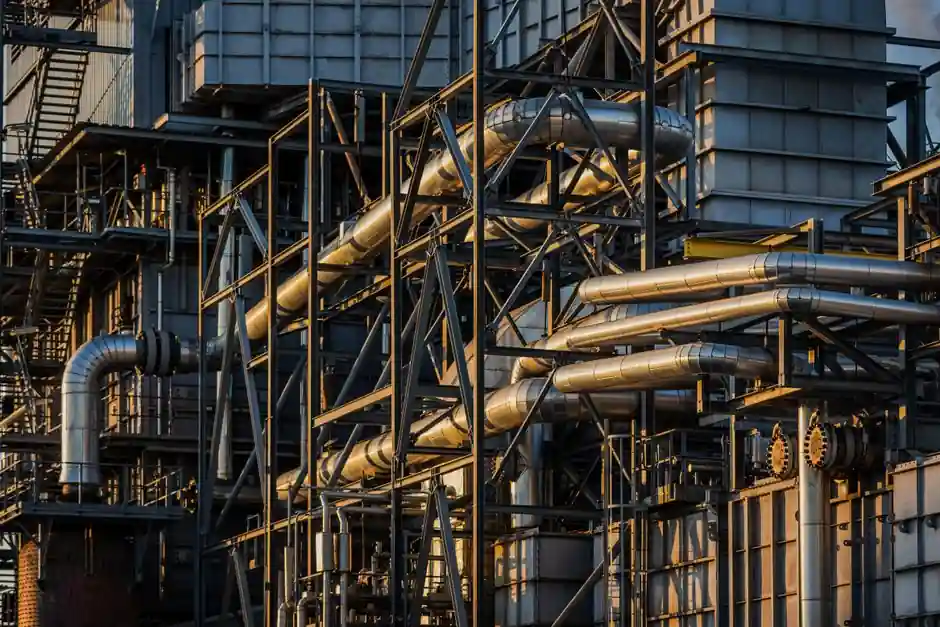
Global iridium production of about 7.1–7.5 tonnes per year supports roughly 18–19 GW of PEM electrolyzer capacity at a loading of 400 kg per GW [S1][S8].
PEM electrolyzers require around 400 kg of iridium per GW, and the scarcity of iridium makes iridium-free AEM an important alternative [S5][S6].
Why iridium becomes the PEM capacity ceiling
PEMEL technology depends on iridium as the anode catalyst [S7]. Global annual iridium supply is about 7.5 tonnes [S7].
Global iridium supply is capped at 7.1 tonnes per year [S8]. The difference is small enough that project planning should use the lower supply case rather than assume that nominal production is always available.
The supply constraint is not a geological claim that iridium is nearly absent in Earth’s crust. It is a production-structure problem, because only a limited fraction of mined nickel and copper ore becomes iridium.
Converting metal demand into GW of electrolyzers
A PEM electrolyzer consuming 300 kg of iridium per GW leaves approximately 25 GW of supported capacity when divided by 7.5 tonnes of annual supply, or about 18 GW at 7.1 tonnes [S1][S8]. These are material-balance ceilings before allowance for non-hydraulic refining losses, fabrication rejects, operating inventories, strategic stockpiles or demand from competing industries.
At 400 kg per GW, 7.1–7.5 tonnes of iridium per year supports about 18–19 GW of PEM electrolyzer capacity. The 300–400 kg range therefore changes the implied supportable capacity by roughly one third [S5][S6].
The material sensitivity can be expressed directly as deployment capacity equal to annual iridium supply divided by kilograms of iridium per GW. At 300 kg per GW, every additional 100 tonnes of annual supply supports about 333 GW; at 400 kg per GW, the same increment supports about 250 GW. Reducing metal intensity therefore has a direct capacity effect, but the catalyst still must deliver the required efficiency and durability.
PEM, alkaline and AEM compared
PEM electrolysis offers high power density and strong load-following capability, but it remains exposed to iridium scarcity. Alkaline electrolysis avoids iridium and can offer a modest cost advantage, although conventional systems are less responsive to variable wind and solar output. Enapter's AEM electrolysers are iridium-free [S5].
PEMEL has higher power densities and superior load-following capability than AEL [S1].
Catalyst reduction targets versus durability requirements
The US Department of Energy lists total platinum-group-metal content for PEM electrolyzer stacks at 3.0 mg/cm², with a 2026 target of 0.5 mg/cm² and an ultimate target of 0.125 mg/cm² [S2]. On a power basis, the same table moves from 0.8 g/kW to a 2026 target of 0.1 g/kW and an ultimate target of 0.03 g/kW.
Those reductions must occur without sacrificing performance. The DOE 2026 stack target is 3.0 A/cm² at 1.8 V per cell, with electrical efficiency of 48 kWh/kg H₂, degradation of 2.3 mV/kh and operating life of 80,000 hours. The ultimate target combines 3.0 A/cm² at 1.6 V with 43 kWh/kg H₂, 2.0 mV/kh and 80,000 hours [S2].
Iridium reduction is therefore constrained by electrochemical function, not by catalyst cost alone. DOE targets for PEM electrolysis specify total platinum group metal content for both electrodes combined [S2].
Recycling extends supply without creating virgin metal
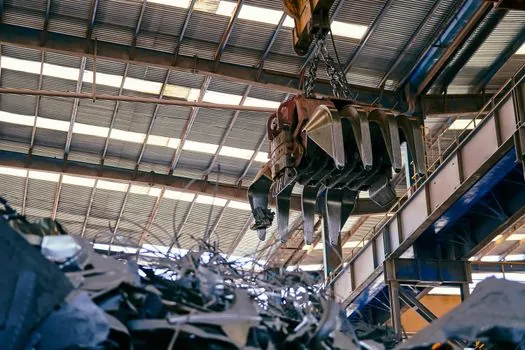
Recovering iridium from spent catalysts can redirect material that would otherwise leave the hydrogen supply chain, but recycling cannot replace every tonne of virgin supply needed for initial factory fill and expansion.
End-of-life collection is especially important because the catalyst remains in the stack after operation. Recycling iridium from spent catalysts and crucibles addresses how recovered metal can re-enter industrial use, while project planners must still establish recovery yield, processing time, qualification requirements and residual losses.
Ir recycling should be modeled as a time-delimited resource. DOE reports a 2022 PEM electrolyzer stack lifetime status of 40,000 operating hours and an 80,000-hour lifetime target [S2].
Deployment scenario: shortage can emerge by 2030
A 2026 material-flow study concludes that iridium shortages could emerge as early as 2030 and that long-term requirements beyond 2040 are significantly underestimated [S1]. Its baseline uses about 7.5 tonnes of annual supply and a 1.5-tonne annual requirement under a representative reduced-loading case, showing that deployment assumptions dominate the result.
Longer-range studies identify projected annual iridium needs of about 18 tonnes under specific PEM expansion assumptions, while another projection reaches as much as 34 tonnes annually by 2040 [S4][S5]. These are scenario outputs, not fixed physical limits, and each depends on installed capacity, catalyst loading, recycling rates, service life and the pace of non-hydrogen demand.
For project screening, three quantities should be tracked: kilograms of iridium per GW, annual primary supply available to the project, and the share of catalyst expected to return through recovery. A 1 GW project using 300–400 kg therefore requires a named allocation of 300–400 kg, not merely an assurance that iridium is commercially available.
Specification checklist for PEM projects
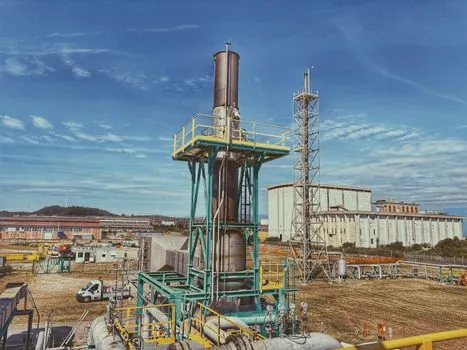
A bankable PEM project should document stack power density, system efficiency, degradation rate, operating lifetime and replacement policy. DOE reference points include 3.0 A/cm² at 1.8 V per cell, 48 kWh/kg H₂ at the stack level, 51 kWh/kg H₂ at the system level and 80,000 hours for the 2026 targets [S2].
The same checklist should identify catalyst loading in mg/cm² and g/kW, iridium source, recovery route, warranty treatment for recovered material and the effect of catalyst replacement on lifecycle emissions and cost. Iridium intensity must be tied to guaranteed stack performance rather than separated into an unrelated material guarantee.
The practical decision is straightforward: plan every PEM GW against 300–400 kg of iridium, test supply against the lower 7.1–7.5 tonnes per year reference range, and maintain an alkaline or AEM alternative where the project cannot secure iridium. Track announced catalyst loadings, qualified recycling recovery and primary annual production as the three signals that can change the deployment ceiling.