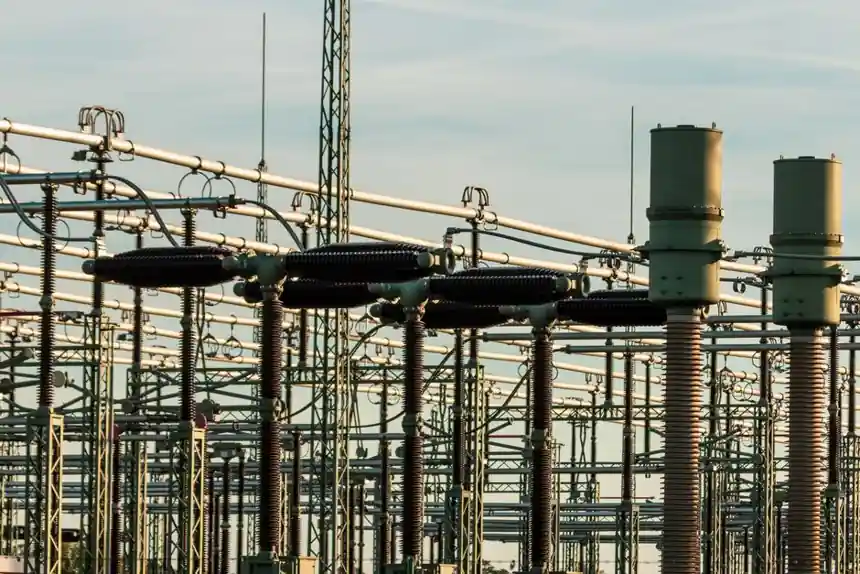
An isolating switch TCO model should compare acquisition, installation, operation, maintenance, replacement, disposal, and residual value across a defined service period [S2][S3][S4].
The framework applies to plant, infrastructure, and equipment buyers comparing switch alternatives on financial impact, technical performance, risk, and lifecycle burden rather than purchase price alone [S2][S3].
Defining the isolating switch cost boundary
Total cost of ownership is the sum of known and estimated costs over the asset lifecycle, including first cost, recurring cost, renewal or replacement, and end-of-useful-life cost [S2].
IBM also identifies indirect costs such as staff time spent adjusting to new systems, which matters when a switch change affects operating procedures or maintenance work practices [S4].
Cost drivers that move the purchase price
Material and construction choices drive the largest technical differences between basic and engineered switch packages.
Total cost of ownership must also account for switching costs, support costs, training, disposal, and unit salvage or residual value [S5]. A lower quoted switch price is therefore not sufficient evidence of a lower investment. For a structured extension on adjacent equipment, see Switch-Disconnector TCO: Compare Lifecycle Costs.
Comparing manual, motorized, and remote options
These comparisons remain application-specific because the supplied research defines TCO method but does not provide isolating-switch unit prices, duty cycles, labor rates, or service-life data [S2][S4]. Any numerical business case must therefore use site data, not generic percentages or assumed market averages.
Quantifying installation and operating labor
Training is a legitimate support cost, and duplicate service during installation is another TCO component identified in lifecycle-costing guidance [S5]. The model should also distinguish internal labor from specialist subcontractor work. The solicitation should include information relevant to the product being procured so that bidders can supply comparable data [S5].
Failure risk, renewal, and residual value
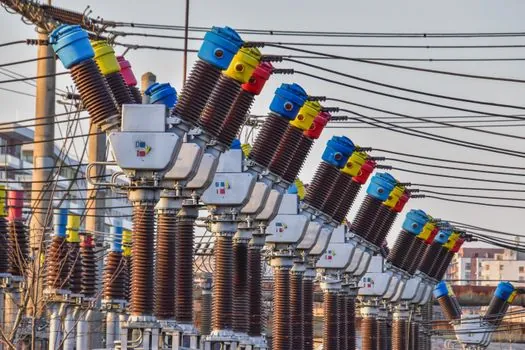
TCO covers replacement or upgrade costs at the end of the lifecycle, so failure exposure must be included before it appears as an emergency replacement [S3][S6]. The analysis should record the number and type of protected circuits, switching frequency, access restrictions, required isolation time, expected mechanism duty, spare-parts availability, and the consequences of an unavailable switch [S2]. These inputs support a risk-adjusted maintenance and renewal estimate without inventing a failure rate unsupported by the research.
Renewal costs include overhaul or replacement, while end-of-life costs include disposal [S2]. Disposal must reflect removal, segregation, recycling, scrap treatment, and any site requirement for documented handling [S5]. Salvage or residual value should reduce the lifecycle cost only where a defensible resale, reuse, or scrap value exists [S5]. The arithmetic should preserve that distinction by showing gross renewal and disposal cash flows separately from the residual-value credit.
The same 10-year analysis period should be applied to every candidate, with nominal or real cash-flow treatment declared and no mixing of the two [S5]. For operational continuity, the broad method used for Circuit Breaker TCO Beyond Purchase Price provides a useful comparison, but switch-specific failure and labor data remain necessary.
Choosing the right buyer and application
This TCO method suits facilities managers, plant electrical engineers, procurement teams, maintenance planners, and project managers replacing installed isolating switches or designing new distribution equipment [S2][S3]. It is also appropriate for owners comparing manual, motorized, and remote architectures, because each changes both capital cost and operating labor [S2][S4].
The method is less suitable for a simple catalog substitution where no design, installation, operating, renewal, or disposal scope exists. It is also less suitable for a low-duty application where remote operation adds cost without measurable labor, safety, or continuity benefit. Those cases still require a documented comparison, but the model should not assign them complex features they do not need.
Technical selection remains separate from financial scoring. The isolating switch must meet the required isolation function, installation arrangement, protection system, access conditions, and site codes. If the device is integrated into a distribution assembly, the distribution cabinet interface adds enclosure, wiring, transport, and commissioning costs that belong in the same installed-cost boundary [S2].
Building a defensible procurement model

The procurement document should define the application, projected years of use, operating environment, recurring charges, nonrecurring charges, delivery and transportation, installation, support, training, disposal, and residual value [S5]. Bidders should itemize hardware, add-ons, implementation, recurring maintenance, and technical support so that quotations can be compared on the same basis [S5]. Factors omitted from the solicitation should not be introduced during award evaluation [S5].
Chaffey College commences a formal TCO review when a building project reaches 50% completion [S3]. Those thresholds are institutional examples rather than universal isolating-switch rules, but they illustrate two useful controls: review TCO before commitment becomes difficult to change, and apply enhanced review to major capital packages [S3].
IBM describes TCO as covering direct and indirect costs over an entire lifecycle, while APPA structures the estimate into project delivery, operation and maintenance, and recapitalization [S2][S4]. The next trackable step is to issue one common scope and analysis period to every bidder, then reconcile quoted options against the same cost codes before award.