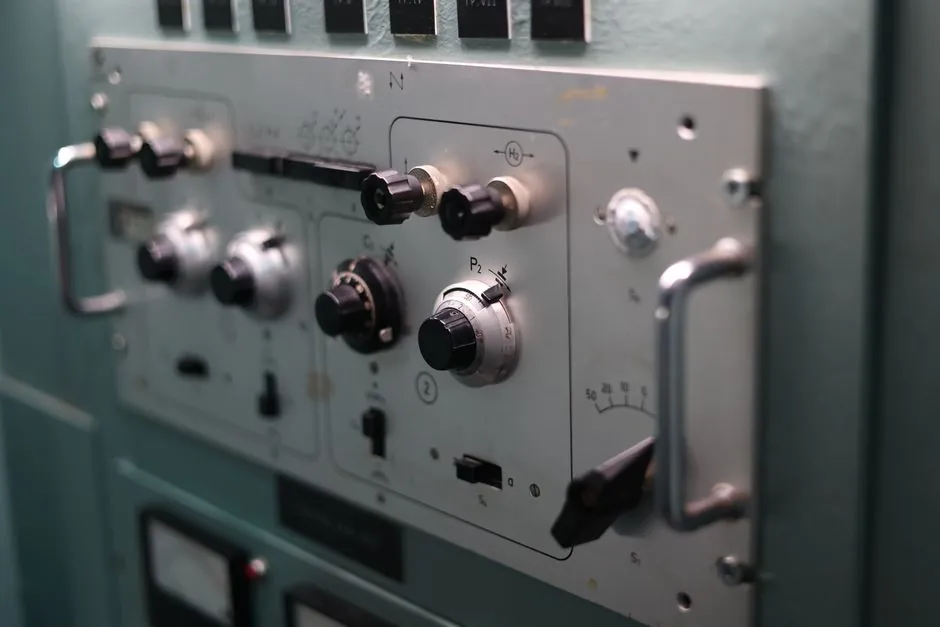
Load break switch TCO must include acquisition, installation, maintenance, downtime, upgrades and disposal rather than the switch price alone. A medium-voltage comparison by Eaton found circuit-breaker-protected equipment can cost up to 10 times less than fuse load break switches, while SF6-free switchgear generally carries a 5–20% purchase-price premium [S3].
This analysis applies to medium-voltage industrial feeders, ring-main units, transformer secondary protection and facilities where switching reliability, interruption duty and service access affect operating cost. The relevant commercial boundary runs from engineering and procurement through commissioning, operation, failure response, modernization and end-of-life removal [S3][S4][S7].
What Load Break Switch TCO Actually Measures
Total cost of ownership is the sum of lifecycle costs across acquisition, installation, energy, maintenance, downtime and disposal [S7]. For a load break switch, that includes the assembled equipment price and also mounting, interlocks, protective coordination, testing, spares, inspection labor, switching-cycle exposure, outage consequences, modifications and retirement [S3][S4].
The analysis period and discount rate must be fixed before comparing bids. Chaffey College applies TCO review to facility projects at 50% completion and treats replacement or upgrade costs at the end of the asset life as part of ownership rather than exclusions [S4]. At Chaffey, TCO is applied to facilities and technology, and the Executive Team commences a TCO review when a building project reaches 50% completion [S4].
A load break switch is therefore not merely a low-voltage disconnect in a cabinet. It is part of a medium-voltage switching and protection system whose failure can affect feeders, transformers, motors and production loads. In a ring-main application, panel quantity, enclosure arrangement and switching technology affect both installed price and later service requirements; Eaton identifies two-, three-, four- and five-panel configurations for its vacuum-based medium-voltage ring-main family [S3].
Price Drivers Behind the Purchase Decision
Acquisition cost is the visible portion of load break switch TCO, but it is also the part most easily distorted by incomplete specifications. The first price driver is interrupting architecture: fuse-protected equipment can have a materially lower upfront cost than circuit-breaker-protected equipment, although the comparison can reach a 10:1 difference in the cited medium-voltage example [S3].
The second driver is insulating medium and enclosure design. Eaton states that its SF6-free switchgear costs about 5–20% more on average than SF6-filled equipment, a gap it expects to narrow as production and sales volumes increase [S3]. This premium buys potential avoidance of SF6 handling, end-of-life recycling and related disposal work, but the actual saving depends on local service economics and regulatory requirements.
Volume and standardization form the third driver. A project requiring nonstandard ratings, cable entries, interlocks, busbar arrangements or panel counts can lose much of its economies of scale. Quoted market pricing must therefore separate base equipment, options, factory testing, accessories, freight, engineering, installation and commissioning rather than reducing the comparison to one line item.
The fourth driver is lead time and supplier responsiveness. Load break switch tenders should apply the same delivery-risk test because an expedited replacement can still be expensive if its interfaces do not match the installation.
Fuse, Vacuum and Air-Insulated Options Compared
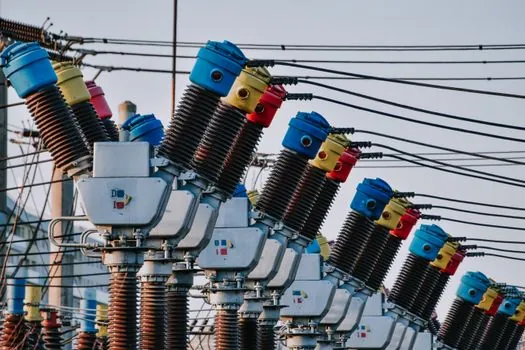
The principal choice is normally fuse-protected load breaking versus circuit-breaker-protected switching, with vacuum and air insulation considered within the switching system. On acquisition price, fuse equipment can be cheaper, while breaker protection can be justified by the value of fault interruption, selectivity and restoration control [S3].
Insulation technology changes the operating profile. Eaton describes vacuum switching as reducing maintenance, increasing safe switching operations and eliminating end-of-life disposal procedures associated with SF6 equipment [S3]. Air-insulated equipment offers another route without SF6, but the comparison must cover mechanical complexity, environmental suitability, interrupting ratings and accessory requirements rather than treating gas name as the sole criterion.
The architecture question also matters. A load break switch handles normal making and breaking duties, while a circuit breaker is selected when fault-current interruption and protection coordination justify the added cost. In larger distribution systems, the isolating switch provides visible isolation without serving the same interruption role.
Installation, Energy and Operating Costs
Installation can erase apparent savings before the switch reaches service. The modeled scope should include civil work, mounting, cable termination, busbar fabrication, enclosure preparation, interlock wiring, remote-control accessories, grounding, protection coordination, commissioning tests and site labor [S3][S4]. A replacement that needs specialized fabrication can also require enclosure, pad or panel modifications, plus additional inspection or recertification [S2].
Energy costs are not limited to the switch itself. Losses in upstream and downstream conductors, transformers and connected loads contribute to facility cost, while the switching arrangement affects how much of the network remains energized during maintenance. The ICCT TCO calculator illustrates the correct treatment by including vehicle purchase, fuel, maintenance, charging infrastructure and residual value in a side-by-side lifetime comparison [S5]. A load break switch model should preserve the same accounting logic even where the energy term appears as avoided losses or outage hours.
Remote and motorized switching can reduce repeated manual travel, operator exposure and switching labor, but it adds controls, wiring, power supply, testing and failure modes. A motorized load switch should therefore be compared with the manual configuration on installed accessories, annual operating labor and avoided travel, not on motor price alone.
Maintenance planning needs measurable intervals: inspection frequency, mechanism operation count, contact or arc-chamber condition, fuse replacement, contact wear, lubrication requirements, test access and spare-part strategy. These inputs should come from the manufacturer’s maintenance instructions and site switching duty, because a switch in a repetitive industrial process does not have the same duty profile as an occasional feeder isolator.
Downtime and Reliability Shape the Business Case
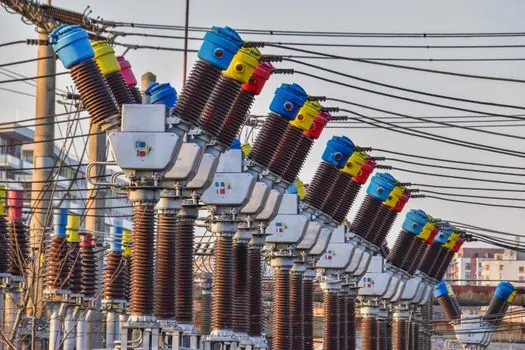
Downtime is the dominant uncertainty in load break switch TCO because the replacement cost may be less important than the cost of the interrupted process. The TCO framework identifies acquisition, operating, replacement and upgrade phases, while transformer analysis demonstrates why hourly loss, emergency procurement and retrofit labor belong in the same model [S2][S4][S7].
One robust quotation for the procurement file is the definition: “TCO is the sum of all costs over an asset’s lifecycle: acquisition, installation, energy, maintenance, downtime, and disposal” [S7]. Each term should then be assigned an owner, evidence source, cost range and sensitivity range. For downtime, calculate lost production, standby labor, restart labor, rejected product, critical-utility penalties and restoration delays.
Failure-mode analysis should include refusal to close, failure to open, slow operation, contact overheating, control-power loss, interlock misoperation and mechanism wear. Mitigations include factory acceptance testing, installed testing, spare mechanisms, critical spares, planned exercise intervals and remote status. These measures reduce uncertainty, but each adds acquisition, installation or lifecycle cost and must enter the calculation explicitly.
A circuit breaker can justify a higher price when rapid restoration, fault selectivity and repeated switching are operationally valuable. A fuse switch can remain economically appropriate when interruption frequency is low, the feeder duty is straightforward and the cost of a planned fuse replacement is controlled [S3].
End-of-Life, Vendor and Supply Risk
Disposal is a lifecycle cost, not an administrative footnote. Eaton states that vacuum-based SF6-free switchgear eliminates the need for special SF6 recycling or end-of-life disposal procedures [S3]. A project using SF6 equipment should therefore price gas inventory, trained personnel, handling equipment, transport, treatment and disposal documentation where applicable.
Vendor support affects TCO through spare-part availability, technical documentation, field service, retrofit capability and response time. A quotation should identify the manufacturer, model, ratings, interrupting medium, frame versions, configurable accessories and service channel. Firmware, controls and proprietary spare parts add supplier dependency, so the model should include the labor and lead-time exposure created by a failed component.
The financial model should also separate commodity inflation from operational performance. Supplier response times, energy efficiency and warranty coverage are identified as major transformer TCO drivers [S2]. The same principle applies to switching equipment: warranty exclusions, response coverage and local service capability affect who pays for labor, freight, travel and temporary switching arrangements.
For fleet and transport decisions, the ICCT calculator uses a side-by-side structure with adjustable inputs for annual mileage, charging strategy and incentives [S5]. Facility buyers can adapt that approach by holding voltage, fault duty, number of operations, enclosure rating and protection function constant while varying acquisition price, labor, outage cost, maintenance and disposal.
Build a Bid-Neutral TCO Model
A defensible load break switch TCO model uses one evaluation period, one discount rate and one outage-cost method for every bid. Divide it into CAPEX, annual operating cost, expected failure cost and end-of-life cost. CAPEX includes equipment, freight, taxes, engineering, civil work, installation and commissioning; operating cost includes inspection, testing, spares, labor and energy; failure cost includes outage, emergency procurement, repair and restart; end-of-life cost includes removal, transport, recycling and disposal [S3][S4][S7].
Use three scenarios for uncertain inputs: base, adverse and recovery. Flex fault rate, switching frequency, outage duration, field-service response, retrofit labor and disposal price. Calculate both undiscounted lifecycle cash flow and present value. Do not merge fuse replacement with breaker maintenance as though they are identical tasks, because their parts, labor and restoration logic differ.
Market context should not be used as a substitute for engineering economics. The load break switch market was forecast to reach USD 5.05 billion by 2034 at a 4.76% compound annual growth rate for 2026–2034 [S6]. That figure describes market direction, not the lifecycle cost of an individual switch, and it should not justify accepting a higher bid without matching outage and maintenance values.
The next procurement decision can be tracked through three specific outputs: quoted purchase price by architecture, documented lead time with factory and site scope, and interruption capacity and maintenance intervals. If those three data sets are not aligned, the apparent savings remain unproven.