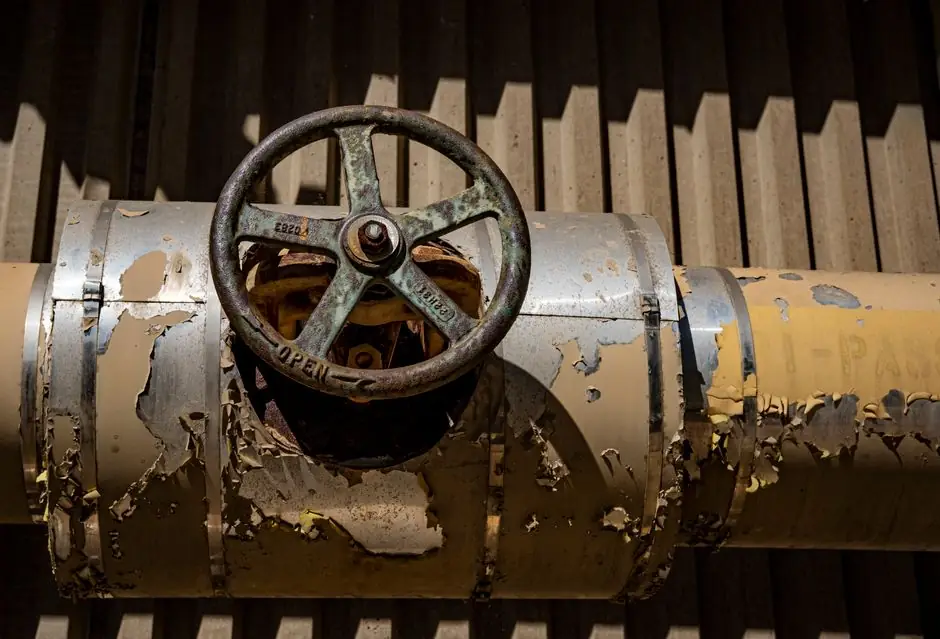
Knife gate valves suit on-off isolation of solids-bearing seawater, but only a bidirectional, corrosion-resistant design with a confirmed pressure rating and suitable seat should be specified.
Desalination duties range from raw seawater intake to reject, washwater, and chemical service; selection must account for chloride exposure, suspended solids, flow direction, shutoff requirements, and pressure rather than nominal size alone.
Where Knife Gates Fit in Desalination
A knife gate uses a thin, bevelled blade that moves perpendicular to the flow and closes toward a seat, allowing it to pass through sludge, sediment, and other solids that can obstruct a conventional wedge gate [S1][S2]. This makes the valve suitable for on-off isolation, not throttling. The blade is typically 316 stainless steel in the cited construction example, while the body, seat, stem, packing, and fasteners must be selected for the specific chloride concentration and temperature [S2][S5].
In a desalination plant, the principal candidate duties are raw-water intake isolation, prefilter or membrane-feed isolation, backwash and washwater isolation, brine or reject lines, and chemical handling. Knife gates are strongest where solids may settle in a dead leg or where a positive-closure service is more valuable than a throttling function [S3]. A standard knife gate should not be selected as a general control valve unless the manufacturer specifically approves that duty [S6].
The knife gate valve is therefore a specialised isolation component, not a default replacement for every desalination valve. Its gate valve alternative may be more suitable where the service is clean, bidirectional sealing is not required, and pressure capability or dimensional standardization dominates.
Decide the Service Type Before the Body Material
Conventional knife gates are simple, economical designs rated by the cited industry paper at 150 psi CWP [S1]. Unidirectional designs can use metal seats for higher temperature or resilient seats for tighter shutoff, and a deflection cone can direct abrasive flow away from the seat [S1]. Bidirectional designs provide shutoff in either flow direction and are the safer default where orientation may change or reverse flow is credible [S1].
Push-through designs discharge media directly to atmosphere, have no packing chamber, and use resilient seating for isolation in abrasive slurry service [S1]. They can suit controlled sludge or solids-disposal points, but the discharge route must address personnel exposure, containment, and downstream handling. Specialty O-port designs can displace solids or divert flow, while lined constructions improve wear resistance in selected media [S1].
For a normal seawater isolation point, a bidirectional knife gate is usually the most defensible variant. Choose a unidirectional valve only when flow direction is fixed and positively controlled, a push-through valve only where intentional discharge is acceptable, and a specialty O-port design only where solids displacement or diversion is an explicit process function [S1][S3].
Compare Bidirectional, Unidirectional, and Push-Through Designs

Bidirectional construction gives the broadest installation flexibility because it seals against reverse flow and supports dead-end service; its replaceable seats and seals can simplify maintenance, but those wear components still require a defined replacement interval [S1]. Unidirectional construction reduces complexity and can offer metal or resilient seats, yet system pressure must assist the gate against the seat, so installation orientation becomes part of the functional requirement [S1].
Pressure capability is a separate decision from flange class. The DeZURIK industry paper states that conventional knife gate valves are rated to 150 CWP [S1]. Do not equate ASME B16.5 Class 150 flange drilling with a 150 psi valve body rating [S2].
The decision sequence is therefore: bidirectional for uncertain or reverse flow; unidirectional for fixed flow and lower complexity; push-through for intentional solids discharge. Across all three, require manufacturer-confirmed cold-working pressure, seat test pressure, allowable temperature, and flange rating.
Match Metallurgy to Seawater, Temperature, and Solids
Seawater creates pitting, crevice corrosion, erosion, and continuous-duty exposure, so exposed carbon steel and cast iron require lining or coating rather than direct service [S5]. The material comparison identifies 304 and 316 stainless steel as more appropriate for pretreatment or lower-chloride conditions, duplex 2205 for most seawater applications, and super duplex 2507 for high-pressure or critical service [S5].
For raw seawater, 316 may be acceptable where chlorides, temperature, crevices, and solids exposure are controlled, but 2205 is the more defensible default for general seawater piping. Grade 2507 is justified by high pressure, severe chloride exposure, critical isolation duty, or high lifecycle cost rather than by material grade alone [S5]. Seat, stem, packing, bolting, and lining materials must be checked separately because a duplex body does not make every wetted component duplex.
Temperature and fluid chemistry determine seat selection. Resilient seats generally provide tighter shutoff but require compatibility checks; metal seats are the route for elevated-temperature service [S1]. Chloride-resistant alloys do not prevent erosion by suspended solids or high-velocity flow, so for solids-bearing lines specify a wear-resistant seat, hardened edge, and replaceable wear components where available [S1][S5].
Use Size, Pressure Drop, and Solids Limits as Separate Gates
Nominal diameter does not establish whether a knife gate can close reliably. The line must be checked for minimum shutoff pressure, available differential pressure, solids accumulation at the seat, actuator closing force, stem stroke, and the valve's face-to-face envelope [S1][S6]. A valve selected only by DN size can close incompletely, overload its actuator, or damage the seat.
For seawater systems, the sizing record should include minimum and maximum differential pressure, design flow, fluid temperature, chloride concentration, solids type and concentration, allowable particle size, and shutdown direction. If the medium can lodge between blade and seat, an engineered flushing or purge arrangement is needed. Bidirectional or automatic recirculation valve arrangements should be considered only where their specified purge flow and installation geometry address the identified dead-leg mechanism.
Desalination sizing guidance places medium-bore service at DN65–DN300, where both butterfly and gate valves may be suitable, and states that sizes above DN300 generally favor butterfly valves [S5]. That is a system-level guideline, not a blanket knife-gate exclusion. A knife gate remains credible in DN65–DN300 lines when solids closure behavior is essential; at larger sizes, weight, actuator force, structural support, and pressure-drop effects need explicit review [S5].
Establish Shutoff, Maintenance, and Failure Acceptance
Specify whether the duty requires zero visible leakage, bubble-tight isolation, or only limited process leakage. Unidirectional metal seats suit higher temperature, while resilient seats can provide tighter shutoff; bidirectional designs add installation and reverse-flow protection [S1]. For pump-discharge or membrane-feed isolation, write the accepted leakage criterion into the datasheet rather than accepting the generic phrase “tight shutoff.”
The bonnetless knife-gate arrangement reduces trapped cavity volume, but the stem packing remains a wear point and a potential leakage path [S2]. A push-through design removes the packing chamber but creates a controlled discharge requirement [S1]. Maintenance planning should therefore identify the seat, seal, packing, wear ring, stem, and actuator inspection points, with defined spare quantities and an access envelope that does not obstruct the rising or non-rising stem [S1][S2].
Failure modes include incomplete closure around settled solids, seat erosion, blade-edge damage, packing leakage, actuator stall, and exposure of personnel during push-through discharge. Instrument the valve with limit switches when remote status is required, but do not treat a position switch as proof of tight shutoff. Operators should treat a partially closed knife gate as an obstruction, not a throttling element [S2].
Specify and Verify the Purchase Data
The data sheet should identify valve style, size and pressure class, flow direction, body and trim grades, seat material, face-to-face dimensions, stem orientation, actuator type, allowable temperature, design pressure, differential-pressure basis, seat test pressure, end connection, coating or lining, and standards compliance [S1]. For MSS SP-81 designs, state whether the scope is stainless steel, bonnetless, and flanged as defined in the cited standard [S1].
For corrosion service, require 316, 2205, or 2507 as appropriate and list chloride concentration, temperature, and exposure duration on the enquiry [S5]. For solids service, request the manufacturer to confirm maximum particle size, solids concentration, test medium, minimum differential pressure for closure, and seat or blade material [S3][S6].
The shortlist logic is direct: specify a bidirectional knife gate for general solids-bearing seawater isolation; use unidirectional construction only with fixed flow and confirmed pressure-assisted sealing; use push-through construction only where controlled discharge is part of the design. Reject any bid that relies only on Class 150 flange drilling, unqualified “zero leakage,” or carbon-steel wetted parts without a documented corrosion barrier.
The next verification node is the manufacturer’s valve-specific calculation and test record: closure force at minimum differential pressure, seat test at 40 psi where MSS SP-81 applies, corrosion and materials declaration, actuator torque or thrust, and confirmation of the stated shutoff criterion [S1].