
A laboratory-grade portable gas detector must cover at minimum the four baseline hazards: CO, O2, H2S, and LEL combustible vapour, while allowing custom channels such as NH3, H2, CH2O, or CO2 for bench-specific work [S1][S3].
Selection is driven by three hard constraints — the chemicals actually used in the lab, the certification footprint required by the local authority having jurisdiction, and the form factor (diffusion vs pump-sampled) that matches the sampling protocol [S1][S2][S4].
Sensor Stack Configuration for Lab Hazards
WASP-D4 multi-gas units combine EC (electrochemical), LEL (catalytic bead or pellistor), PID (photoionization), and IR (infrared) sensors on a single smart platform, and the four channels are freely swappable to match the gas list [S1]. For typical analytical, pharmaceutical, or R&D benches, the baseline four-gas stack (LEL, O2, CO, H2S) is the most common configuration shipped by Chinese OEMs at roughly US$380 per unit at 1-piece MOQ [S7]. Where formaldehyde (CH2O), ammonia (NH3), or hydrogen (H2) are handled, EC single-gas diffusion units such as the WASP-D1 are specified as a companion to the main four-gas monitor, since these gases require dedicated electrochemical cells with narrower cross-sensitivity profiles [S3]. A bench working with CO2 incubators or dry-ice baths adds an NDIR CO2 channel rather than relying on the EC CO sensor, because NDIR is selective to CO2 and unaffected by humidity swings common in open-lid CO2 incubator work [S2]. The catalogue model PTM600-S, a wireless interconnected multifunctional unit, carries open-path IR flammable sensing and is sized for area monitoring around solvent stores rather than personal carry [S8].
Certification Footprint: ATEX, IECEx, and SIL2
Any portable unit used in a Zone 1 or Zone 2 classified lab space must carry ATEX certification, and instruments explicitly marketed for flammable-gas leak detection frequently carry the combined ATEX + SIL2 marking, signalling both explosion protection and a documented functional-safety layer [S4]. Buyers in pharmaceutical and chemical labs should request the ATEX certificate number, the IECEx Certificate of Conformity (CoC) number, and any SIL2/SIL3 declaration from the manufacturer before purchase, rather than relying on the marketing phrase "ATEX certified" alone [S2][S4]. For non-classified general labs (university teaching, QC benches without flammable solvents), the certification burden drops to IP rating plus general compliance, and a wider supplier pool is available [S2].
Diffusion vs Pump-Sampled Form Factor
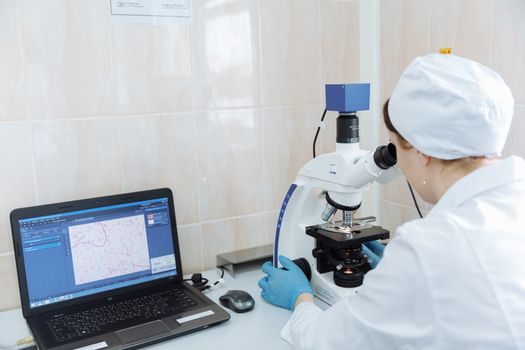
Diffusion single-gas units (WASP-D1 pattern) are lighter, smaller, and run on USB-rechargeable lithium batteries, making them the default for personal carry in bench work where the user moves with the device [S3]. Pump-primed portable units draw a sample through a hose and are specified for confined-space entry — solvent drum inspection, cold-room audit, fume-hood leak tracing — where the hazard may be at a distance from the operator [S1]. For a mixed-use analytical lab, the typical practice is to issue a four-gas diffusion unit to each bench user and stage a pump-sampled unit at the confined-space entry point, so the same calibration standard is used across the lab [S1][S2]. A multi gas detector with a sampling pump adds roughly US$100–200 over the equivalent diffusion model in the Chinese OEM tier, based on the published KT-602 factory-direct pricing tier at US$380 per piece [S7].
Matching Detector Type to Lab Profile
Three lab profiles dominate the spec sheet. Profile A — academic and teaching labs handling small solvent volumes — typically takes a single-gas EC unit per bench, with CO or H2S as the most likely channel [S3]. Profile B — pharmaceutical QC and analytical labs with HPLC solvents, CO2 incubators, and formaldehyde use — takes a four-gas diffusion unit (LEL/O2/CO/H2S) plus a dedicated EC sensor for the specific toxin in play, often NH3 or CH2O [S1][S3]. Profile C — petrochemical, refinery, or pilot-plant labs handling hydrocarbon vapours — takes a pump-sampled four-gas unit with ATEX/IECEx/SIL2 triple marking and a documented bump-test interval of typically 30 days for the LEL and EC channels [S4][S7]. For a toxic gas detector channel selection, EC cells remain the workhorse for H2S, CO, NH3, and H2, while PID is added when volatile organic compounds (VOCs) such as benzene, toluene, or xylene are in scope [S1][S3].
What a Portable Detector Does Not Replace
A portable unit is a personal safety and spot-leak tool, not a substitute for a fixed area monitor. Lab rooms with continuous solvent transfer, gas cylinder manifolds, or unattended CO2 incubators require a fixed gas detector network wired to a control panel, with calibration drift tracked over months rather than the 30- to 90-day bump-test cycle of a portable unit [S2]. The fixed detector carries the alarm-and-shutdown logic for the room; the portable carries the operator [S2]. A combustible gas detector portable will read the same LEL percentage as a fixed catalytic-bead sensor, but only the fixed unit can trigger a solenoid shut-off on a piped gas manifold — a limitation often missed when labs try to use portables as a cost-saving substitute [S2].
Procurement and Supply Notes
The Chinese OEM tier — GRI Instrument (Changsha, Hunan), AIYI Technologies (Nanjing), and the multigas-detector.com manufacturing cluster — ships configurable multi-gas units with custom gas lists and supports FOB, CIF, DDU, and DDP terms, with monthly production capacities typically quoted at 1,000 pieces [S1][S2][S7][S8]. Henan Weiguo's portable and household gas-alarm line has been in production since 1998, built on Hanwei Electronics' 21-year sensor platform, and is a viable second source for single-gas and household-pattern detectors rather than the lab-specific four-gas class [S5]. For lab procurement, validate the actual sensor part number on the bill of materials (not just the marketing gas list), confirm the ATEX/IECEx CoC scope matches the Zone classification of the room, and budget for a 30-day bump-test cycle plus annual sensor replacement as a recurring line item [S1][S4]. Cross-reference the chemical-plant selection map in Portable Gas Detector Spec Map for Chemical Plants if the lab is downstream of a process unit, and the mining spec map in Portable Gas Detector Selection for Mining if the lab handles coal-dust or methane-mine samples.