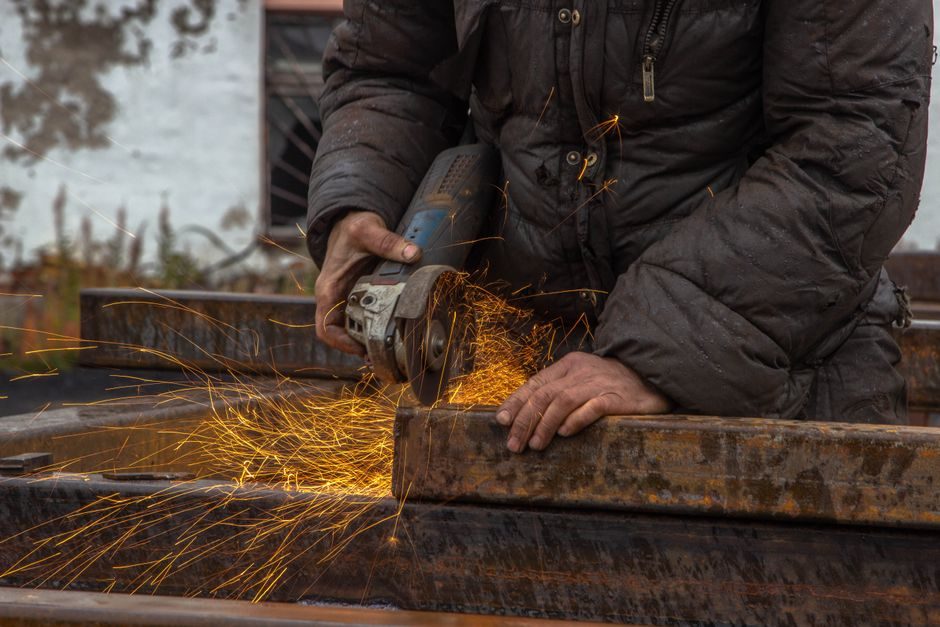
Welding work generates a layered gas hazard: the arc consumes oxygen in enclosed spaces, consumables outgas CO and NOx, and adjacent processes (solvent cleaning, purge gas leaks) add combustible risk, which is why a portable gas detector for welding duty must monitor O2 alongside at least CO and LEL [S2].
Hanwei's portable line covers 1 to 6 gases simultaneously, and ATO's diffusion-sampling SKUs ship with selectable measuring ranges — CO testers at 0-500/1000/2000 ppm and Cl2 monitors at 0-10/20/50/100 ppm — so the same hardware class spans single-toxic spot checks and 4-gas personal monitors [S2][S3].
Sensor Stack: What a Welding Detector Must Carry
A welding-rated 4-gas monitor typically combines an electrochemical O2 cell, an electrochemical CO cell, an electrochemical H2S cell (for sewer/utility crossover jobs), and a catalytic-bead or NDIR LEL sensor for combustible vapors, matching the LEL/CO/H2S/O2 quartet that Hanwei's multi-gas family is built around [S2].
For stainless and MIG/GMAW work, add NO2 sensing if the job sits in a tank or vessel; ATO's diffusion platform is built to accept additional gas channels on the same form factor, which keeps the worker from carrying two instruments [S3]. Cross-sensitivity is the failure mode most often missed: CO electrochemical cells respond to H2, and welding shield gas (Ar/CO2 mixes) can suppress catalytic LEL readings, so factory calibration gas and bump-test gas must be specified when ordering [S1].
Alarm Architecture and Response Thresholds
Every portable unit in the surveyed catalogues ships with multi-tier audible plus visual alarms — Hanwei's portable single-gas and multi-gas families and ATO's Cl2/CO testers all list dual-alarm annunciation as standard, not optional [S2][S3]. OSHA's confined-space rule (29 CFR 1910.146) sets the legal floor: an entrant-attached monitor must alarm at 19.5% O2 low, 23.5% O2 high, 10% LEL combustible, and the applicable CO/H2S permissible exposure limit, and welding frequently pushes O2 below 19.5% in unventilated pits.
A man-down alarm and a TWA/STEL readout are the two features that separate a welding instrument from a generic single-gas unit, because welders work alone in elevated or enclosed positions where a latched worker cannot trigger help. Honeywell/RAE's portable line explicitly markets fast-deployment, serviceable instruments for confined spaces and spot leak detection, which is the same use case the welding trade needs [S1].
Calibration, Bump Test, and Sensor Lifetime
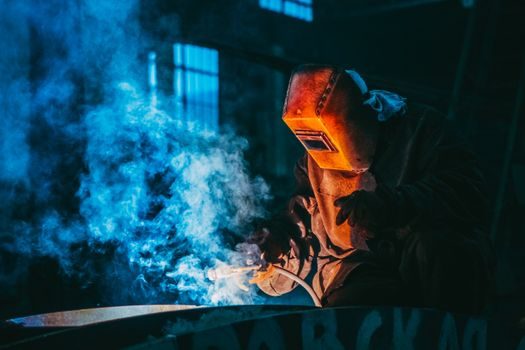
Field reality: electrochemical CO/H2S cells drift within weeks in a welding environment that is hot, humid, and full of metal fumes, so a daily bump test with a known-concentration gas is non-negotiable. Hanwei sells serviceable portable instruments with replaceable sensors and modules, and ATO's portable CO and Cl2 testers are described as configurable and serviceable, which means calibration gas (typically 50 ppm CO, 25 ppm H2S, 2.5% CH4, 20.9% O2) and a regulator are part of the purchase, not an accessory [S2][S3].
Sensor end-of-life is usually 24-36 months for CO and H2S cells and 12-24 months for O2 cells in heavy welding service, and the instrument must flag the expiry rather than silently continue. RAE Systems publishes firmware updates for the UltraRAE 3000 family, which is the model-level evidence that the manufacturer supports field calibration and sensor-swap on the portable platform, not just factory-only service [S1].
Form Factor, Ingress Protection, and Use Conditions
Welding sites expose instruments to spatter, slag, and heat; an IP66/IP67-rated housing with a removable particulate filter is the practical minimum, and the unit must survive a 1-2 m drop onto concrete because the worker often clips it to a harness. ATO's portable gas detector line is built around diffusion sampling with a compact handheld body, which keeps weight and clip-on profile compatible with a welder's hood and jacket [S3].
For hot work in ambient temperatures above 40 °C, electrochemical O2 cells begin to read erratically and catalytic LEL sensors lose sensitivity to high-molecular-weight solvents, so operations in refinery turnarounds or chemical-plant maintenance often step up to an NDIR combustible sensor at additional cost. Hanwei explicitly lists petrochemical, coal-and-steel, and offshore exploration among the applications its portable family is designed for, which is a good proxy for the welding duty envelope [S2].
Welding-Specific Failure Modes and Mis-Specs
The most common mis-spec is buying a single-gas CO detector because "welding produces CO" — that unit will not catch an argon or nitrogen purge-gas displacement of oxygen in a confined tank, and the welder asphyxiates without an O2 alarm. The second most common error is specifying a diffusion-only unit for pre-entry testing of a tank; a sampled unit with a pump draw and a hose is required because diffusion lags at the worker's chest while the gas sits at the bottom. [S2]
Another failure mode is sensor poisoning: H2S cells are permanently damaged by high-dose exposure, and chlorine from nearby PVC welding or disinfection work will poison both H2S and CO cells. ATO's Cl2 monitor (0-10/20/50/100 ppm range) is sold as a separate SKU precisely because the Cl2 channel uses a different electrochemical chemistry and a different bias; bundling it into a welding 4-gas without a Cl2 channel means the chlorine hazard is invisible [S3].
Decision Matrix: Diffusion 4-Gas vs Pumped Multi-Gas vs Single-Toxic
Three instrument classes fit welding, and the choice is driven by confined-space entry rather than the welding itself. A diffusion 4-gas (LEL/O2/CO/H2S) is the cheapest personal monitor at roughly the ATO price band ($200-$500 per SKU) and suits open-shop fabrication; a pumped multi-gas adds a sample draw for pre-entry testing of vessels and pits, and a single-toxic unit covers spot checks such as verifying ventilation after hot work [S3].
For stainless welding inside a reactor, a pumped unit with NO2 and a particulate filter is justified; for structural welding on a shop floor, a diffusion 4-gas is enough. The catalogue pattern at ATO shows the same diffusion sampling method used across CO, Cl2, and NH3 testers, so the buying decision is about sensor selection and pumped-vs-diffusion rather than platform choice [S3].
Standards, Compliance, and Sourcing Signals
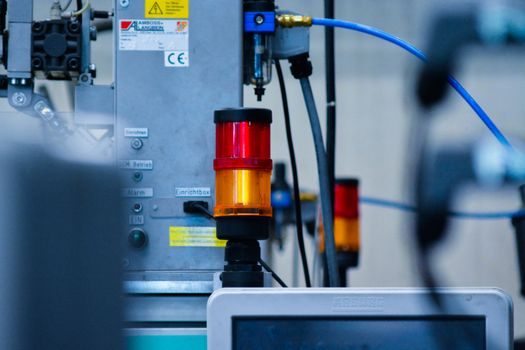
Welding gas monitoring in North America is anchored by OSHA 29 CFR 1910.146 for confined-space entry and by 29 CFR 1910.252 for welding/cutting (oxygen-displacement and toxic-gas language); in the EU, EN 50545-1 governs toxic-gas monitor performance inside confined spaces, and EN 60079-29-1 covers combustible-gas detector performance. A portable detector on a welder should be rated to at least ATEX/IECEx for Group IIC atmospheres if the work sits near a flammable gas line, and the instrument body must carry the explosion-proof marking visible to the safety officer. [S1]
For selection steps that overlap with electrical work, the spec-driven portable gas detector selection map for electrical work walks through sensor-stack choices for arc-flash and switchgear environments, while the portable gas detector spec map for chemical plants covers pumped multi-gas configurations that translate directly to reactor and vessel welding. The combustible gas detector reference page defines the LEL sensor classes that welding duty relies on, and the multi gas detector entry covers the 4-gas architecture used in personal monitors. Track two signals over the next quarter: new electrochemical cell launches that push CO/H2S life past 36 months, and harmonisation of EN 50545-1 toxic-gas thresholds with OSHA PEL values, both of which will reshape buying specs for welding contractors.
For the relevant spec sheets and selection criteria, see portable gas detector.