
Portable gas detection in a chemical plant is not one purchase — it is a stack of single-gas, multi-gas, diffusion and pumped units, each pinned to a different confined-space or patrol task. New Cosmos XP-3000II series units are ATEX-rated, IP67-sealed portable detectors covering up to 32 gas conversions including propane, methane, butane, benzene, acetone, ethanol and LPG, with selectable alkaline or Ni-MH AA power [S1].
Honeywell BW Clip series single-gas CO monitors are sold in a 0-300 ppm range with a two-year no-calibration runtime, while ATO's pumped NDIR methane unit reads 0-100% Vol for inerting and LNG checks [S4][S8]. The spread of range, sensor type and form factor across the seven product records reviewed this week is the reason chemical-plant buyers compare models against a checklist, not a brand [S1][S2][S3][S4][S6][S8].
Sensor Principle vs Target Gas
Semiconductor sensors are the lowest-cost option for LEL combustibles but suffer cross-sensitivity to solvents — XP-3000II lists 32 gases convertible on one head, including aromatic and aliphatic hydrocarbons, but the limit is the head's selectivity, not its range [S1]. NDIR (non-dispersive infrared) is the right pick for CH4 at 0-100% Vol because it is unaffected by catalytic poisons and will not flame-out in lean mixtures [S4].
Electrochemical cells are the standard for toxic-gas single-gas detectors: ATO's O3 portable offers 0-10 / 0-20 / 0-50 ppm ranges with sound-light-vibration alarms for confined-space work where ozone is generated by welding or UV sterilisation [S2]; Gri Instrument's WASP-D1 diffusion single-gas detector covers CO, H2, H2S, NH3 and CH2O with replaceable sensors, more than 20 toxic-gas head options and 2-point calibration on the same 110 × 68 × 38 mm body [S3]. The same product line should not be specified across all three — sensor principle is matched to the dominant gas and to the poisoning risk in the unit's duty area [S1][S2][S3][S4].
Detection Range and Alarm Architecture
Range selection is the single largest source of mis-spec in chemical plants. ATO's NH3 portable ships in 0-50 ppm and 0-100 ppm versions for personal and home use — both ranges are too low for a refrigerant compressor room where short-term exposure can spike to hundreds of ppm, so plant buyers step up to a multi-range or fixed system [S6]. The same vendor's CO tester covers 0-500 / 0-1000 / 0-2000 ppm, which is closer to furnace and boiler maintenance work, and an IR methane unit reading 0-100% Vol is built for purge and inerting verification, not for personnel protection [S4][S6].
Alarm architecture is converging: every reviewed portable detector uses a three-mode stack — audible sounder, red LED beacon, and vibration — because PPE around a flare or in a noisy pump house makes a single channel unreliable [S1][S2][S3][S4][S6]. New Cosmos adds a built-in flashlight, 1 m gas-sampling tube and a drain filter for tank and manhole entry [S1]. Gri Instrument's WASP-D1 adds 30-second-interval datalogging for more than four months of record, which is what auditors want for TWA/STEL reporting under most plant hygiene schemes [S3].
Certification, IP Rating and Hazardous-Area Use
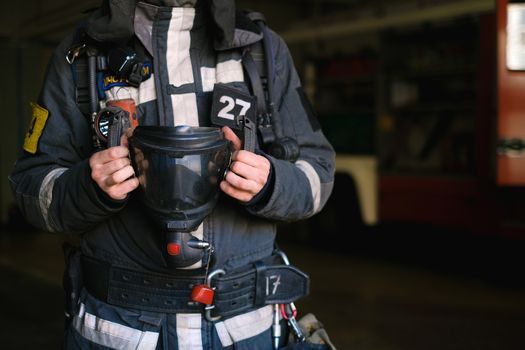
For Zone 1 / Zone 2 chemical areas, two markings on the nameplate are non-negotiable: ATEX for the European regulatory frame, and IP67 for the wet, dusty and wash-down plant environment. The XP-3000II carries both, plus an LEL scale and pre-calibrated combustible head [S1]. Gri Instrument's WASP-D1 is listed as explosion-proof, water- and dust-proof, with operating temperature -20 °C to +60 °C and 0-95% RH non-condensing — a working envelope that matches most outdoor and process-area duties in a chemical complex [S3].
For pure personnel monitoring in non-classified offices and laboratories, a lower-cost diffusion CO or NH3 unit without ATEX can be used, but it must not cross into a classified process area without the marking. The ATO NH3 monitor at 0-50 / 0-100 ppm is positioned as a personal/home device, not a Zone 1 detector [S6]. Plant buyers who use a personal-only unit in a classified area create a documentation gap that turns up at the next PSM audit — the rule of thumb is to match the nameplate to the area classification on the plot plan, not to the user's job title.
Power, Runtime and Field Service
Two power architectures dominate the field. AA-cell designs (XP-3000II takes four AAs, alkaline or Ni-MH) trade fast swap-in-the-dock for shorter continuous runtime; sealed Li-ion designs (WASP-D1) run for more than 8 hours per charge and recharge in under 4 hours via USB [S1][S3]. The Honeywell BW Clip at 0-300 ppm CO is the maintenance-free extreme: two years, no calibration, no sensor change, no battery swap [S8].
Pumped detectors add a third category. ATO's pumped IR methane unit has a built-in micro-sampling pump with 10 selectable suction grades, which is what you need for pre-entry testing of vessels and ducts where diffusion lags [S4]. Field service for pumped and multi-gas units is dominated by calibration-kit cost, sensor replacement on the 6-12 month cycle, and bump-testing before each shift — these recurring items often exceed the unit's purchase price over a five-year life, and they belong in the spec sheet, not in a separate aftermarket line [S4].
Application Fit: Patrol, Confined Space, Hot Work
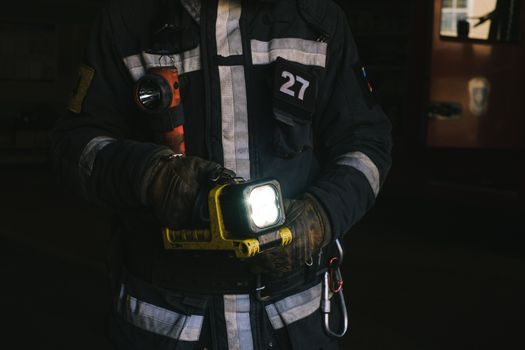
Walking patrol in an open process unit is the use case for a lightweight single-gas diffusion monitor such as the WASP-D1 at 200 g, 110 × 68 × 38 mm, replaceable sensor head, and TFT colour display readable in low light [S3]. Confined-space entry — tank, manhole, tunnel, sewer — is the use case for a pumped or hand-aspirated LEL/O2/toxic multi-gas with a sampling tube and a flashlight, which is the slot the XP-3000II is built for [S1].
Hot work and welding generate O3 and NOx; an O3-specific portable at 0-10/20/50 ppm is the right perimeter monitor for a welder's standby zone [S2]. For LNG, refrigerant or purge work, the IR 0-100% Vol CH4 portable is the only safe choice because catalytic-bead LEL sensors will not read accurately at high concentration [S4]. Specifying one detector across all four tasks is the most common error in small-plant safety budgets — a single unit cannot cover patrol, entry, hot-work and inerting on the same sensor head.
Selection Checklist for Chemical-Plant Buyers
Use a four-criterion matrix to compare candidates: (1) target gas and range, (2) sensor principle matched to gas and poisoning risk, (3) certification (ATEX + IP67) for Zone 1 / Zone 2 placement, and (4) power and service model. On that matrix, the XP-3000II is the multi-gas LEL entry unit [S1], the ATO IR-CH4 is the high-range inerting unit [S4], the WASP-D1 is the patrol / toxic single-gas unit [S3], and the BW Clip is the no-maintenance personnel CO monitor [S8].
Two more lines from the field round out a working fleet: ATO's CO tester at 0-500/1000/2000 ppm for furnace and boiler maintenance [S6], and an O3 unit at 0-50 ppm for hot-work standby [S2]. Vendors reviewed this week include New Cosmos, ATO, Gri Instrument, Honeywell (via ITM distribution) and Chinese suppliers AIYI Technologies and Henan Oceanus, both of which list gas detection as a primary line alongside fixed detectors and controllers [S5][S7]. Buyers who walk that checklist and pin each unit to a defined task, rather than to a brand, end up with a fleet that satisfies both operator practice and the next PSM audit [S1][S2][S3][S4][S6][S8].
For the broader cross-industry comparison of portable gas monitors, including oil-and-gas sensor stacks and certification, see this portable gas detector selection map. The detector side is only half the safety loop — fire and gas system controllers downstream of the portable readings are covered in firefighting gas alarm controller specs. For a primer on the fixed-instrument counterpart of these portables, the fixed gas detector reference entry summarises sensor families and certification classes used in the same plants.
For the relevant spec sheets and selection criteria, see portable gas detector, and chemical anchor.