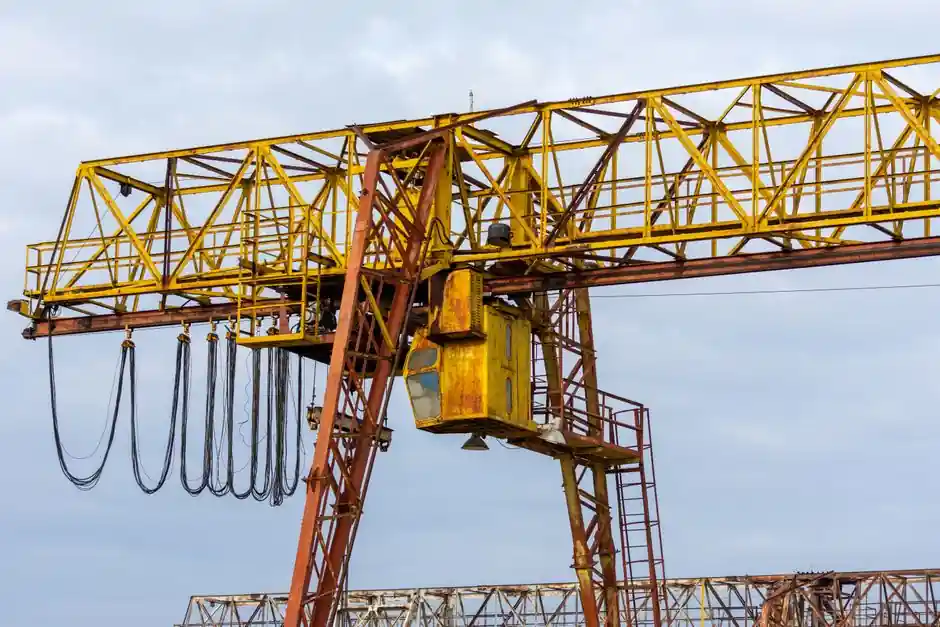
Large crawler-crane assembly commonly requires one day for a smaller unit and several days for a long-boom configuration, with no universal crew count published for large-capacity units.
A crawler crane arrives as multiple transport sections, is assembled with an assist crane, and is tested before lifting, making crew planning a site-logistics problem rather than a fixed labor rate.
What determines assembly time and crew size
Assembly duration depends on the crane configuration, not merely the headline lifting capacity. A smaller unit may be assembled in one day, while a large, long-boom configuration can take several days [S5].
Crawler cranes cover a capacity range from approximately 25 tonnes in small models to more than 3,000 tonnes in the largest heavy-duty machines [S2]. The upper-capacity description identifies the equipment class, but the research does not assign a universal crew number or assembly duration to every machine above a defined capacity.
Modern crawler cranes are designed for modular transport, with their sections able to fit onto road trailers and be reassembled at the work site [S1]. The representative 55-tonne SCX550 crawler crane has a 10 m basic boom, a 52 m maximum boom and a six-to-15 m fly jib [S4].
Assembly scope for a large-capacity crawler
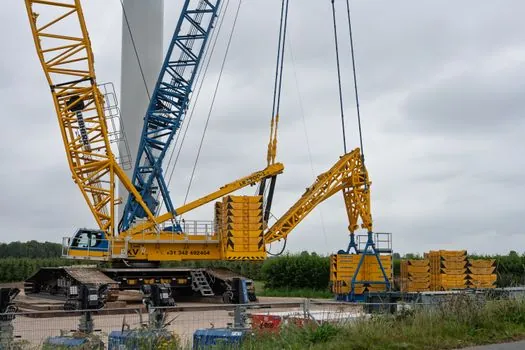
The physical work includes unloading the tracks or undercarriage, base and carbody, boom sections, rear attachment and counterweights, then joining them and installing the boom and hoist equipment [S5]. A smaller assist crane is used during this operation [S5].
Assembly is not complete when the components are connected. The assembled crane must be tested before lifting starts [S5]. For planning purposes, the assembly package therefore includes unloading, rigging, mechanical installation, hydraulic and electrical checks, boom installation, counterweight placement, function testing and operator handover.
The SCX550 specification illustrates the mechanical scale involved in a representative machine. It has a maximum rated load of 55 t at a 3.7 m working radius, a 10 m basic boom, a 52 m maximum boom and a 6–15 m fly jib [S4]. Its main-boom configuration can also be combined with a fly jib for a stated boom-plus-fly-jib length of 43 m plus 15 m [S4].
Selecting a practical site assembly team

The defensible staffing rule is to plan by work package and shift the crew as modules arrive, not assign one person to every assembly activity. The research provides a duration range but does not publish a verified headcount for large-capacity crawler-crane assembly. [S5]
For procurement, divide the work into four roles: crawler supervisor, riggers and boom installers, mechanical and hydraulic technicians, and lifting-operations personnel. One person may cover several roles on a smaller machine, while a large boom installation may require dedicated rigging, alignment and torque-control support. This is an operational planning structure rather than a sourced minimum crew requirement.
The SCX550 offers tower-crane configurations from 22 m through 40 m [S4]. Its separate boom, fly-jib, tower-jib, clam-shell and dragline documentation indicates that one crane model can be delivered with materially different attachment packages [S4]. Crew loading should therefore follow the actual transport manifest and lift plan.
Assembly time compared with operating setup
Assembly and operating setup are separate work packages. Mobile cranes commonly reach lifting readiness in under an hour after arrival, while crawler-crane assembly takes from one day to several days for the cited range of configurations [S5].
Once operating on tracks, the crane avoids the outrigger-retruction and repositioning cycle associated with a wheeled mobile crane. That cycle can consume up to 90 minutes in a 10-hour shift, whereas a crawler crane can carry loads while moving to the next lift position [S3]. The comparison shows why large crawler cranes are used for sustained heavy-lift programmes rather than short-duration spot lifting [S5].
Assembly duration should not be confused with the repositioning process for a truck crane, which can waste up to 90 minutes of a standard 10-hour shift [S3]. The former is a mobilisation and erection task performed before operations; the latter is part of repeated site movement after the crane is established.
Ground, transport and access constraints
Crawler tracks distribute crane mass over a larger footprint than mobile-crane outrigger pads, making them better suited to soft, sandy or uneven ground [S5]. The SCX550 specification lists ground contact pressure of 67.0 kPa, travel speed of 2.0/1.5 km/h and 40 percent gradeability [S4].
Those figures help planners distinguish transport limits from site limits. A 40 percent gradeability specification does not mean the assembled crane can be driven across an unprepared 40 percent slope; route preparation, bearing capacity and crawler geometry remain separate engineering checks [S4].
Transport arrangement must also match the machine. A representative 55-tonne crawler crane has a 300 L fuel tank, a 24 V electrical system and an Isuzu 4HK1X diesel engine rated at 147 kW at 2,100 rpm [S4]. The transport list must therefore cover separate upperstructure, undercarriage, boom and attachment sections rather than treating the crane as one road-going unit [S5].
Equipment and method differences
Crawler cranes generally begin near 40 tonnes and extend beyond 1,000 tonnes on the largest models, while mobile cranes commonly cover approximately 20–500 tonnes [S5]. Capacity at the required working radius remains more important than the maximum rated-load headline [S5].
For long-boom and heavy-load work, a crawler crane offers greater sustained lifting capability and tracks reduce dependence on prepared outrigger pads. A mobile crane is faster to establish, easier to deploy for short-notice work and normally requires less site assembly [S5].
This comparison places the two types against four decision criteria: mobilisation time, operating setup, ground access and sustained heavy lifting. The crawler option wins where assembly lead time can be absorbed and the lift programme requires heavy capacity or repeated pick-and-carry movement. The mobile option wins where rapid deployment and lower mobilisation effort dominate.
How to verify a supplier crew commitment
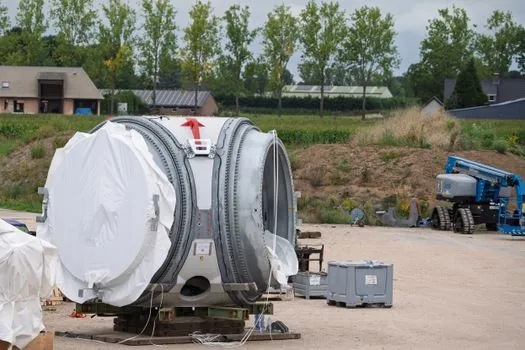
Require the supplier to state the assumed assembly configuration, transport-section count, assist-crane arrangement, working hours, shift pattern and commissioning scope. The published duration range supports a planning allowance of one day for a smaller unit and several days for a large, long-boom configuration [S5].
Demand a crew schedule tied to milestones rather than a bare total: offloading and rigging, base and track preparation, upperstructure installation, boom assembly, counterweight installation, functional testing and pre-lift inspection. This converts an unsupported crew count into a measurable commitment that can be compared with the lift programme.
For large-capacity units, the practical baseline is therefore a dedicated assembly team led by a crawler supervisor, with additional trade capacity allocated by module and engineering procedure. The installation contractor should also define the assist-crane plan, since the base, tracks, boom sections and counterweights are assembled on site [S5].
Track two signals through delivery: whether the transport manifest matches the promised configuration, and whether the planned shift pattern provides enough working hours to complete testing within the contractual handover date. The crawler crane category covers machines from small 25-tonne-class units to heavy-duty machines above 3,000 tonnes, but neither capacity alone nor headline tonnage determines the assembly crew [S2].