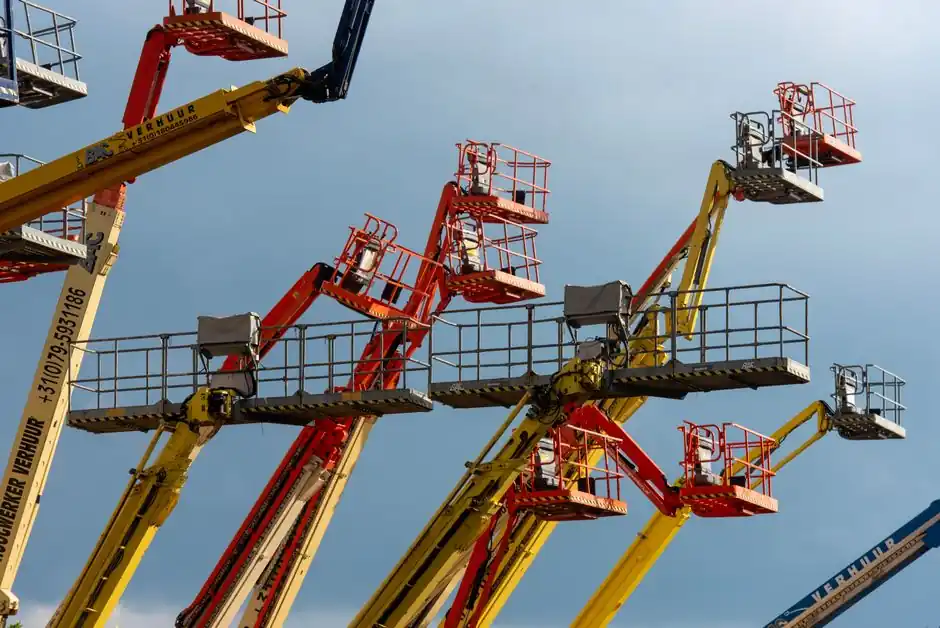
A large crawler crane build typically requires a planned sequence of track, upperworks, boom, counterweight, and rigging operations, with assembly and disassembly time governed more by logistics and assist-crane availability than by a single published duration.
Independent oversight for complex crawler crane builds includes checking the sequence, documenting the work, and limiting rework, rework avoidance, and avoidable shift time are the practical controls for protecting a large-lift schedule [S1].
What Determines Crawler Crane Assembly Time
There is no defensible universal shift count for a crawler crane build because the published case material identifies several project-specific drivers rather than one standard duration [S1][S2][S3]. The principal variables are crane configuration, number and weight of removable components, ground access, available assist cranes, crew coordination, and whether counterweights must be moved to and from truck trailers.
A telescoping-boom mobile crane can add and remove counterweights from truck trailers during the job, while a crawler crane normally needs assist cranes to assemble and disassemble it [S2]. That difference can materially change the mobilization plan: the crawler build may require separate lifting resources, road-access planning for the undercarriage and upperworks, and more controlled sequencing at the assembly area.
The manufacturer’s component sequence should be treated as the baseline for the work plan. Mansfield Crane ensures that crane components are configured in the sequence provided [S3]. For planning purposes, crews should separate shop preparation, transport, offloading, mechanical assembly, rigging checks, functional verification, and lift readiness rather than compressing the estimate into one generic assembly window.
Assist-Crane Requirements and Configuration
Assist cranes are a defining constraint for crawler crane assembly and disassembly because the crawler crane is not normally configured to erect itself in the same way as a telescoping-boom mobile crane [S2]. A documented Manitowoc 4600 operation in Brussels used three cranes to lift the housing from a truck [S2].
The number of assist cranes should not be copied from those examples without a machine-specific lift plan. It depends on the item being handled, its shipping configuration, lifting points, available crane ratings, reach, rigging arrangement, and the sequence defined by the manufacturer. The three-crane housing lift and the two-crane teardown demonstrate that assembly and disassembly can require dedicated lifting support, but they do not establish a universal assist-crane count [S2].
For a large lift, the assistance package should identify each helper crane, assigned crane number, load weight, rigging or attachment, pick radius, required capacity, setup footprint, and operating sequence. The same discipline applies to the main machine: the crawler crane configuration should be reviewed against ground bearing capacity, access route, available footprint, boom arrangement, and the lift plan before the first assembly shift.
Counterweights, Tracks, and Transport Logistics
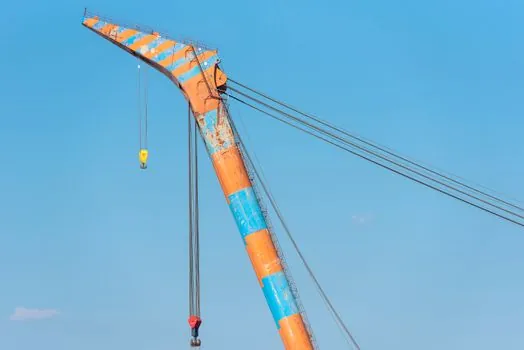
A Grove GMK6300L required six truck trailers to carry its counterweights, demonstrating that counterweight logistics can become a transport operation rather than a single crane-yard task [S2]. Crawler crane counterweights may also require separate handling, while an oversize crawler body and tread assemblies can create additional load-out constraints.
That observation supports a practical distinction between transport time and crane-assembly time: route surveys, trailer spacing, delivery windows, unloading access, and ground conditions can sit on the critical path before the main crane is ready to lift.
The estimate should therefore maintain separate line items for counterweight delivery, track placement, upperworks installation, boom installation, helper-crane mobilization, and final inspection. Combining these into one “crane assembly” allowance hides the actual constraint and makes a schedule change difficult to diagnose. It also prevents planners from comparing the crawler option fairly against a mobile crane, whose counterweights can be added from and returned to trailers without the same self-erection requirement [S2].
Comparing Crawler, Mobile, and Luffing Configurations
Crawler, telescoping-boom mobile, and luffing-jib arrangements differ in self-assembly capability, helper-crane exposure, component weight, and site access requirements. These criteria determine whether the assembly duration is dominated by crane support, transport staging, or controlled mechanical installation. [S1]
Disassembly Time and Site Reconfiguration
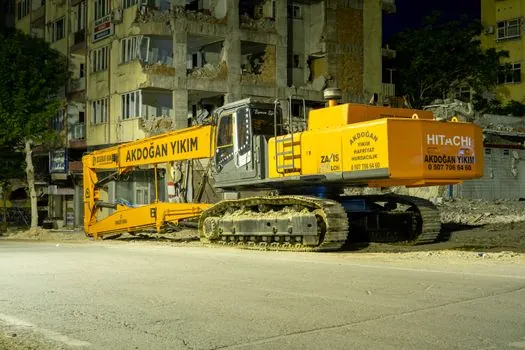
The lift operation therefore affected both the crane schedule and the surrounding road network.
Disassembly planning should begin before the final lift, not after the last load is set down. The sequence needs to account for boom removal, rigging release, upperworks and housing removal, track separation, counterweight removal, component loading, and restoration of the work area. Each stage requires its own labor, equipment, access condition, and inspection point.
Independent third-party oversight can reduce the risk that assembly or disassembly mistakes cause rework, damaged components, extra mobilizations, lost shift time, or multi-day downtime [S1]. This is particularly relevant where the build is large and the margin for error is small. It also supports documented handover before the overhead bridge crane or other downstream lifting operation begins, although the crane-build scope must remain separate from the operating lift plan.
Planning Assumptions and Failure Modes
Assembly time should be estimated from a written sequence with a duration for each operation, but the research material does not provide a defensible average number of shifts for a large crawler crane. A schedule that assumes a generic duration without identifying the crane model, component weights, transport splits, helper-crane picks, or site constraints is not fit for a large lift. [S1]
The main failure modes are understandable from the available case data: an unverified assembly sequence, inadequate helper-crane support, counterweight movements that do not match trailer availability, oversize transport arriving without a workable unloading plan, and site access that changes during the job [S1][S2][S3]. Communication failures during crane assembly and disassembly are also treated as a direct safety concern because there is no small exception in the sequence [S3].
Third-party oversight for crawler cranes, large hydraulic cranes with luffing attachments, and tower-crane erection or climbing demonstrates that independent construction support can extend beyond the crawler build itself [S1]. Marquis Crane Services identifies more than 35 years of repair, assembly or disassembly, and inspection experience, with personnel qualifications including NCCCO-certified inspectors and OSHA 30 training [S1]. These credentials support competence in the oversight role, but they do not replace the project-specific lift plan or the manufacturer’s sequence.
Controls for a Defensible Large-Lift Schedule

A traceable large-lift schedule should contain at least three duration pools: equipment preparation and transport, mechanical assembly, and lift-readiness verification. Each pool requires named resources and a responsible person, allowing the planner to identify whether a delay comes from transport, helper-crane availability, component sequence, or inspection documentation. [S1]
The build plan should also carry a hold-point list for critical stages, such as track positioning, foundation or ground-condition confirmation, upperworks installation, boom installation, counterweight placement, rigging verification, and final functional checks. Marquis Crane Services describes its service as maintaining the plan, following the sequence, and keeping documentation accurate so the crane is assembled correctly and ready for work [S1].
The practical decision is to budget crawler crane assembly and disassembly as a managed logistics operation, not a fixed hourly task. Where the crane includes a luffing attachment, compare the complexity with the dedicated criteria in Luffing Jib vs Fixed Jib Crawler Crane: A Spec-Driven Selection. The next trackable signal is not a generic market figure, but whether the approved lift plan identifies every helper crane, trailer load, component sequence, hold point, and site-access constraint before mobilization.
