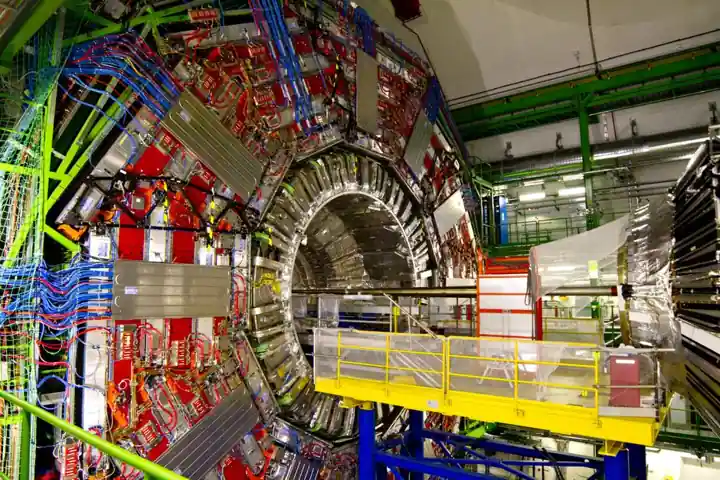
Large Generation III+ reactor pressure vessels require forging presses rated at about 14,000–15,000 tonnes that accept 500–600 tonne hot-steel ingots, restricting supply to a small group of qualified heavy-manufacturing plants [S3].
The constraint extends beyond pressure vessels to turbine and generator forgings, nickel alloys, zirconium products, pumps, graphite and other engineered components, so reactor build rates depend on several narrow supply chains rather than one piece of steel [S2][S3][S4].
Why Pressure-Vessel Forgings Set the Delivery Pace
A reactor pressure vessel is normally forged as a small number of large integral rings rather than assembled from numerous small welded sections. Vendors want reactor pressure vessels forged as a small number of large integral rings rather than many small pieces welded together.
For very large Generation III+ units, the reference forging requirement is a 140–150 MN press, equivalent to 14,000–15,000 tonnes, processing hot ingots weighing 500–600 tonnes [S3].
The loading requirement is equally restrictive. For very large Generation III+ reactors, pressure-vessel production requires, or is best undertaken by, forging presses of about 140–150 MN capacity that accept hot-steel ingots of 500–600 tonnes. Press tonnage alone therefore does not establish whether a plant can produce the required component.
How Press Capacity and Ingot Size Limit Output
The productive comparison is therefore not simply tonnes of steel produced per year. It is qualified press capacity, maximum ingot mass, nuclear authorization, code compliance, heat-treatment and machining capacity, and the time required to inspect and document the finished component [S1][S3].
Why Nuclear Qualification Rules Out Easy Capacity Substitution
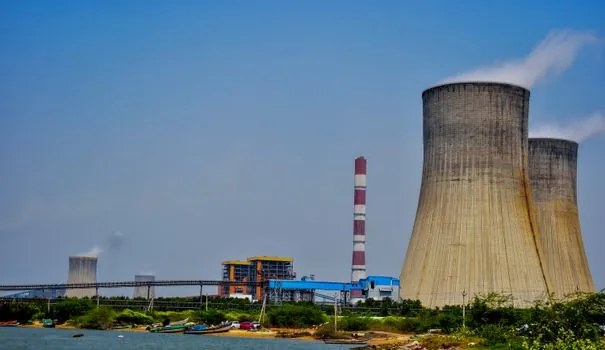
A commercial forge is not automatically a nuclear-grade forge. Nuclear equipment suppliers must be qualified and quality controlled, and the ASME nuclear N-stamp provides internationally recognized evidence that an authorized vendor has produced commercial nuclear-grade components under the applicable nuclear quality requirements [S3].
That qualification barrier prevents general heavy fabrication capacity from replacing the missing press capability. A supplier must control the material pedigree, forging sequence, heat treatment, inspection, documentation and applicable codes, while the reactor design, pressure-boundary geometry and procurement package determine whether the resulting forging is usable [S1][S3].
North American and European experience illustrates that point. Steelmaking capability, ingot logistics, nuclear qualification and product geometry must align before capacity becomes scheduleable.
For project planners, the practical pre-order check is therefore specific: identify the required vessel design, maximum component mass, forging yield, ingot mass, governing material specification, code and inspection package, then confirm the qualified forge and its committed production slot. Checking press tonnage without those conditions gives an incomplete answer [S1][S3].
What Else Can Delay a New Reactor
Heavy forgings are only one part of the reactor delivery chain. The World Nuclear Association lists reactor pressure vessels, steam turbines and generators as heavy-forging categories, while also noting supply constraints across other engineered components and the transmission of steel and energy prices into plant costs [S3].
The reactor coolant pump is a separate long-lead constraint in pressurized-water reactors. Each Westinghouse AP1000 requires four reactor coolant pumps. Curtiss-Wright indicated that production and delivery of a coolant pump can require four to five years [S5].
Fuel supply adds another gate. Centrus Energy is expanding domestic production of conventional low-enriched uranium and high-assay low-enriched uranium.
Advanced designs add non-steel dependencies. HTGRs and some molten-salt-reactor designs use nuclear-grade graphite in substantial quantities, while SMR supply chains require nuclear-grade zirconium, hafnium, high-specification steels, nickel alloys, rare-earth-dependent components and advanced electronics [S2][S4]. The supply-chain readiness of large reactor projects must therefore cover the full equipment chain rather than only reactor-vessel steel.
Who Can Use Existing Heavy Forging Capacity
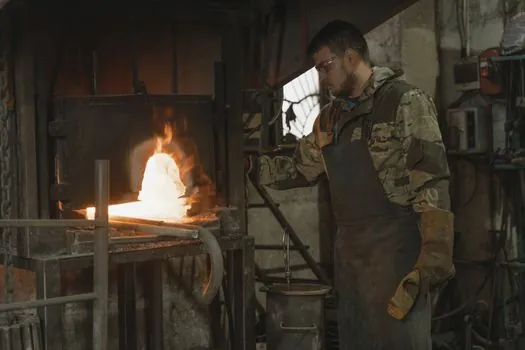
Buyers with an early reactor order can use the existing international forging base if the selected design fits an available press and ingot configuration. China First Heavy has supplied pressure vessels for the Hualong One and for large and small modular designs, while the Hualong 2.0 design is rated at 1,217 MW [S1].
This route suits developers able to align their reactor specification with qualified forge capability, accept international procurement exposure and reserve production capacity well before component delivery. It is less suitable for projects that require a domestic forge but lack a press of 14,000–15,000 tonnes, a compatible 500–600 tonne ingot route and nuclear-qualified processing [S1][S3].
The alternative is to develop or restore domestic capability. That path requires more than purchasing a nominal press: it requires melt-shop preparation, large-ingot handling, forging dies, heat treatment, nondestructive inspection, machining, nuclear quality systems and qualification of the specific component [S3]. New capacity is being built in Japan, China, South Korea, Czech Republic and Russia, while projects are planned in India, but construction and qualification schedules still govern usable output [S3].
For SMR developers, smaller units do not automatically avoid the problem. The BWRX-300 and ARC-100 projects use common non-fuel materials also found in CANDU and AP1000 fleets, so factory fabrication can multiply demand for the same thin, qualification-controlled supply base [S4].
How Buyers Can Manage Forging Lead Time
The first procurement action is to freeze the component geometry early, because changing vessel design after a forge slot is allocated can invalidate material, tooling, heat-treatment or inspection work. Large integral forgings reduce lifetime weld inspection, but they also concentrate the schedule risk in fewer and larger pieces [S1][S3].
The second action is to contract against the real production chain. A deliverable press slot is valuable only when the supplier can procure compatible ingots, qualify the steel, complete heat treatment, machine the component, document inspections and transport the finished vessel to the project [S1].
The third action is to reserve long-lead equipment in parallel, not sequentially. Each AP1000 needs four reactor coolant pumps, and a four-to-five-year pump production and delivery cycle can exceed the period in which a vessel forging slot remains commercially useful [S5]. HALEU, enrichment, graphite and nuclear-grade zirconium contracts require the same synchronized treatment [S2][S4].
Trackable signals for a procurement team are the qualified forge named in the purchase order, the confirmed ingot mass and heat-treatment route, the inspection and code package, the vessel delivery milestone, and the scheduled pump and fuel awards. If any one of those remains undefined, the stated reactor construction date is not supported by the heavy-manufacturing chain.