
OCTG buyers face extended mill lead times, constrained production capacity and upward price pressure as geopolitical disruption and trade actions tighten the 2026 supply chain [S2].
The market spans casing, tubing and drill pipe under API 5CT, with North America supported by 591 active US rigs and 207 Canadian rigs as of September 11, 2026, and an international rig count of 1,102 in August 2026 [S4][S5].
What is driving OCTG supply and inventory demand
OCTG demand is a derivative of upstream well construction, completion and workover activity, with casing representing the largest material pool; [S4][S5].
Demand intensity rises for long laterals, deep wells, HPHT wells and sour-service applications because these programs require greater tonnage, higher-strength grades or premium connections [S4]. Rig activity remains a relevant cycle signal: the United States operated 591 rigs on September 11, 2026, Canada had 207, and the international count reached 1,102 in August 2026 [S4].
Oil and steel prices became materially more volatile after the Middle East conflict began. Higher oil prices initially increased later-year drilling commitments and OCTG inquiries, while the mid-June peace-deal announcement pushed oil prices back toward pre-war levels [S2]. Buyers therefore cannot treat oil prices as a standalone demand indicator because project schedules and inventory policy also drive orders [S2].
Why mill lead times and imports constrain availability
Three supply constraints define the near-term market: extended mill lead times, limited production capacity and global steel disruption, particularly from geopolitical events in the Middle East [S2]. The same conditions are sustaining upward pressure on OCTG prices despite fluctuating oil, steel coil and carbon-steel costs [S2].
Import supply has also tightened. U.S. OCTG supply declined because lower import volumes outweighed domestic movement, while major foreign suppliers from Austria and Taiwan faced U.S. antidumping measures [S3]. For energy pipe and tube more broadly, import share fell significantly during the first five months of 2026 compared with the same period of 2025, primarily because of Section 232 actions and trade-case activity [S2].
The logistics signal points in the same direction. In September 2026, 21.4% of manufacturers reported slower supplier deliveries, with primary metals and fabricated metal products among the affected industries [S1]. Tubular procurement is exposed because OCTG depends on steel inputs, mill conversion and downstream threading capacity, so a nominal availability window does not guarantee delivery to the rig site [S1][S2].
Compare OCTG products against project requirements
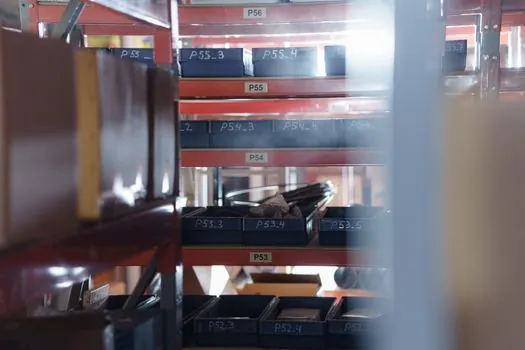
Casing, tubing and drill pipe cannot be treated as interchangeable inventory because each carries a different downhole load and connection arrangement [S5].
Inventory screening should begin with outside diameter, wall or weight specification, grade, length, end condition, coupling or thread form, and connection type. A mismatch in any one field can defeat the delivery advantage of an in-stock string, even when its price appears attractive [S1].
Select grades, manufacturing routes and sour-service limits
OCTG is specified to API 5CT, 11th Edition (2024), covering casing, tubing and drill pipe; common grades include J55, K55, N80, L80, P110 and Q125 [S5]. Sour-service requirements are governed by NACE MR0175 / ISO 15156, which must be matched to the actual service environment rather than treated as a generic material label [S5].
Seamless pipe is the primary manufacturing route, while welded pipe is used by some suppliers for defined applications [S5]. Buyers should not select on manufacturing route alone. They must verify grade, dimensions, mechanical-property records, product marking and suitability for pressure, temperature and corrosion conditions before accepting inventory [S1][S5].
The market mix also shifts toward premium-grade OCTG, including high-collapse casing, corrosion-resistant alloys, sour-service tubing and premium connections. That explains why market value can grow faster than physical volume as drilling programs become more demanding [S4]. One industry estimate values the global OCTG market at USD 37.82 billion in 2025, with a 5–8% CAGR, while another estimates USD 27.06 billion for 2025 and projects USD 42.05 billion by 2032 at a 6.50% CAGR [S4][S5]. The differing estimates indicate that market-value comparisons require matched definitions before they can guide procurement decisions.
Use delivered cost and documentation to qualify inventory

A low purchase price is not a valid OCTG cost comparison when freight, inspection, repair or reconditioning are excluded. A discounted string requiring added inspection, repair or long-distance shipping can cost more on arrival than a higher-priced option supplied ready for service [S1].
Buyers should obtain material verification and inspection reports before purchase, with traceability linking each document to the offered goods. The supplier should also state dimensions, grade and connection type so engineering can compare the inventory against the well design before freight is committed [S1]. Missing records and unclear product identification create both technical and schedule risk [S1].
API 5CT marking and mill-test-report requirements must be checked against the standard edition and project specification in force for the purchase. A seller’s statement that goods are API 5CT compliant is not a substitute for traceable records, especially where a threaded string requires verification of the coupling and thread condition before it can be accepted [S1][S5].
Which buyers should hold or release OCTG inventory
Procurement and engineering should define acceptable alternatives before ordering, covering grade, connection, dimensional tolerance and inspection status, because early agreement lets buyers confirm inventory and delivery dates before committing the schedule [S1]. This approach fits operators with firm well schedules, material coordinators managing call-off dates, and distributors needing verified stock that can ship inside a buyer’s required window [S1].
Spot buyers focused only on unit price are poorly placed for this cycle. Low-cost offers are unsuitable when the material, records, connection or delivery condition do not match the well program, and a short delivery window can make an available but technically wrong string worthless [S1].
Inventory strategy must also distinguish project consumption from speculative stocking. Customer purchases in 2026 are being shaped by project requirements and inventory strategies rather than commodity-price movements alone, and uncertainty has prompted cautious purchasing [S2]. A defensible plan links each position to a well, call-off window, approved specification and delivery site rather than to an unsupported expectation of price direction.
Track four signals through the 2026 supply cycle
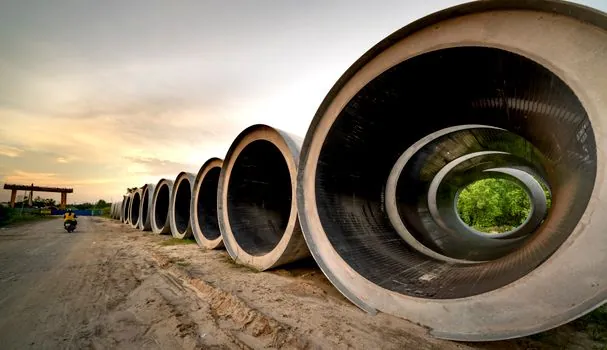
Four measurable signals provide a practical cycle review: active rig counts, mill lead times, import share and confirmed delivery windows. North American demand is supported by 591 US rigs and 207 Canadian rigs as of September 11, 2026, while international drilling stood at 1,102 rigs in August [S4]. Trade exposure is visible in the first-five-month 2026 import-share decline, while broader supplier-delivery delays affected 21.4% of surveyed manufacturers in September [S1][S2].
For each requisition, procurement should record the mill or distributor lead time, offered ship date, technical deviation, inspection requirement and delivered-cost adjustment. A stock offer is only usable when its documentation, connection, dimensions and delivery date satisfy the well program; otherwise it is inventory, not supply [S1].
Closing the cycle requires three trackable outputs: a qualified list of casing, tubing and drill pipe by grade and connection, a delivery date tied to each rig schedule, and a documented acceptance of total cost rather than quoted pipe price alone [S1][S2].