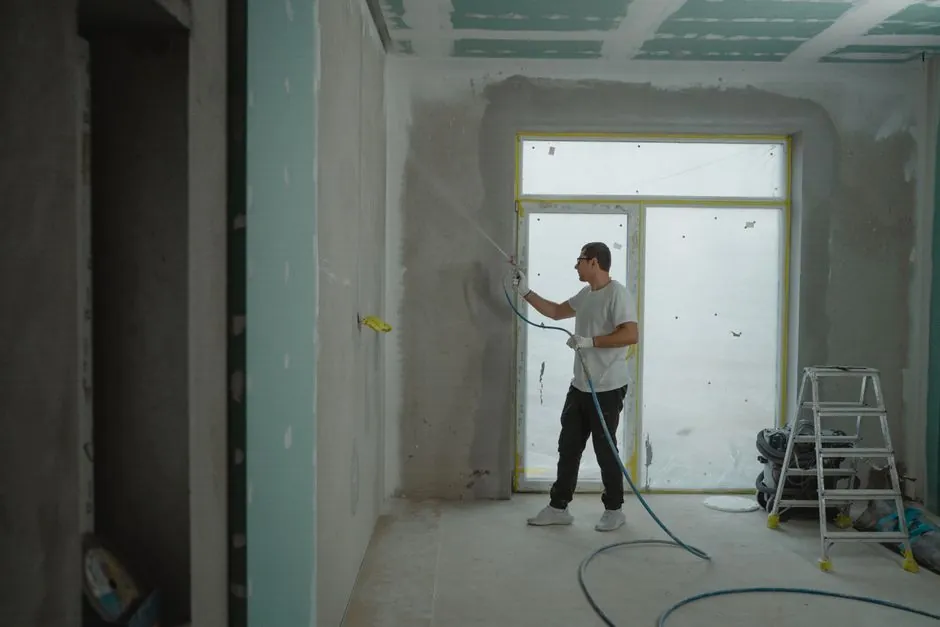
Interior finishing work, covering cabinetry, tile, drywall and trim, calls for a laser distance meter in the 20-40 m range with ±1.5 mm (±1/16 in) accuracy, green-beam visibility and IP54-or-better ingress, per selection guidance published 12 January 2026 [S1].
Accuracy targets tighten as the work moves from rough framing to finished surfaces: cabinetry, tile and trim typically need ±1 mm, while structural as-built documentation commonly accepts ±1-2 mm, with consumer-grade units often falling short of the tighter band [S3]. Understanding where the laser class fits, and where it stops, is the difference between a clean shop drawing and a re-cut on site.
Range, Accuracy and Beam Class: The Three Hard Numbers
Range and accuracy are the two spec values that drive every other decision on a finishing job, and they are the only numbers printed on the data plate that actually constrain a layout [S1][S3]. Most handheld consumer and prosumer meters hold ±1/8 in (about 3.2 mm) across their full range, while higher-tier units push to ±1/16 in (about 1.6 mm), which is the level finishing trades should treat as the working floor for cabinetry and stone work [S5].
For rooms up to 12 m on the long axis, a 30-40 m meter covers the diagonal cleanly; for open-plan interiors and small commercial fit-outs, step up to a 50-70 m class to keep the Pythagorean and trapezoid functions inside their specified accuracy window. Green-beam diodes, as fitted to units such as the Bosch GLM165-27CGL (165 ft / 50 m, ±1/16 in, IP65, Bluetooth, rechargeable), remain visible up to roughly four times farther than the equivalent red beam under interior daylight, which is why they are now the default for finishing crews who shoot into sunlit atria and glazed shopfronts [S2]. Red-beam units still ship at lower cost, and they remain acceptable on shaded interior partitions where beam visibility is not the limiting factor [S4].
Selection Criteria for Finishing Trades
A finishing-grade meter is selected against four criteria, visibility, safety, digital documentation, and full-range accuracy, all four of which the AIA partner MILESEEY guidance lays out for architects specifying measurement tools [S4]. Visibility covers both the beam colour and the display: an IPS full-colour screen with oversized fonts and a black-and-white mode keeps the readout legible against bright backdrops and dim stud cavities alike. Safety translates directly into fewer ladder moves: Pythagorean, indirect height and point-to-point (P2P) functions let one operator capture soffit heights, stair stringers and cathedral ceiling lines from floor level.
Documentation is no longer optional on multi-party fit-outs. Bluetooth export to apps such as Bosch MeasureOn, Leica DISTO Plan or the in-house Mileseey suite turns a measurement into a CSV, image or DXF traceable to the room, which removes the manual transcription step that historically seeded most finishing rework. The fourth criterion, full-range accuracy, is the one most often fudged: a meter rated ±1.5 mm at 5 m but only ±3.0 mm at 30 m is acceptable for trim, but not for stone or modular cabinetry, where shop drawings are cut from the field data [S3][S4]. A spec-driven comparison for the three classes used on interior work is laid out below.
Class Comparison: Pocket, Mid-Range and Long-Range
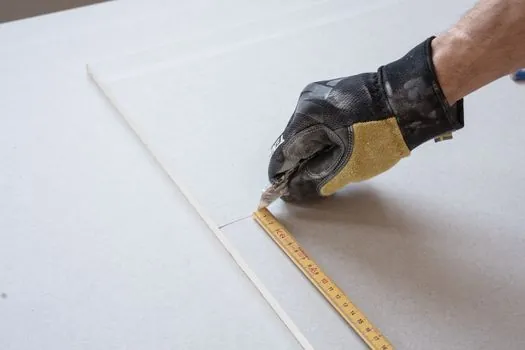
Pocket-class meters (typically 20-30 m, ±2-3 mm, red beam, IP40-IP54) suit solo finish carpenters doing single-room trim, backsplashes and small cabinet runs, where the longest shot stays under 10 m and the budget is tight. Mid-range units (40-60 m, ±1.5 mm, green beam option, IP54, Bluetooth) are the workhorse for residential and light-commercial fit-out: they cover an open-plan living area diagonal, run Pythagorean functions on stair wells, and pair with mobile apps for layout export. Long-range pro models (80 m and up, ±1-1.5 mm, green beam, P2P, IP65, rechargeable) are over-spec for a single bathroom but pay back on whole-floor as-built surveys, large retail fit-outs and high-ceiling commercial interiors [S1][S2][S4].
A representative spec lineup against four decision criteria:
Class / Typical range / Accuracy / Ingress / Best fit on a finishing job. Pocket (Skil ME9821-00, 100 ft / 30 m): ±1/8 in, IP54, DIY trim and single-room cabinetry. Mid-range (Bosch GLM165-27CGL, 165 ft / 50 m): ±1/16 in, IP65, Bluetooth, multi-room fit-out and stair geometry. Long-range (Leica Disto X6, 820 ft / 250 m, or Fluke 424D, 300 ft / 100 m, ±1/16 in): large commercial interiors and facade-to-interior tie-ins. The mid-range row is where most finishing crews land, because ±1/16 in matches the ±1 mm finishing tolerance band cited for cabinetry and tile once instrument and target geometry are accounted for [S2][S3].
Use Cases by Trade, and Where the Meter Stops
For cabinetry and built-ins, the laser distance meter replaces the tape on tall uppers, full-height pantry runs and ceiling-attached valances, where one operator can shoot a vertical from floor to soffit and let the Pythagorean function resolve the horizontal without a second person on a step stool [S6]. Tile setters use area and perimeter modes to order material from a single sweep of the wet room, then add the waste factor on the meter itself rather than re-keying into a calculator. Painters and flooring crews rely on the same area accumulation across multiple walls or rooms to drive material takeoffs.
Where the tool stops is just as important to call out. Laser distance meters require a reflective target, so glass, mirrors, polished stone and high-gloss lacquered panels can degrade accuracy at oblique angles; a small adhesive target plate solves most of these cases and costs far less than a re-measure. Hot surfaces, steam and direct sun on the receiver window can also push a 1.5 mm spec out to 3 mm or worse, which is why the spec sheet always quotes accuracy under reference conditions, not on a live site [S3]. For a finishing crew, that means trusting the meter for room dimensions and Pythagorean geometry, but pulling out the tape or a rigid rule for joint reveals under 3 mm where the human eye is the real tolerance. Crews running modular partitions alongside the trim work often reach for related layout tools covered in the rebar coupler selection for road maintenance spec map and the stud welder selection for interior finishing CD vs drawn-arc spec map, which sit on the same interior finishing tool list.
Safety, Standards and On-Site Discipline

Handheld laser distance meters sold for construction use in North America and the EU fall under laser Class 2 (visible beam, blink aversion response) and ship with the same eye-safety profile as a laser pointer, but finishing crews should still avoid aiming at eye level across a corridor and should not look into the optics with optical aids [S4]. IP54 is the practical minimum for dusty interior build-out, because gypsum dust and tile-grout mist get into anything lower-rated within a week; IP65, as on the GLM165-27CGL, is the safer call on commercial sites where the meter shares a bag with grinders and saws [S2].
For documentation chains that feed BIM or cabinet CNC, Bluetooth export in CSV or DXF is the verification point: every recorded measurement should land in a named file, with a timestamp and the operator's ID, so a callback to the field data is one tap, not a re-visit. The reference laser distance meter entry covers the underlying phase-shift and time-of-flight measurement principles; for fixed installations on a finishing line, a laser distance sensor is the industrial counterpart, while a laser level handles the horizontal and vertical reference planes that the handheld meter assumes are already set. Crews measuring floor flatness as part of the finishing handover should also be aware of the separate finishing material tolerance bands, which define the substrate the meter is shooting against.
Limits, Failure Modes and Sourcing Notes
The most common field failure on a finishing job is not a broken meter, it is a misread: beam drift on dark fabrics, false echoes off glossy tiles, and operator-induced cosine error when the device is not held square to the target wall [S3]. A target plate, a tripod mount for shots above 30 m, and a quick check against a steel rule at a known 1 m and 5 m baseline before each shift catch nearly all of these. Batteries are the second failure mode: rechargeables are cheaper per cycle but go flat without warning on long layout days, so a USB-C bank in the kit is a sensible hedge [S2].
On sourcing, the 2025-07-21 Pro Tool Reviews round-up lists six named units that bracket the finishing market, from the Skil ME9821-00 pocket DIY tool at the low end, through the Klein 93LDM100C and Bosch GLM165-27CGL mid-range, to the Leica Disto X6 and Fluke 424D at the professional ceiling [S2]. Distributors stocking the Bosch, Leica, Fluke and Mileseey lines are widely available through 2026, with the Bosch GLM165-27CGL listed at $199 with a 2-year warranty in the same review. For an interior finishing crew buying in mid-2026, the watch-items are: Bluetooth app support for the current phone OS, replacement battery availability for rechargeable packs, and the manufacturer's stated accuracy tolerance at the maximum range the crew will actually shoot, because that is the spec that governs cabinetry, tile and trim fit.