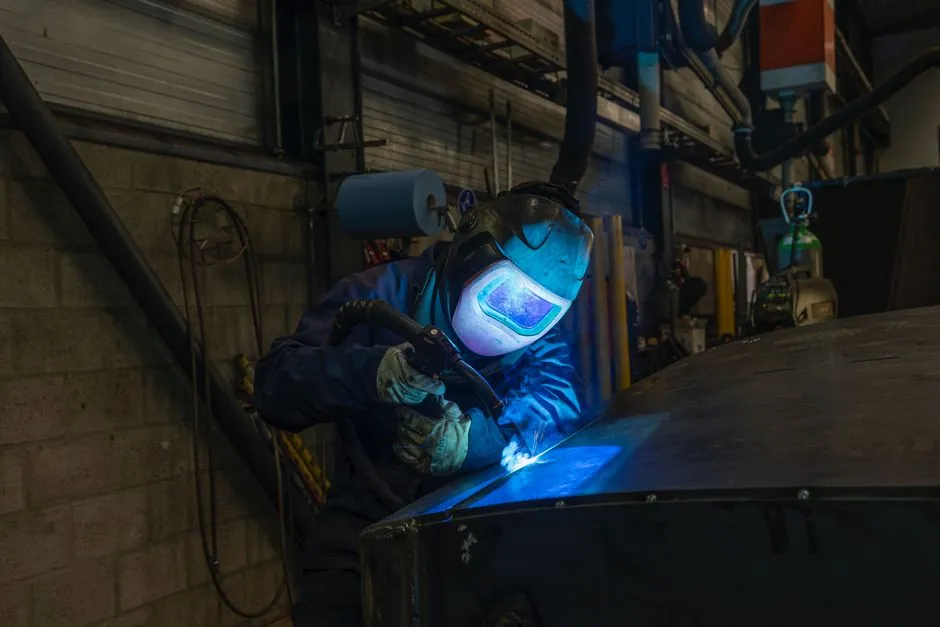
Interior finishing demands stud diameters typically ranging from M3 to M10, with capacitor-discharge (CD) units handling 0.5–3.0 mm base-metal gauges and drawn-arc systems covering thicker structural plates above 6 mm, per industrial equipment guidance [S1].
The core decision is substrate thickness and stud-alloy match: CD welds complete in 1–10 ms with minimal heat input for galvanized, zinc-coated, or thin stainless panels, while drawn-arc delivers deeper fusion for shear connectors embedded in steel framing [S1]. Finishing crews fitting HVAC duct hangers, ceiling-grid anchors, and architectural trim should default to CD unless the stud exceeds 10 mm or the base metal exceeds 3 mm [S2].
Capacitor-Discharge Units for Thin-Gauge Interior Panels
CD stud welders complete welds with minimal heat input, protecting delicate substrates such as galvanized steel, zinc-coated sheet, and thin stainless used in architectural interiors [S1]. Typical operating range covers 0.5–3.0 mm base-metal thickness with stud diameters from M3 to M8, making them the default for duct-hanger clips, ceiling-grid anchor points, and decorative trim where burn-through is a recurring failure mode.
Threaded CD weld studs replace rivets and bolted inserts for interior trim, underbody components, and heat shields, eliminating visible fasteners that interfere with finished surfaces [S2][S3]. For interior finishing crews working with pre-finished or powder-coated panels, CD prevents cosmetic distortion on the visible side because weld time is short enough that heat-affected zone stays below 1 mm in most thin-gauge applications [S1]. The full fusion bond also removes leak paths in HVAC plenums and dust-collection housings where rivets historically loosened under vibration [S1].
Drawn-Arc Systems for Structural Framing and Heavy Anchors
Drawn-arc stud welders deliver deep fusion for anchors, structural plates, shear connectors, and high-strength refractory hardware, supporting stud diameters from M6 up to M20 and base-metal thicknesses from 3 mm to 25+ mm [S1]. For interior finishing, drawn-arc applies to mezzanine framing attachment, partition-base anchors embedded in concrete-form deck, and stair-stringer connections where shear loading exceeds the capacity of a CD fusion zone.
Operators in tight or elevated positions benefit from compact drawn-arc units that allow remote weld completion while maintaining accurate fusion and stable output, which matters in ceiling cavities and mechanical rooms where mobility dictates productivity [S1].
Selection Criteria: Diameter, Thickness, Alloy, and Cycle Time
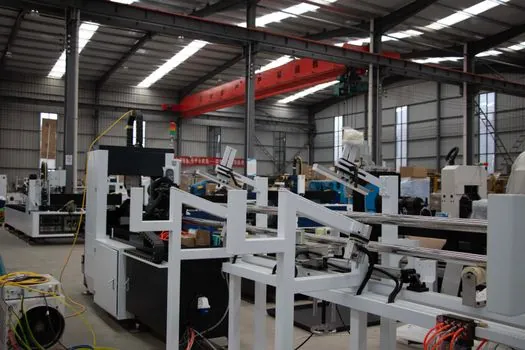
Selection hinges on four quantifiable inputs: stud diameter, base-metal thickness, stud alloy, and required weld cycles per shift. CD units with capacitor banks rated 50,000–200,000 microfarads typically support weld rates of 10–20 studs per minute on 0.8–2.0 mm galvanized sheet, while drawn-arc systems run 6–12 studs per minute on 6–12 mm structural plate [S1][S3].
Stud material selection directly affects equipment compatibility, weld penetration, corrosion resistance, and long-term stability, and the alloy must be matched to both the stud welder's polarity/charge profile and the base-metal coating [S1]. Mild steel studs (low-carbon 1010/1018) suit most interior HVAC and trim work; stainless 304/316 is specified for food-service, laboratory, and pool-deck interiors where chloride exposure is a factor. For zinc-rich galvanized substrates, a CD tip-ignition system with adjusted capacitance prevents porosity caused by zinc outgassing at the weld interface [S1]. Crews frequently cross from finishing into HVAC bracket work, where the demolition hammer selection guide for interior finishing covers the prep side of the same workflow.
Comparison: CD vs Drawn-Arc vs Manual Arc for Interior Work
On four decision criteria, CD leads the field for interior finishing: substrate thickness range 0.5–3.0 mm (CD) vs 3–25+ mm (drawn-arc); visible-side heat distortion minimal (CD) vs localized HAZ 5–10 mm (drawn-arc); stud diameter M3–M8 (CD) vs M6–M20 (drawn-arc); cycles per minute 10–20 (CD) vs 6–12 (drawn-arc) [S1].
Manual stick or MIG tack alternatives fall behind on consistency and cycle time: a skilled operator can run 4–6 manual tack welds per minute, and rework rates climb on thin-gauge coated sheet where porosity and burn-through dominate failure logs [S3]. The full fusion bond from either CD or drawn-arc stud welding removes the need for drilling, limits leak paths in pressure or dust-handling components, and preserves the structural integrity of vessels, plates, and fabricated assemblies [S1].
Failure Modes and Operational Limits
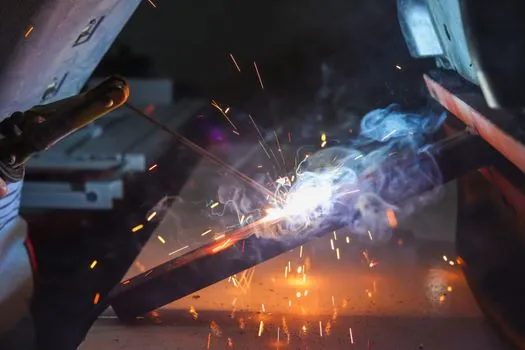
Burn-through is the dominant CD failure on substrates below 0.6 mm; reducing capacitance or switching to a smaller-diameter stud (M3 instead of M5) is the standard corrective path, and weld time must stay under 10 ms to keep the HAZ inside the coating layer [S1]. Porosity on galvanized sheet is the second-most-common defect, traced to zinc outgassing at the weld face when charge voltage is set above the alloy's ignition threshold.
For finishing crews scaling from a few hundred to several thousand welds per shift, the productivity math is decisive: 10–20 studs per minute on CD versus 4–6 manual tacks, with rework rates that drop from typical manual figures into low single-digit percentages once capacitor voltage and lift are dialed to the stud/base-metal combination [S1][S3]. Stud welding is a sister process to TIG welding where low heat input matters, and shares duty-cycle economics with arc welder fleets on structural scopes.
Equipment Sourcing and Vendor Lines
Industrial supply catalogs currently list dedicated stud-welding gun lines alongside general arc welder categories, with named series for IWT and Tru-Weld stud welders grouped under a stud-welding subcategory [S3]. Distributor catalogs also stock stud welding guns separately from MIG/TIG/stick lines, reflecting how the process sits between fastener installation and fusion welding in the workflow [S3].
For finishing contractors specifying equipment, the practical procurement path is to match the stud diameter and base-metal range to a CD or drawn-arc model series, then verify ferrule and chuck consumables are stocked locally to avoid downtime. Buyers evaluating broader welding fleets for finishing, HVAC, and structural scopes can use the stud welder advantages and limits reference to cross-check whether a unit covers both the trim and the structural ends of the job. The finishing material compatibility check (zinc, powder-coat, anodized layers) is the last gate before approving a stud-alloy/welder pairing on a finishing scope.
Trackable signals for the next 90 days: distributor restock patterns for CD capacitor banks rated above 100,000 microfarads (lead-time indicator for interior finishing demand), and any new ferrule-alloy SKUs from the IWT and Tru-Weld lines that target thin-gauge galvanized interior work [S3].