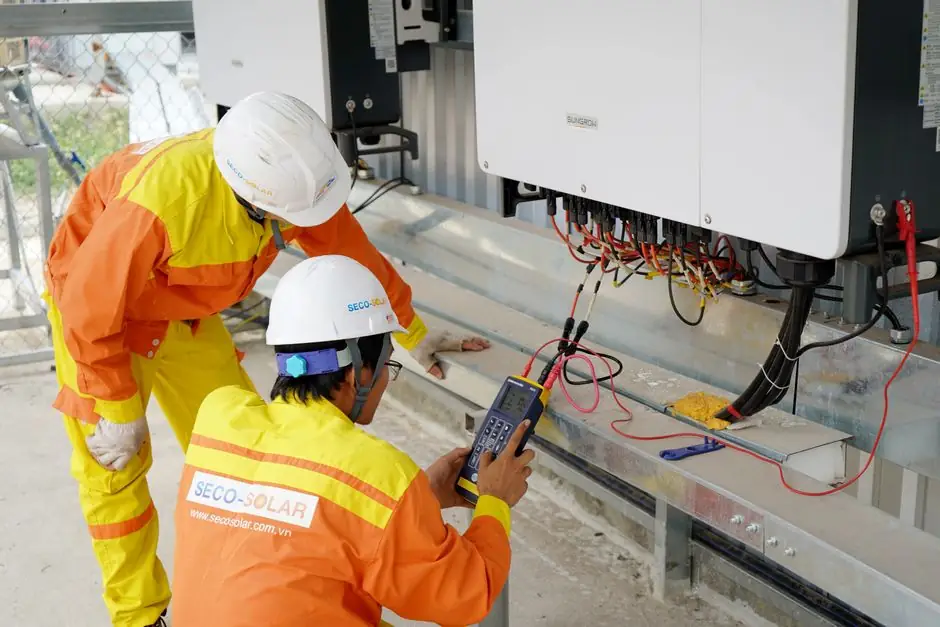
For electrical-installation embedment (conduit encasement, equipment-pad pour-back, cable-tray support, substation firewalls) the working envelope is small, the access is often indoor, and the power source is 208/230V single-phase rather than a 20 hp gas engine [S2]. Wet-mix swing-tube or peristaltic pumps delivering 4-21 m³/h from a 5.5-15 kW electric VFD-controlled drive are the dominant spec class, while dry-mix rotary gunite rigs remain relevant only where compressed air is already on site and material rebound tolerance is high [S1][S3].
Selection turns on three measurable numbers: peak output in m³/h, delivery-line diameter, and continuous full-load amp draw at 208V. The Putzmeister S5 EV, for example, draws 42 A at 208V single-phase for 1.5 ft³/min (44 lpm, roughly 2.7 m³/h) at 360 psi (25 bar) maximum, with a 260 ft (80 m) horizontal and 195 ft (60 m) vertical pumping distance from a 30-inch (762 mm) hopper [S2]. Anything larger for embedment work is over-specified; anything smaller cannot keep a 1.5-2 inch nozzle fed.
Pump Family vs Electrical-Installation Use Case
Hydraulic swing-tube pumps in 3-inch and 4-inch outlet trim cover the embedment window almost completely: 3-inch units deliver 2-8 yd³/h (1.5-6 m³/h) and 4-inch units deliver 9-20 yd³/h (7-15 m³/h), with pump discharge pressure ranging 750-2100 psi for harsh, low-slump mixes [S3]. The output-to-pressure relationship is linear in practice: higher pumping pressure extends vertical and horizontal reach but raises hose weight at the nozzle, so 2-inch delivery lines are the practical ceiling for hand-held nozzle work and 1.5-inch lines are used for the tightest embedment patches.
For indoor electrical-room work and live substation pads, the 360 psi / 80 m horizontal / 60 m vertical envelope of a single-phase 208/230V rotor/stator pump such as the Putzmeister S5 EV is the most commonly specified combination in North American retrofit work [S2]. Dry-mix rotary gunite machines (Aliva 252, Aliva 267) reach 4-21 m³/h but require a separate 10 cfm (283 L/min) air compressor at 2 hp (1.5 kW) on top of the main drive, which on indoor sites doubles the equipment count and the permit-to-work surface [S1][S2].
Decision Criteria: Output, Pressure, Power, and Line Diameter
The four criteria that decide a shotcrete machine on an electrical-installation job are output, pressure, power source, and delivery-line diameter. A swing-tube pump scores highest on pressure (up to 2100 psi) and on harsh-mix tolerance, but costs more and needs a trained operator [S3]. A rotor/stator pump scores highest on indoor suitability because it is electrically driven with VFD control from zero to full output, reversing capability, and lower noise, but its 25 bar (360 psi) ceiling limits vertical reach to about 60 m [S2].
Peristaltic or squeeze pumps sit between the two on pressure and output but tolerate abrasive mixes well, and a hydraulic ball-valve pump is the heavy-haul choice for large-diameter aggregate. For an embedment job under 6 m³/h, a 3-inch swing-tube pump or a 5.5 kW electric rotor/stator pump is the right size; for 7-15 m³/h, step up to a 4-inch swing-tube or a 15 kW S5-class electric; above 15 m³/h the spec shifts to a truck-mounted robotic unit such as the Aliva 302.1 with 2-9 m spray reach or a GEHP3515 electric-driven truck rig [S1][S5].
When NOT to Use a Shotcrete Machine
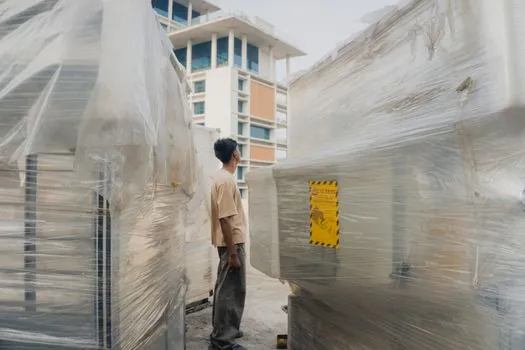
Below roughly 0.5 m³ of placement per shift, hand patching or pre-bagged repair mortar is faster and cheaper than mobilising any pump, because the setup, cleaning, and hose-flush time on a swing-tube or rotor/stator unit exceeds the placement time for that volume [S2]. For very small vertical encasements around conduit entries, a 110V portable such as the QuikShot (1.5 yd³/h, 25 bags in 15 minutes) covers the working envelope without a 42 A single-phase feed [S6].
Dry-mix gunite is also the wrong call on live switchgear rooms: the air-placed cloud defeats dust-collection planning, and rebound (typically 5-15% for dry-mix, 0-5% for wet-mix) is harder to contain indoors. ACI 506 and the American Shotcrete Association only recognise compressed-air placement of concrete as true shotcrete, so a low-velocity "spray-up" approach is not a substitute on a contract that calls for shotcrete by spec [S3].
Power, Cabling, and On-Site Coordination
The electrical side of the spec is non-trivial. The Putzmeister S5 EV draws 42 A continuous at 208V single-phase and 18 A at 208V for the TM 100 mixer, plus 12 A at 208V for the optional 2 hp (1.5 kW) on-board air compressor at 10 cfm (283 L/min) [S2]. A 20 hp (15 kW) gas TM 100 mixer trades amp draw for exhaust and is therefore barred from most indoor electrical-room scopes by site safety rules.
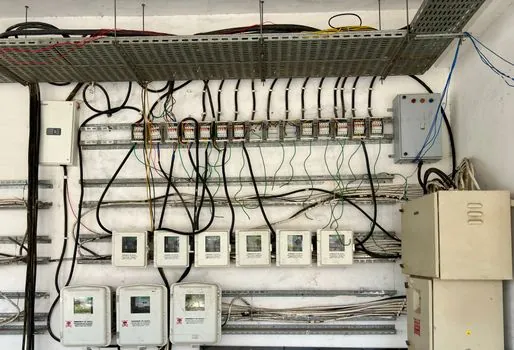
For wet-mix truck rigs in the 7-15 m³/h class, the spec sheet shows three-phase 380/400V on the larger carrier-driven hydraulic units, with the GEHP3515 being the all-electric variant that drops the diesel auxiliary and is preferred on indoor or emissions-restricted substation builds [S5]. This is where the electrical automation panel on the machine matters: VFD infinite control from zero to full output, reversing to relieve line pressure, and a sealed control box for the swing-tube proximity-switch logic all sit on the same feed that the low-voltage distribution cabinet supplies, and they have to be coordinated with the explosion-proof electrical classification of the surrounding room when the embedment is inside a battery or transformer bay.
Limitations, Failure Modes, and Acceptance Checks
Nozzle-side failure modes cluster around three symptoms: surging, plug-back, and excessive rebound. Surging on a swing-tube pump usually means the outlet is too large for the hose, and the cure is to step down from a 4-inch pump to a 3-inch pump rather than to slow the stroke, because slowing the stroke overwhelms the nozzleman with intermittent flow [S3]. Plug-back in a rotor/stator pump points to a worn stator (typical life 500-1000 hours for abrasive mixes) and is the standard "replace, do not repair" call. Excessive rebound (above 15% on dry-mix, above 5% on wet-mix) is almost always a water-content or accelerator-dosing problem, not a machine problem, and is corrected at the nozzle [S1][S3].
Acceptance checks before hand-off: verify pump discharge pressure reaches the rated 360 psi (S5-class) or the rated 750-2100 psi (swing-tube) on a water test, confirm 2-inch or 1.5-inch line is in use, measure continuous amp draw on the electrical measurement logging instrument against the nameplate, and confirm VFD ramp from zero to full output without stall. A wet-mix unit that will not hold 25 bar at 44 lpm is not ready for production; a dry-mix rig without a working 10 cfm compressor and a calibrated pre-dampener (such as the Multicrete integral Aliva + Predampener frame) is not ready either [S1][S2].
Standards and Sourcing Notes
ACI 506 is the governing North American reference for shotcrete, and the American Shotcrete Association's definition (air placement of concrete at high velocity) is the line that separates shotcrete from low-velocity "spray-up" [S3]. For European projects, EN 14487 (sprayed concrete) and EN 14488 (testing) cover composition and strength verification, and the fire monitor classification of the cured material is the relevant substation-firewall property when the embedment is fire-rated. Manufacturer documentation in this segment is the primary public source for output-vs-power curves: the Putzmeister S5 series spec sheet (2022) gives the 360 psi, 5.5 kW electric, 42 A at 208V baseline used above [S2]; the Multicrete Aliva 252 and Aliva 267 data give the 4-21 m³/h air-driven envelope and the raise-robot 1.5-6 m shaft range [S1]; the Gengli product line gives the equivalent Chinese-market model codes (GYP-90C hydraulic wet, GEHP3515 electric-driven truck rig, GHP4025 crawler robotic) for cross-reference on Asia-built equipment [S5].
For a tighter spec build on adjacent tooling, see the stud welder selection map for electrical installation, which covers the stud-welding side of equipment-pad embedment, and the electroslag pressure welder column-work spec for rebar-embedment columns that the shotcrete pour-back then encases. Underground routing of the same delivery line is covered in the sander spec map for tunnel construction, where 80 m horizontal pumping is the same constraint class.