
A handheld laser distance meter typically reaches 0.05–50 m on a single target, with models like the Fluke 414D rated to 50 m (165 ft) and the budget WHLD20 OEM unit capped at 20 m [S3][S6]. A total station is a theodolite-paired EDM with typical range 1,000–5,000 m to a single prism and 200–1,000 m reflectorless, with angular readouts to 1″–5″ and 2 mm + 2 ppm distance accuracy on the better survey-grade units.
Both products are routinely stocked by the same Chinese export-trading houses, which list "Total Station, Theodolite, GPS, Auto Level, Handheld GPS, Laser Distance Meter" as parallel catalog lines [S4]. The shared supplier base hides a real spec gap: one is a hand-tool, the other is a survey instrument. The 2026 selection problem is knowing where each one ends and the other starts.
Operating Principle and Sensor Path
A laser distance meter usually runs time-of-flight or phase-shift on a continuous-wave laser diode, with TI reference designs converting "light-to-bits" over nanosecond-scale timing windows [S5]. Johnson Level's LDM100 ships as a portable, LCD-displayed, metric-format unit, designed for one-handed point-and-shoot use [S1]. A total station pairs that same EDM core with a horizontal/vertical angular encoder, a sighting telescope, and an on-board computer that records slope distance, Hz, V angle and computes coordinates.
The angular encoder is the line that separates a distance meter from a total station. Without angles, you have a scalar distance. With angles, you have a 3-D point and a traverse. The OEM meter SKUs in China confirm this floor: the WHLD20 is sold as an OEM-branded 20 m unit at US$25–30 per piece in 500-piece lots, far below any surveying-grade total station [S6].
Range, Accuracy and Beam Class
Range is the first spec gate. The Fluke 414D lands at 50 m as a stocking retail SKU, and a 20 m OEM meter is the typical low end [S3][S6]. A 1″ survey total station reaches 3,000–5,000 m to a single prism under standard atmospheric conditions, with reflectorless modes falling to a few hundred metres on bright surfaces.
Accuracy follows the same ratio. Mid-range handheld meters quote ±1.5 mm to ±3.0 mm; the better units push ±1.0 mm. Total stations hit 2 mm + 2 ppm on slope distance and 1″–2″ on angle, which is roughly an order of magnitude tighter at 1 km than any hand-held meter could deliver. Laser class also matters: most hand-held meters are Class 2 (≤1 mW CW, visible 400–700 nm); a laser level used on the same site can be Class 3R or 3B, so the on-site PPE envelope differs even if the source wavelengths look similar.
Who Should Use Which
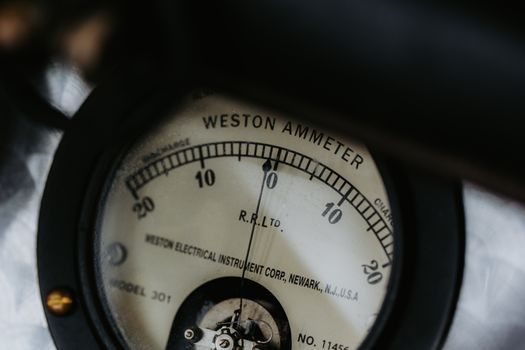
For interior fit-out, room-by-room takeoffs, ceiling heights, façade diagonals, MEP rough-in and short façade checks, the laser distance meter is the right tool. It is one-person, two-button, belt-clip work; a Fluke 414D class unit covers everything up to a 50 m wall run [S3]. Adding a Pythagoras / area / volume mode covers most BIM as-built tasks without needing a tripod.
For boundary surveys, topographic mapping, control networks, setting-out, machine guidance and any task that needs coordinates rather than scalar distances, a total station is mandatory. The same Shanghai trading houses that ship the hand-held meters also list total stations, theodolites and auto levels side-by-side because the buying audience is different: the hand-tool SKU goes to electricians and site foremen, the total station goes to licensed survey crews [S4].
Comparison: Decision Criteria Across Both Tools
Lining the two against the criteria that actually drive a 2026 purchase order, the spec bands are clear. Range: 0.05–50 m handheld vs 1,000–5,000 m prism / 200–1,000 m reflectorless on a total station. Distance accuracy: ±1–3 mm handheld vs 2 mm + 2 ppm survey-grade. Angular output: none on a hand-held meter vs 1″–5″ on a total station. Operator skill: any tradesperson with a quick-start card vs a trained surveyor running traverse adjustment. Unit cost at 500-piece OEM: roughly US$25–30 for a 20 m meter [S6] vs thousands of US dollars for a total station, even on the Chinese export channels.
Weight and power also split the field. A 20 m or 50 m hand-held meter runs on two AA cells and weighs 100–200 g; a motorised total station needs an internal Li-ion pack rated for 6–20 hours and a tripod plus prism pole. When site logistics are tight, that battery / tripod line often decides the choice as much as the range does.
Use Cases Where the Wrong Pick Costs Real Money

Three failure modes show up repeatedly on 2025–2026 job sites. First, using a hand-held meter to set out a building grid: the 50 m ceiling is fine, but without an angle you still need a string line or a second operator with another meter, which doubles the crew cost. Second, using a total station for an interior fit-out where a 30 m shot on a whiteboard is the only measurement: the survey crew's day rate burns the budget before lunch. Third, ignoring laser class — running a Class 3R laser level or a reflectorless total station in a live public space without the 5 m × 5 m exclusion zone and the on-beam eye protection, which is a documented NIOSH/ANSI Z136 hazard pattern. [S1]
On a procurement level, the same Chinese OEM channels now ship laser distance meters as commodity SKUs (Nantong GAIDE M&E, Weihua Meter and similar factories list them as a top-three product line alongside laser levels and cordless tools) [S2]. That commodity supply means the hand-held meter can be specified by spec sheet, not by brand, for non-critical tasks. Total stations, by contrast, are still bought on brand, service network and firmware — see, for example, the way VFD vs servo drive selection is dominated by control-loop behaviour, not by raw cost.
Standards, Calibration and Field Discipline
Two standards families dominate. Hand-held laser distance meters normally reference IEC 60825-1 for laser safety classification and a manufacturer-stated accuracy spec verified on a known baseline at 10–30 m. Total stations reference ISO 17123 (accuracy test procedures for geodetic instruments) and the same IEC 60825-1 family, with Class 3R visible laser being the usual working beam. Site crews should re-baseline both tools on a certified baseline range before each major project; the 2 mm + 2 ppm headline only holds if the prism constant and the atmospheric pressure / temperature input are correct. [S2]
A second discipline point: HART or Foundation Fieldbus stack questions are irrelevant here, but a laser distance sensor used on a fixed industrial line is a different SKU family from the hand-held meter — fixed sensors run 0.1–10 m, output 4–20 mA or IO-Link, and live in the industrial-instrument channel, not the hand-tool channel. Mixing the two on a purchase order is a common 2026 specification error.
Selection Checklist for a 2026 Spec Sheet
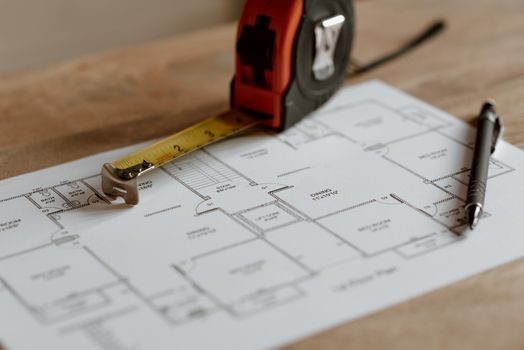
Lock the spec sheet on five gates. (1) Maximum single-shot range required, with a 1.5× safety margin so the tool is not run at its absolute ceiling. (2) Distance accuracy band: ±1.5 mm is fine for room takeoffs, 2 mm + 2 ppm is the floor for setting-out. (3) Angle requirement: if yes, total station; if no, hand-held meter. (4) Laser class and on-site PPE plan, written into the safety file. (5) Service and calibration: for total stations, that means a regional dealer with a calibration baseline; for hand-held meters, that means a 12-month replacement policy and a unit cost low enough (US$25–30 at OEM lots) to be expendable [S6].
On procurement rhythm, 2026 export catalogues continue to bundle the two tool families under one trading-company roof, so a single RFQ can cover hand-held meters, total stations, theodolites and GPS in one shipment [S4]. The trade-off to watch: bundled orders from a trading company carry no calibration certificate for the survey-grade line — the buyer must request an ISO 17123 test report per unit, or arrange a regional calibration lab pass before site issue.
Two trackable signals for the next buying cycle. Watch for OEM-meter SKUs crossing 100 m range at sub-US$50 price points, which would re-open long-range hand-held use cases currently owned by total stations. And watch for robotic / scanning total stations dropping below the US$5,000 line on Chinese export channels, which would compress the total-station / hand-held-meter spec gap even further. Either shift changes the 2026 selection matrix shown above.