
If you are quoting a laser tracker in mid-2026, the short answer is this: a 6DoF interferometer-based tracker such as the API Radian Plus or Radian Core — which folds the control box, temperature compensation, tilt sensor and battery into the head [S2] — is the default for shop-floor large-volume metrology, and most serious buyers will spend 80,000–200,000 USD on a complete kit [S1].
Use this guide to separate the four decisions that actually drive cost: laser measurement principle, accuracy class, probing accessory (SMR / T-Mac / T-Probe), and software/ecosystem lock-in. Every paragraph below maps to one of those gates, so an engineering manager or metrology lead can hand the checklist to procurement without rewriting it.
Definition and Scope: What a Laser Tracker Is, and What It Is Not
A laser tracker is a portable coordinate measuring system that locks onto a target (spherically mounted retroreflector, or SMR) and reports 3D point coordinates to a controller, typically with an absolute distance meter (ADM) and an interferometer (IFM) on the same beam [S1]. The instrument has no relation to a laser level, which is a self-leveling line/point generator for layout and is documented separately in the laser level encyclopedia entry. The right mental model is a portable, robotic CMM that you can wheel to a turbine, a fuselage jig or a wind-turbine hub, not a 2D layout beam.
Trackers are usually deployed in six industries: aerospace assembly and tool calibration, heavy-machining alignment (turbines, generators, ship propeller shafts), large-scale fabrication metrology (tanks, pressure vessels, ship blocks), on-machine tool calibration, wind-energy blade and hub measurement, and field service/reverse engineering of large parts [S1]. For sub-meter parts, a fixed CMM, an articulated arm or a structured-light scanner is almost always cheaper per point than a tracker; for parts or assemblies where the working volume exceeds roughly 6 m on a side, the tracker wins on reach and flexibility [S1].
Selection Criteria: The Four Gates That Drive a 2026 Quote
Every laser-tracker quote in 2026 collapses onto four engineering decisions: measurement principle, accuracy class, probe/inertial accessory, and software + probe ecosystem. Buyers who skip one of these gates end up with either a 30,000 USD system that cannot reach their working volume, or a 250,000 USD system they only use 20% of. [S1]
Gate 1 — Measurement principle. Two-beam interferometer trackers with an ADM co-located on the same laser head remain the dominant choice for sub-100 µm volumetric accuracy, and 2026 product lines such as the API Radian series fold the controller, temperature compensation, tilt sensor and battery into a single wireless head [S2]. Pure ADM-only systems exist and are cheaper, but they trade away the sub-ppm distance resolution of the interferometer. The phrase "laser tracker" in most industrial buying portals refers to the interferometer-class instrument; if you are cross-shopping a 1D laser level or a 2D laser profiler, you are in a different product category and the selection math is unrelated.
Gate 2 — Accuracy class. The 2026 commercial range sits roughly between ±15 µm + 6 µm/m (premium class, e.g. Radian Plus) and ±50 µm + 10 µm/m (entry class), with a 20–30% accuracy premium for systems that hold their spec over the full working volume rather than at a single test length [S1]. A buyer should always require the manufacturer's volumetric accuracy in µm + µm/m at a stated distance (commonly 2.5 m, 5 m and the maximum range), and should reject any datasheet that quotes a 0 m distance figure with no distance-proportional term.
Gate 3 — Probe and active target. Passive SMRs are the cheapest way to measure, but any 6DoF pose measurement requires an active target such as a T-Mac (camera-tracked active target) or T-Probe (handheld wireless probe), and the cost of one active probe often equals 20–35% of a bare tracker quote. Tilt-compensated measurement, in which the tracker reads a built-in inclination sensor as part of every shot, is now standard on the API Radian Plus and Core and is one of the headline ergonomic changes versus older two-piece trackers [S2].
Gate 4 — Software and ecosystem. Most 2026 trackers ship with vendor-proprietary software (SpatialAnalyzer, SA Suite, PolyWorks, etc.) and the probe ecosystem is locked to that software. Interchangeable probe protocols and open ASCII point streams exist, but the buyer should plan on vendor lock-in for at least the active-probe workflow. The same ecosystem question is also why the laser-tracker buying decision is rarely a 1-vendor RFQ; it is closer to a 2-vendor bake-off over a 2-week pilot rental.
Who a Laser Tracker Is For — and Who It Is Not For
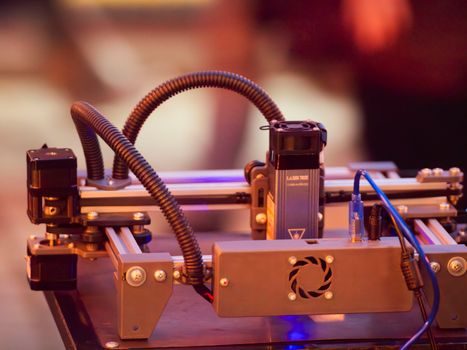
A laser tracker is for the team that already has a 6DoF measurement problem, not the team that thinks it might have one. The classic fits are: an aerospace tooling group aligning a fuselage jig, a heavy-machining shop commissioning a horizontal boring mill or a turbine, a wind-blade manufacturer verifying root-flange geometry, and a field-service crew reverse-engineering a marine propeller shaft on dry dock [S1]. These teams already have a metrology-trained operator and a CAD model in a known format, and the tracker pays for itself in months by replacing mechanical sighting bars and theodolite jigs.
It is not for the team whose largest part is under 1 m, whose required uncertainty is below 5 µm, or whose volume is below roughly 100 measurement points per shift. For those cases a fixed CMM, an articulated arm or a structured-light scanner will deliver the same answer at a fraction of the price. The borderline case is a job shop quoting its first large-part alignment: the cheapest path in 2026 is almost always a 2-week tracker rental with a trained operator, not a capital purchase, and most metrology vendors (including API's distributor channel) support that rental model on the Radian line [S2].
Comparing the Main 2026 Options on Decision Criteria
Across the 2026 vendor catalog, the practical landscape narrows to three systems you will be quoted against: the API Radian Plus (premium accuracy, integrated head), the API Radian Core (entry-tier Radian with most of the same ergonomics, lower accuracy class), and one of the Leica Absolute Tracker / FARO Vantage equivalents that you will see on the same RFQ [S1][S2]. All three are interferometer-class 6DoF trackers, all three support active T-Mac and T-Probe workflows, and all three support a wireless or single-cable head.
The decision criteria, in priority order, are: (1) Volumetric accuracy at your working distance — anything worse than ±30 µm + 8 µm/m at 10 m rules a system out for tight-tolerance tooling; (2) Active-probe workflow — confirm the vendor's T-Mac equivalent supports the camera-tracked 6DoF pose you need, and confirm tilt-compensated shots are first-class; (3) Ergonomics — integrated-head designs (control box, tilt sensor, battery in the head) cut setup time by 20–40% versus two-piece designs, per the API Radian Plus/Core product description [S2]; (4) Software and probe lock-in — total cost of ownership over five years is often 1.5× to 2× the bare tracker price once you include probes, software seats, calibration and training [S1].
Concretely, a 2026 quote for an integrated-head interferometer tracker (Radian-class) with one T-Mac, one T-Probe, SpatialAnalyzer seat, annual calibration and 3 days of training will land in the 120,000–200,000 USD band; a no-frills entry-class tracker with passive SMR only will land in the 60,000–90,000 USD band; and a refurbished or used tracker with a single probe is widely available in the 25,000–50,000 USD band for buyers who can accept an older spec sheet [S1].
Real Use Cases From 2026 Case-Study Reporting

Two 2026 case studies from the API Metrology newsroom illustrate the working envelope. In one, an API Radian laser tracker was used to verify locating-pin positions against CAD and to guide real-time adjustment on an assembly line, with the case study noting the value of live deviation feedback versus a post-process report [S4]. In a second case study, a 10,000-ton rotary reaction furnace — built in sections and joined on site — was measured, aligned and installed with an API Radian laser tracker, with the article highlighting that the body's sectional construction left very little room for accumulated alignment error [S4].
The common pattern: the tracker is the only instrument that can reach the working volume, deliver µm-class distance accuracy, and feed live numbers back to a fitter or welder who is adjusting the part in real time. In a separate category of work, a laser marker handles permanent part identification and a laser screed handles concrete floor flatness — neither is interchangeable with a tracker, and confusing the three is a common first-time buyer mistake.
Limitations, Constraints and Common Failure Modes
The 2026 catalog is honest about tracker limits: every tracker is line-of-sight, every tracker needs a stable mount or nest, and every tracker's accuracy spec degrades outside its calibrated working volume. Wireless integrated heads (Radian Plus/Core) cut the cable-trip hazard, but the head is still a precision opto-mechanical instrument and should be treated as such [S2]. Tilt-compensated shots are powerful, but they assume the inclination sensor is calibrated and that the operator understands the difference between the tracker's reported 1σ accuracy and the part's accumulated 3σ uncertainty over a multi-station network.
Common 2026 failure modes buyers should price in: (1) probe-to-probe handover errors when stitching networks together, mitigated by laser-tracker-only network adjustment software; (2) thermal drift over long measurements, mitigated by the temperature compensation now bundled into the head [S2]; (3) hidden cost of annual calibration, typically 5–10% of the tracker price per year; (4) under-spec'd SMR nests for high-volume production, where a motorized SMR nest is the right answer; (5) software seat inflation, where a second seat costs more than a second operator's annual salary. None of these are deal-breakers, but each one is a line item that an inexperienced buyer misses on the first RFQ.
Sourcing, Standards and Trackable Signals
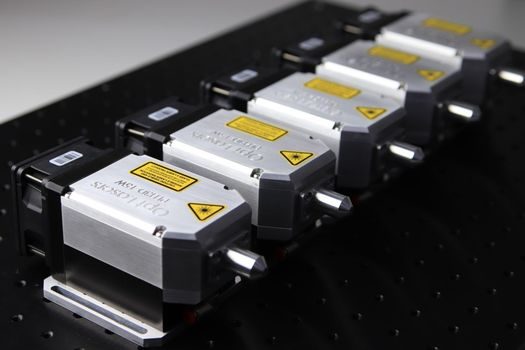
There is no single ISO or ASME standard that "certifies" a laser tracker the way ASME B89.1.12 (or its regional equivalents) does for a fixed CMM, and 2026 buyers should expect each vendor to publish a self-declared accuracy statement traceable to a documented test procedure [S1]. The pragmatic sourcing signals in 2026 are: a published volumetric accuracy in µm + µm/m at named distances, an ADM/IFM pair or a justified ADM-only architecture, an integrated tilt sensor with tilt-compensated shot mode, an active 6DoF probe family (T-Mac / T-Probe class), and a documented rental program with on-site training.