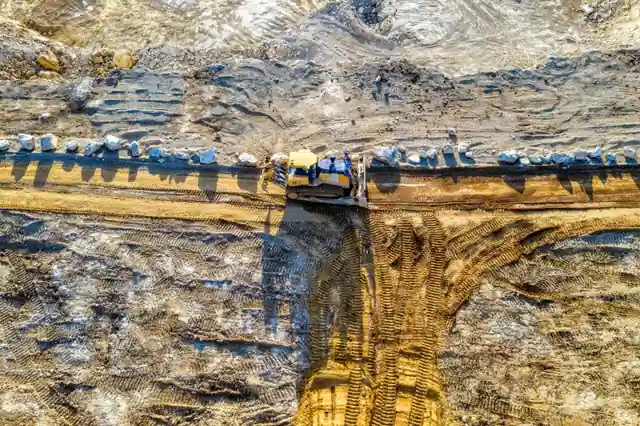
On Wirtgen's LEVEL PRO system fitted to the W 210i, the controller continually compares actual milling depth against the preset target and can mix cable, hydraulic cylinder, sonic, slope, laser, sonic-ski and multiplex sensors on one machine [S2].
The trade-off is real: laser-grade sensors read an optical reference plane and need a clear sightline plus a stringline or rotating laser emitter, while sonic-grade sensors measure the time-of-flight of an acoustic pulse to the existing pavement and need a representative reference footprint but no emitter [S2][S6].
What Each Sensor Family Actually Measures
Sonic-grade sensors fire an acoustic pulse at the surface ahead of the cutter and time the echo return; the LEVEL PRO controller uses that height as the depth reference [S2]. Equipment World described the broader category as contact or non-contact grade control that senses the height of material to be cut and sends a signal back to the machine to correct it [S6].
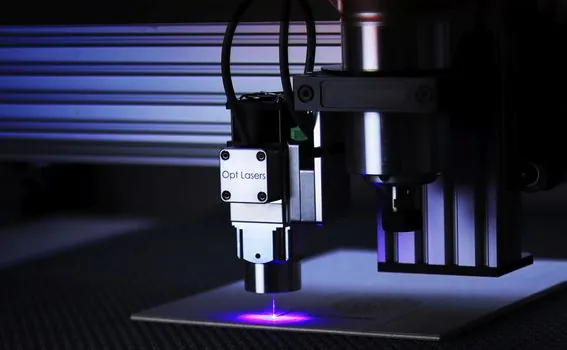
Laser-grade sensors, often arranged as a laser ski across the front of the cold milling machine, read a rotating laser plane emitted by a standalone transmitter; each sensor reports its height below the plane, and the controller averages those readings against the target depth [S2]. Variable depth milling then averages high and low spots so the milled surface is truer to grade, which Topcon credits with a smoother road and a longer projected lifespan [S1].
Decision Criteria: Where Each Sensor Wins
Sonic-grade sensors are robust against airborne dust and stray light, and they need no external transmitter, which makes them attractive on jobs where setting up a laser plane is impractical [S2][S6]. A multi-sensor sonic-ski arrangement also gives the machine a wider reference footprint so it averages out localised ruts and patched areas instead of chasing them.
Laser-grade sensors give a tighter absolute reference because every sensor in the ski reads the same plane, and they are unaffected by soft, wet or freshly milled asphalt whose acoustic impedance can confuse a sonic reading [S2][S3]. Mico Equipment notes that the minute depth control achieved on modern cold planers, even on sloping surfaces, depends on GPS or laser-guided movements rather than on acoustic averaging [S3].
Side-by-Side Comparison: Laser vs Sonic Grade
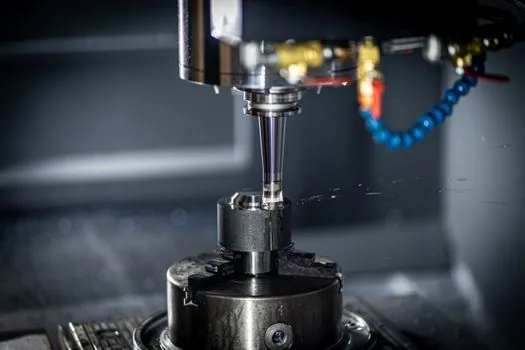
Reference method: laser-grade reads an external rotating laser plane; sonic-grade reads an acoustic time-of-flight to the in-place pavement [S2]. External hardware: laser needs a transmitter set up and re-set on each move; sonic needs no emitter but is sensitive to material type and surface texture [S2][S6]. Sensitivity to jobsite conditions: laser is degraded by fog, heavy dust and physical obstruction of the beam, while sonic is degraded by soft asphalt, standing water, loose RAP and excessive dust, which can absorb or scatter the pulse [S6]. Best use: laser is preferred for corridor paving, airport runways and stringline-driven variable depth work, and sonic is preferred for spot milling, urban patches and jobs where no stringline is feasible [S1][S2][S3].
Sensor Fusion and Multiplex Options
LEVEL PRO is explicitly designed to combine multiple sensor types on one machine, so laser and sonic skis are not always an either/or choice [S2]. Construction Equipment reports that all four North American cold milling machine manufacturers, Astec's Roadtec, BOMAG, Caterpillar and Wirtgen, accept third-party machine control systems, which means Topcon-style 3D millimeter GPS and total-station solutions can sit on top of the factory leveling hardware [S4].
On a 3D job, an active total station tracks the cold planer position and the on-board controller verifies elevation and slope against the design model, which is how Wirtgen was able to "cut to the digital models" and still respect the 47,000-ton, 60-hour milling window at Oakland International [S2][S4]. That Oakland project used W 210i machines with 7 ft. 3 in. wide drums and three adjustable drum speeds, removing 3.5-in.-minus RAP in continuously varying depths [S2].
Limits, Failure Modes and Trade-Offs
Even when the depth controller is doing its job, milling results can drift if the wear parts that touch the pavement are wrong: worn teeth, loose holders, an unbalanced drum, dragging skids or a failing scraper blade all look like a depth-control problem but are mechanical, not sensor, faults [S5]. Equipment World makes the same point from the other direction: grade control is only one input, and a control system can only correct against the reference the sensor actually sees [S6].
Wirtgen caps the W 210i's full milling depth at 13 in. with three selectable engine speeds, so even perfect laser or sonic feedback cannot pull more material than the drum geometry allows [S2]. Sonic sensors also average the area under their footprint, so on a severely rutted pavement the controller will tend to bridge across ruts rather than trace them; laser skis driven from an external plane do not have that bias [S2][S6].
Selection Guidance by Use Case
For airport runways, highway mainline and any job driven by a 3D design model, choose a laser-ski or 3D total-station / GNSS solution backed by sonic as a secondary averaging reference, since absolute accuracy against the design model is the controlling requirement [S1][S2][S4]. For municipal spot milling, utility-cut patching and small urban projects with no stringline, sonic-grade sensors are the more practical primary reference, because no setup crew is needed and the sensor handles the broken-up surface well [S2][S3][S6].
For deep variable-depth work, confirm that the chosen sensor pair still lets the controller average high and low spots the way Topcon describes, since that averaging is what extends pavement life, not the raw depth number itself [S1]. The cold milling machine category page covers the broader mechanical envelope (drum widths, engine speeds, working depth) that any sensor choice has to fit inside.
Standards and Sourcing Discipline
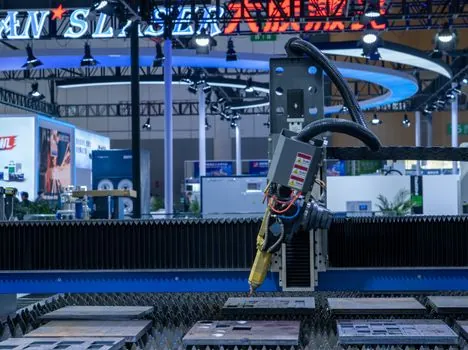
There is no single ISO or ASTM standard that mandates laser over sonic (or vice versa) for cold milling depth control; machine-level performance is governed by manufacturer leveling systems such as Wirtgen's LEVEL PRO, and on 3D jobs the design model is the controlling reference [S2][S4]. Treat any vendor claim of "millimeter accuracy" as a 3D-millimeter-GPS or total-station statement, not a sensor-spec statement, since sonic and laser skis both have wider inherent footprints than that [S1][S4].
Trackable signals to watch over the next 12 months: (1) Wirtgen and the other three North American OEMs continuing to widen third-party machine-control acceptance, which keeps pushing 3D GNSS and total-station depth control below the 1 cm band; (2) more sonic-ski averaging channels on compact and mid-size cold planers, since Mico Equipment's July 2025 buyer guidance still describes minute depth control as GPS- or laser-guided rather than as a default sonic capability [S3][S4].