
Modern large cold milling machines can swap milling drum assemblies between 2.2 m, 2.5 m, and 3.8 m working widths inside a single shift, with the Wirtgen MCS (Multiple Cutting System) cited as enabling "particularly fast" changes versus a full drum swap [S2].
The shift is driven by contractors who run one prime mover across multiple jobs in a week, where hauling a second machine costs more than the downtime of a drum change. Drum life still anchors the economics: an asphalt milling drum is rated for roughly 3,000 working hours, or about 2 years of typical operation [S3].
What a "drum change" actually means in 2026 spec sheets
Three terms get used interchangeably in the field, but they are not the same job. A milling drum is the bare rotating cylinder with bit holders; a milling drum assembly includes the drum, housing, drive coupling, and side scrapers; a cutter system swap is the same assembly with a different tool spacing or profile bolted in [S1].
Wirtgen's MCS groups three working widths (7 ft 3 in / 2.2 m, 8 ft 2 in / 2.5 m, and 12 ft 6 in / 3.8 m) onto a single chassis so the operator can change cutting width without rigging a new machine, with the W250Fi the current large-class model that ships with this option [S2]. The Flexible Cutter System (FCS) covers a parallel need on compact and small mills, letting the contractor swap drums with different tool spacings (e.g., LA15 at 15 mm pitch versus an LA3 micro-fine at 3 mm) to match surface finish requirements without leaving the chassis [S1].
How long the swap actually takes
Wirtgen literature stops short of publishing a hard hour count for the MCS drum swap, but the 2019 Heavy Equipment Guide feature documents a 30-year productivity shift from "mill for an hour or two, then work on the machine for an hour" to a ratio where planned machine downtime is the minority of the working day [S5]. On a W250Fi-class machine, the MCS drum assembly change is described qualitatively as "rapid" and "particularly fast" relative to a full drum swap, with the system designed for in-shift width changes [S2].
Industry guidance from Callape's milling best-practice note frames the operational value differently: contractors buy a multi-width machine "to achieve multiple cutting widths with the same machine," accepting the changeover time as the trade-off against running a second machine on a different job [S4]. For the FCS small-mill range, the swap is mechanical (slide-out drum housing, bolt-on new drum), and the changeover window is dominated by hydraulic line reconnection and tooth inspection rather than crane time [S1].
Tool spacing, milling depth, and width matrix
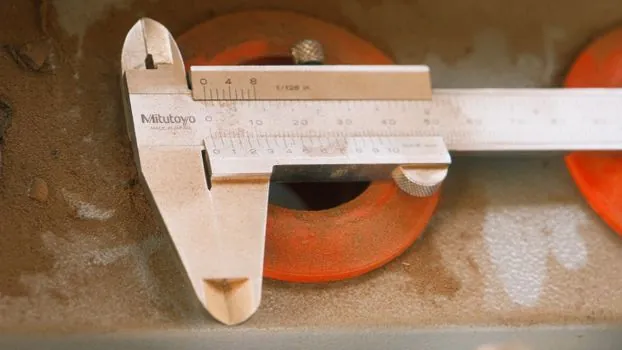
The Wirtgen drum catalog for compact and large mills maps each drum to a working depth ceiling and a tool-spacing band, and this is the spec a contractor cross-checks before booking a swap [S1]:
ECO cutter: up to 350 mm depth, 20 to 25 mm tool spacing, for high-volume removal and concrete jobs. Standard milling drum: up to 350 mm depth, 12 to 18 mm tool spacing, the universal default. Fine milling drum: up to 80 mm depth, 8 to 10 mm tool spacing, for surface texture and skid resistance work. Micro-fine milling drum: up to 30 mm depth, 3 to 6 mm tool spacing, used for thin-layer surface prep and lane-marking removal [S1].
Small-mill drums (LA15 at 15 mm, LA3 at 3 mm, LA4 FB500 at 4 mm with a 500 mm width for water-channel cuts) cover the trenching and detail end of the same matrix [S1]. A swap between a 2.2 m standard drum and a 3.8 m MCS drum on the same prime mover is a working-width change, not a profile change, and that is the swap the MCS hardware is engineered to compress.
Who the multi-width setup is built for, and who should skip it
The MCS three-width setup is for contractors running large-class machines (W220XFi, W250Fi) on jobs that shift between full-lane removal (2.2 m), airport or wide-cut work (3.8 m), and urban mainline milling (2.5 m) inside a single week, and where the cost of demobilizing a second machine exceeds the cost of a drum swap [S2]. It is also a fit for rental fleets where end-users do not know the next job's width at purchase time [S4].
It is not a fit for a single-application owner-operator who runs the same 2.0 m urban cut year-round. In that case, the extra MCS assembly (capital cost, plus the storage and handling kit) sits unused, and a single drum with a 3,000-hour rebuild cycle is the cheaper answer [S3]. The FCS compact-mill system targets the same logic at smaller scale: a milling and paving contractor who toggles between 12 mm standard cuts and 6 mm micro-fine prep in the same week is the buyer; a curb-and-gutter crew running one drum for a season is not [S1].
Operating cost of the drum, not just the swap
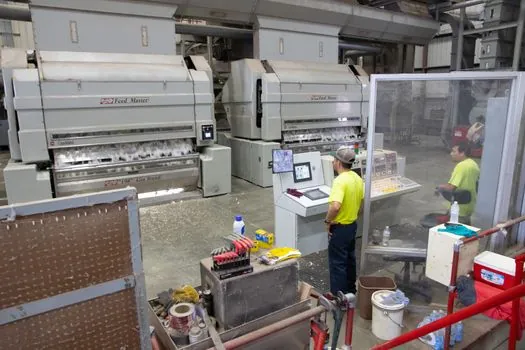
A new milling drum assembly lists in a $30,000 to $100,000 USD band, with the cost driven by working width, tool count, and whether it ships as a bare drum or as a full MCS-matched assembly [S3]. At a 3,000-hour design life, that puts the depreciation floor in the $10 to $33 per operating hour band before picks, fuel, and operator enter the picture.
Tooth (cutting pick) consumption is the other variable, and the 2019 productivity feature flagged three selectable drum speeds as the OEM lever for cutting pick life, letting the operator hold tooth consumption down while keeping high productive effort on harder material [S5]. When the drum swap is on the schedule, a picks-and-drum life audit, including per-shift tool count, is the cheapest diagnostic for whether a contractor is actually saving money on the multi-width setup, or just moving the wear cost around.
Standards, safety, and signals worth tracking
Drum and pick changes fall under general machine guarding and lockout-tagout practice for mobile construction equipment; bit retention torque, drum balance, and hydraulic isolation are OEM-specified rather than governed by a single ISO or EN number. The relevant operational standard to track on the output side is the milled-surface grade tolerance, which is the variable the LEVEL PRO ACTIVE leveling system on the W250Fi is built to control, paired with the dual grade, grade-and-slope, stringline, laser, and GPS sensing options documented in the 2019 productivity feature [S2][S5].
For a milling contractor evaluating a drum-swap program, three signals are worth tracking through 2026: published MCS and FCS changeover times on the next Wirtgen large-class data sheets, third-party confirmation of the 3,000-hour drum life on micro-fine (3 to 6 mm) drums versus standard drums, and rental-fleet utilization data on multi-width machines in the 2.2 to 3.8 m band, since that is the metric that decides whether the swap system earns its keep on a given job. For depth-control decisions inside the same workflow, laser versus sonic grade sensor selection for cold milling is the most relevant adjacent reference.