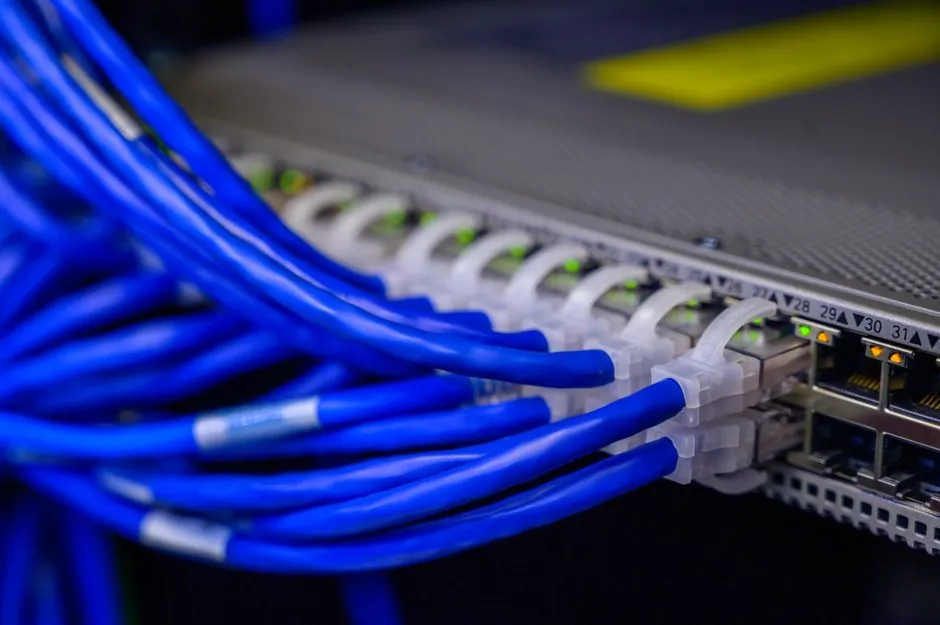
A standard LC fiber patch cable is not a shielded cable. The LC connector is a 1.25 mm ferrule-based optical plug with a positive latch, and the cord itself is buffered glass surrounded by aramid yarn and a PVC or LSZH jacket, with no metallic shield layer anywhere in the construction [S1][S4].
Shielding in copper data cabling refers to a foil wrap, braid, or both, around twisted pairs to reject EMI and RFI [S3]. Fiber carries photons through glass, so the entire EMI/RFI problem that foil and braid exist to solve does not apply to the optical path; "shielded" simply does not exist as a property of a stock LC patch cord [S8].
How "Shielded Cable" Is Actually Defined
Shielded Ethernet cables, abbreviated STP, are built with a layer of foil, braided wire, or a combination of both surrounding the internal twisted pairs, and their purpose is specifically to reduce electromagnetic interference and radio frequency interference [S3]. Typical construction uses an overall foil wrap, an S/FTP braid-plus-foil arrangement, or F/UTP foil-only, with the shield terminated to a metallic connector shell that bonds to chassis ground at the patch panel and the switch [S3][S5]. The principle is that a continuous, properly grounded shield must run end to end, otherwise the shield stops being a shield and behaves as an antenna instead [S2].
By that definition, an LC patch cord does not qualify. The only "metal" associated with some LC cords is a small spring or latching mechanism inside the duplex housing, and that part is a mechanical spring, not an electrical shield [S1][S6].
What an LC Patch Cable Is Built From
The LC connector uses a 1.25 mm ferrule, which is half the size of the more common SC connector's 2.5 mm ferrule, and the assembly is fully pull-proof thanks to a positive latch [S1]. A conventional 3 m LC/UPC duplex OM4 patch cord is typically buffered glass fiber, aramid yarn strength members, and a PVC or LSZH outer jacket, more than adequate for indoor structured cabling but not engineered for crush, moisture, or chemical exposure [S4].
Two common variants extend the basic LC form factor for harsher duty. Armored LC patch cords wrap the buffered fiber in a stainless-steel or corrugated metal tube plus an additional jacket, which is what most readers mean when they say "ruggedized LC" [S4][S6]. IP67/IP68 waterproof LC cords add sealed threaded couplings and gaskets rated to 1 m or more of water immersion for outdoor and washdown-area deployment [S4]. See the shielded cable reference page for the criteria these two constructions are often (incorrectly) lumped under.
EMI Behavior: Why the Question Comes Up
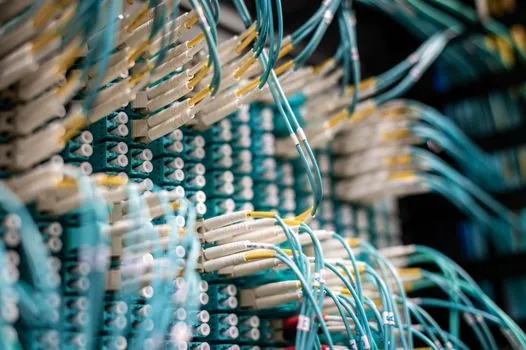
Fiber is specified specifically because it ignores EMI. Glass conductors do not pick up radiated electrical noise the way twisted copper pairs do, which is why industrial, substation, and 5G front-haul links default to fiber when the noise environment would otherwise force a heavy copper-shield solution [S4][S5]. The fiber cable assembly itself still has to survive its physical environment, but the signal-integrity argument that drives shielding in copper does not exist here [S3].
Where the question "is the LC cable shielded?" gets a "yes" answer in practice, it is usually one of three things being confused: an armored LC patch cord (metal tube for crush protection, not EMI shielding), a metallic-armored fiber with a drain wire (the drain grounds the armor, not a data pair), or a hybrid fiber-and-copper cable that bundles LC fiber with a copper power or shield conductor under one jacket [S4][S6]. None of these make the LC link "shielded" in the copper-cable sense; the fiber channel is still EMI-immune because it is optical.
Selection Criteria: When to Spend on Armored vs Standard LC
Pick the construction against the threats in the route, not against a generic "shielded vs unshielded" checkbox. Standard LC is correct for data-center patching, telco rooms, and any climate-controlled indoor run with no crush or moisture risk [S1][S4]. Armored LC is correct for industrial trays, factory floors, mining, marine topside, and anywhere the cable can be stepped on, rolled over, or chewed by rodents, because the steel armor delivers mechanical protection the optical fiber needs to survive [S4][S6].
IP67/IP68 LC is correct for outdoor enclosures, 5G rooftop small cells connecting RRU to BBU, food-and-beverage washdown, and coastal surveillance, where water and dust ingress are the failure modes that matter more than crush [S4]. FTTA-grade LC assemblies are a subset of IP67/IP68 designed and Vendor-tested for cellular front-haul, with low-PIM performance and pull resistance sized for tower-top mating cycles. The closest equivalent selection trade-off in copper land is whether to spend on F/UTP, S/FTP, or unshielded UTP at all, which only matters if the medium is conductive in the first place [S2][S3].
Comparison: LC Variants on the Four Decisions That Matter
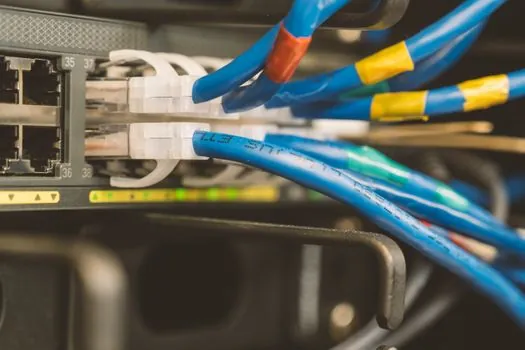
On EMI rejection, standard LC and armored LC score identically (complete, because the medium is glass), while copper STP/F/UTP scores only as well as its shield is continuous and grounded [S2][S3]. On crush and rodent resistance, standard LC scores low, armored LC scores high because of the stainless-steel helix, and IP67/IP68 LC scores moderate to high depending on the outer jacket material [S4][S6]. On water and dust, standard LC has no rating, armored LC is typically indoor-only, and IP67/IP68 LC is rated to 1 m or more of temporary immersion with mated connectors [S4].
On cost and lead time, standard LC is the cheapest and ships same-week from most distributors, armored LC is roughly 2x to 4x the price with a 1 to 3 week lead time, and IP67/IP68 LC is the most expensive with the longest lead time because of the sealed coupling hardware [S4]. For comparison criteria on adjacent industrial cabling choices, the cable condition monitoring methods update for 2026 walks through how plant teams grade copper health in noisy environments, a context where the fiber-versus-shielded-copper trade-off actually plays out.
Standards, Sourcing, and What to Put on a Spec
TIA-568 and IEC 61754 cover fiber connector intermateability, with LC defined in IEC 61754-20, which is the document that pins the 1.25 mm ferrule and the latch geometry cited in vendor literature [S1]. IEC 60529 is the IP rating system that IP67/IP68 LC assemblies are tested against for dust and water ingress, with IP67 rated to 1 m immersion for 30 minutes and IP68 rated to continuous immersion at depths agreed between Vendor and user [S4]. Armored fiber patch cords do not have a single governing IEC product standard in the way copper Cat6A does; Vendor specifications govern the steel tube, jacket, and crush rating in newtons per centimeter.
On the spec sheet, write "LC/UPC duplex, OM4, 50/125 µm, LSZH jacket" for standard indoor runs, add "armored, stainless-steel helix, 1000 N crush minimum" for industrial trays, and add "IP67 mated, 1 m immersion rated per IEC 60529" for outdoor or washdown runs [S4][S6]. Do not write "shielded LC" because the term has no agreed meaning in fiber cabling and will be interpreted differently by each bidder, which is exactly how copper-shielded jobs go wrong when the shield is broken at one patch point [S2].
Limitations and Common Misreads
Two practical limits are worth flagging. First, an LC link that runs alongside a high-current power cable in the same tray can still fail if the armor is not bonded at both ends, because the armor carries induced currents that need a ground path, not a shield, to dissipate [S2][S4]. Second, the optical connector itself can be contaminated by dust or oil that blocks the light path, which looks like a "cable problem" but is actually an end-face cleaning problem, so specifying the cable alone is not enough; pair the spec with IEC 61300-3-35 end-face inspection [S4].
A common misread is to assume armored equals shielded equals EMI-safe. Armored LC is mechanically tough and may carry a drain wire, but the data path is still optical, and the armor's job is to keep the glass alive, not to reject EMI on a copper pair [S3][S6]. A second misread is to assume fiber needs no spec discipline in noisy plants, when in fact the connector, the patch panel, the enclosure, and the routing distance all still have to be chosen together to hit the loss budget the optics require [S4].
For engineers mapping out adjacent plant-cabling decisions, the generative AI for PLC code reference is a useful contrast: it is a different kind of "wiring" decision but follows the same pattern of spec-first, validate-then-deploy. Final spec to put on a purchase order: state the LC ferrule size (1.25 mm), the fiber type (OM3/OM4 multimode or OS2 single-mode), the jacket, the armor if any, and the IP rating if any, and leave the word "shielded" out of the line item unless the cable also contains a copper element you intend to ground.
Spec-level background on the components involved: carbon fiber, and concrete fiber.