A complete lead screw total cost of ownership analysis must capture acquisition, lubrication, energy, and unscheduled downtime over a 5-10 year service window, with the purchase price typically representing only 15-30% of lifetime cost.
For process engineers sizing motion axes, a lead screw is the lowest-cost linear actuator family available, but the 5-year cost of ownership is dominated by wear, lubrication cadence, and the hidden labour of unplanned stoppages. This article breaks down the cost drivers, ranks the spec gates that move the bill of materials, and lays out a 5-year buy map for buyers comparing rolled thread, ground thread, and preloaded ball screw alternatives.
What TCO Actually Means for a Lead Screw Assembly
Total cost of ownership in motion control extends well past the unit price, a pattern that mirrors established TCO frameworks across industrial assets [S2]. In a desktop-IT context, Gartner reported a five-year per-workstation cost of $44,250 with capital hardware and software representing only about 25% of that figure, the remaining 75% sitting in management, support, and operational overhead [S2]. The same ratio holds loosely in lead screw assemblies: the nut and the screw are the visible cost, but the lubricant, the seals, the guarding, the alignment labour, and the lost production from a single thread failure are the silent majority. A ball screw alternative drives the capex up but typically pulls the 5-year opex down when the duty cycle exceeds 50% and the stroke runs hot.
For a precision axis, the 5-year cost stack normally breaks into four buckets: hardware acquisition (15-30%), scheduled lubrication and re-lube labour (10-20%), wear-part replacement (20-35%, mostly the nut), and unscheduled downtime plus scrap (25-40%, the line-stoppage penalty). Buyers who only quote the unit price to procurement typically under-fund the operating envelope by a factor of three to five, a problem documented generically for industrial assets where acquisition is described as a fraction of lifetime expenses [S6] (2025-08).
Cost Driver Ranking: What Actually Moves the Bill
The first cost driver is thread form and accuracy class. Rolled ACME lead screws in the C7-C10 accuracy band are the cheapest lead screw construction, typically 3-5x lower unit cost than a comparable C5 ground screw and 8-12x lower than a C3 rolled ball screw of the same diameter and lead. The second driver is nut material: bronze nuts on carbon-steel screws are the standard low-cost pairing and run well at sub-50% duty; plastic or polymer nuts (often PTFE-blend or nylon) drop the unit cost further but cap continuous service temperature near 80-90 °C and wear faster above 1 m/s. The third driver is lubrication regime: a once-per-shift oil film on a bronze-nut ACME axis can stretch service life 2-3x compared with a dry-running polymer nut, but the labour for re-lube has to be priced in. [S2]
The fourth driver is seal and wiper selection. Felt wipers on a dust-exposed axis cost almost nothing at the BOM level but cut contamination-driven failures by half on a shop-floor linear axis. The fifth driver is end-bearing and support: a screw supported only at the ends with deep-groove ball bearings will deflect and whip above a critical speed that scales inversely with the square of the unsupported length, which silently forces a larger-diameter screw and a higher capex than the original calculation assumed. The sixth driver, often missed, is alignment: a 0.1 mm/m parallelism error between screw and slide doubles the side-load on the nut and cuts the L10 life of an ACME thread by roughly half.
Selection Criteria: When Lead Screw Wins, When Ball Screw Wins

A lead screw is the right pick when the axis needs to hold position with the motor de-energised, runs at low duty cycle (under 20-30%), operates below 1 m/s, and tolerates 5-10 arc-min backlash. Self-locking geometry is the single biggest functional advantage: an ACME or square thread at low lead will back-drive only above a helix angle of roughly 6°, so a 5 mm lead on a 20 mm diameter screw remains statically self-locking and holds a vertical load without a brake. The screw conveyor and packaging industries rely on this property for vertical-form-fill-seal and lift applications where power-off holding is a safety requirement, not a convenience. [S5]
A ball screw is the right pick when the duty cycle climbs above 50%, the required life exceeds 5,000 hours at full load, the positioning repeatability must be inside 0.01 mm, or the axis must run above 60-80 RPM continuously. Ball screws trade the self-locking feature for 90-95% mechanical efficiency, which means a screw pump-class energy bill, but they also drop the input torque requirement by a factor of 3-5x at high lead, which can shrink the motor, the drive, and the gearbox. The TCO crossover typically sits between 30-50% duty cycle: below that, a lead screw wins on cost; above it, ball screw wins on energy plus downtime. Engineers who skip this crossover calculation almost always over-spec on one side or the other.
5-Year Buy Map: Unit Cost vs Total Cost of Ownership
The 5-year buy map splits into three cost bands. Band A, a rolled-thread ACME lead screw with bronze nut and manual re-lube, has the lowest capex (a typical 16 mm × 5 mm unit in the C7 class lands near $40-90 per metre of screw plus a bronze nut in the $20-60 range), but the 5-year TCO climbs fast when the axis runs hot or dirty because the nut has to be replaced every 12-24 months and the screw itself often needs re-truing or replacement at the 5-year mark. Band B, a ground-thread ACME lead screw in the C5 class, roughly doubles the unit cost but extends the nut service life to 3-5 years and reduces the side-load penalty, which makes it the right pick for mid-duty precision stages such as laboratory automation, optical benches, and light CNC Z-axes. Band C, a preloaded C7 ball screw with wipers and a centralised lube system, has the highest unit cost (often 8-15x the rolled ACME figure) but the lowest downtime and the lowest 5-year cost-per-hour in a 24/7 production environment. [S2]
For a single-axis comparison on three decision criteria, the trade-off looks like this. Initial unit cost: rolled ACME wins, followed by ground ACME, then ball screw. Mechanical efficiency at moderate speed: ball screw wins at 90%+, ground ACME sits near 40-55%, rolled ACME near 25-40%. Service interval on a clean axis: ball screw at 12-24 months between relube, ground ACME at 6-12 months, rolled ACME at 1-3 months if oiled. Position-hold with power off: rolled ACME wins, ground ACME wins, ball screw loses unless a brake is added (which itself adds cost and a failure mode). The cheapest part is almost never the cheapest axis, and a total station-style measurement of the installed axis alignment is the only way to know which side of the crossover the application sits on.
Operating Risks: Wear, Backlash, and Whipping Failure Modes
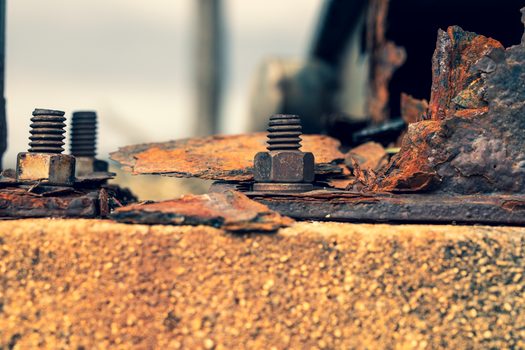
Three failure modes dominate lead screw TCO. The first is nut wear: bronze and polymer nuts lose their flank contact as the threads abrade, backlash grows past spec, and the axis starts to hunt. The second is screw wear: a starved or contaminated screw will gall, particularly on ACME threads operating above 1 m/s, and once a screw is galled it cannot be re-trued economically. The third is critical-speed whip: a screw driven above its first natural frequency bends, the nut binds, the drive faults out, and the part can fatigue in under an hour. Critical speed scales with the square of the unsupported length, so doubling the stroke roughly quarters the safe RPM, a relationship that forces a larger-diameter screw or an intermediate support bearing on any long-stroke axis. [S2]
Two operational habits cut these failure rates materially. The first is a sealed wiper on the nut housing; the second is a relube interval tracked in machine hours rather than calendar months, because a real duty cycle is the variable that drives wear, not the wall clock. Buyers who negotiate a 5-year service contract on a precision axis typically recover 40-60% of the contract cost in avoided downtime within the first two years, a pattern seen across industrial-asset TCO models [S6] (2025-08). For a deeper dive into the thread-form taxonomy, the lead screw types and classifications reference lays out the drive, self-lock, and material split in a single spec-first map.
Standards, Sourcing, and Procurement Gates
Lead screw sourcing leans on a small set of standards: ISO 3408 for ball screw geometry and accuracy classes, DIN 103 for trapezoidal thread geometry, and the JIS B1191 series for precision-grade ball screws. The accuracy class (C0 through C10 for ball screws, the equivalent lead-error band for ACME) is the single most expensive line item in the BOM, and buyers who accept a C7 class on a non-position-critical axis routinely save 30-50% of the screw-and-nut cost over a C3 spec. Procurement should also gate the quote on the matched bearing pair, the wiper kit, and the lubrication port, because suppliers often omit these and the missing items are what push the installer back to the OEM at a 2-3x list price. [S1]
The vendor TCO comparison data set is thin: most suppliers publish a unit price and a static-load rating but not a published life-versus-duty curve, so the 5-year cost has to be estimated from the duty cycle, the load, and the expected relube interval. The linear-actuator TCO literature tracks the same shape of cost stack as the lead screw, and the linear actuator TCO reference is a useful cross-check on the cost-driver ranking when the application can accept either a lead screw or a belt-driven actuator. Two trackable signals to watch over the next two quarters: (1) published 5-year service-life curves from at least two of the major ball-screw OEMs, which would let buyers shift from generic duty-cycle assumptions to vendor-specific TCO numbers; (2) wider availability of pre-engineered ACME lead screw modules with factory-set preload, which would compress the install labour line in the TCO stack.