Industry 4.0 spending in the global manufacturing sector continues to expand at a double-digit CAGR through 2026, with IIoT hardware, edge analytics, and digital-twin software absorbing the largest share of new capex, per the IndustryARC demand analysis published 2026-07 [S3]. For LED packagers and luminaire assemblers, the practical consequence is that greenfield SMT and chip-on-board (COB) lines are now specced end-to-end against data-backplane requirements, not just throughput.
LED-specific Industry 4.0 work is narrower than the generic factory narrative, but it is heavy on three measurable axes: optical inspection resolution, placement accuracy at 0201 metric chips, and the latency between an AOI reject event and the upstream pick-and-place corrective action. The Springer review of foundational Industry 4.0 technologies frames the architecture as cyber-physical systems, IoT, big-data analytics, and horizontal/vertical process integration [S2]. Translating that to an LED line means MES hooks on the die-bonder, the wire-bonder, the phosphor-dispense station, the reflow oven, and the final AOI tunnel, all writing to a common time-series schema.
Reference deployments and named adopters
Signify, ams Osram, and Cypress (the connected-LED and lighting-controls arm) appear consistently in 2024-2026 public references as visible Industry 4.0 reference sites for solid-state lighting production, and the McKinsey operations practice has documented Industry 4.0 adoption programmes with named electronics-sector leads through 2026 [S1]. A typical sign-of-life for a serious LED Industry 4.0 programme is a published OEE uplift in the 15-30% range inside 18 months of MES go-live, with AOI false-call rates dropping from a few percent to below 0.5% once defect-image libraries are reused across product families.
Mid-tier LED packagers (those running 50-200 MOCVD-equivalent wafer-start equivalents or 1-5 billion die per year) usually start with brownfield retrofits: adding IPC-CFX or OPC UA interfaces to legacy pick-and-place and reflow gear, then layering a vendor-neutral MES on top. The Springer survey notes that horizontal integration across the supply chain and vertical integration from field devices up to ERP remain the two open technical problems for most I4.0 programmes, not the absence of sensors [S2].
Selection criteria for LED-line digital upgrades
For an engineer shortlisting Industry 4.0 building blocks on an LED packaging line, four criteria are non-negotiable: (1) AOI pixel pitch at the smallest package, typically 5-10 µm for 0201 metric LED chips, (2) data-backplane interoperability, with OPC UA over TSN or IPC-CFX preferred over vendor-locked protocols, (3) edge-to-cloud latency budget under 100 ms for AOI-driven rework loops, and (4) cybersecurity posture, since ENISA has explicitly named cybersecurity as a key enabler of Industry 4.0 adoption [S2].
The 2026 market data shows that the global Industry 4.0 stack is being pulled by manufacturers rather than pushed by vendors, and adoption is no longer a "pilot problem" but a "scale-and-standards" problem [S3]. In practice that means buyers should write RFP language around data standards and lifecycle support, not around brand names. A useful sanity check is whether the MES can replay a single batch's full genealogy, from wafer lot to finished luminaire, with sub-second granularity, anything weaker will not survive a customer audit under AEC-Q102 or IEC 62031.
Comparative map: IIoT, digital twin, AI vision, additive
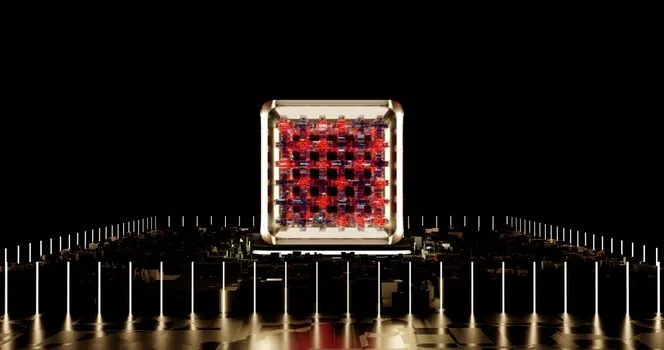
Lining the four most common Industry 4.0 building blocks against LED-line decision criteria gives a clearer selection picture. IIoT sensor retrofits score high on capex efficiency but low on standalone value, they are plumbing. Digital twin of the SMT line scores high on changeover and yield ramp, but requires a stable MES underneath. AI-driven AOI scores highest on false-call reduction and binning accuracy, the published gains in 2024-2025 deployments consistently sit in the 40-60% false-call reduction band. Additive or 3D-printed lighting components are the lowest maturity, mostly limited to heatsinks and optical housings today [S2].
The ENISA position, repeated in the Springer review, is that hyperconnected Industry 4.0 systems widen the attack surface and demand segmented networks, signed firmware, and IEC 62443-aligned zone/conduit models, a non-optional spec line for any 2026 LED factory commissioning [S2]. Buyers who skip this write themselves a remediation project within 24 months, usually triggered by a customer-side security questionnaire.
Use cases that are paying back in 2026
Three LED-specific use cases are clearly above the noise floor in 2026. Second, predictive maintenance on MOCVD and die-bonder vacuum stages, where vibration and pressure-sensor trend data cut unscheduled downtime by a measurable margin, see the generic instrumentation map at pressure sensor for the transducer side of that stack. Third, real-time energy and gas-flow tracking per oven, which doubles as a Scope 1/2 emissions data feed for CSRD reporting.
A useful pattern from the McKinsey operations blog is that the highest-ROI Industry 4.0 work focuses on a small set of process steps rather than a sweeping plant-wide digital twin, the "right focus" framing in the article's title [S1]. On an LED line that is usually die-bond, phosphor dispense, and final AOI. Anything outside those three is a 2027-or-later conversation.
Limitations and failure modes
The most common failure mode is data silos: each machine vendor exposes a different schema, and the MES turns into a translator instead of an orchestrator. The second is over-scoping: trying to digital-twin the entire factory before a single process step is instrumented end-to-end. The third is ignoring the cyber-physical safety boundary, an LED die-bonder moving at 50 kCPH is a real machine, and I4.0 retrofits must respect ISO 13849 and IEC 61508 functional-safety states, not just connect to Wi-Fi.
For plants with fewer than ~30 million die per month, the capex payback on a full Industry 4.0 stack is generally unattractive; those sites do better with targeted vision upgrades and selective flow meter or industrial valve retrofits on gas and coolant lines where the energy and reliability returns are concentrated. The Springer survey explicitly flags organisational and managerial challenges as a top adoption barrier, ahead of any single technology gap [S2], which lines up with what most LED plant managers report in 2025-2026.
Sourcing and standards checklist
For an LED Industry 4.0 specification in 2026, anchor the requirement set to: IEC 62443 for industrial cyber security, IEC 61508 / ISO 13849 for functional safety, OPC UA over TSN or IPC-CFX for the backplane, and IEC 62031 / AEC-Q102 for the LED-product-side compliance that the data must ultimately support. The IndustryARC demand analysis published 2026-07 confirms the broad market direction [S3], and the McKinsey operations practice continues to treat I4.0 as a sequenced, focus-driven programme rather than a single platform purchase [S1].
Track two signals over the next 6-12 months: (1) whether the next major MES release embeds IEC 62443 zone/conduit modelling by default, and (2) whether the next round of MOCVD tool OEM contracts start quoting OPC UA over TSN as a standard interface, rather than an option. Either shift will reset the LED-line spec map; neither has happened at scale as of 2026-08.
This topic is covered further in Hydraulic cylinder selection: bore, stroke, duty, and mounting rules.