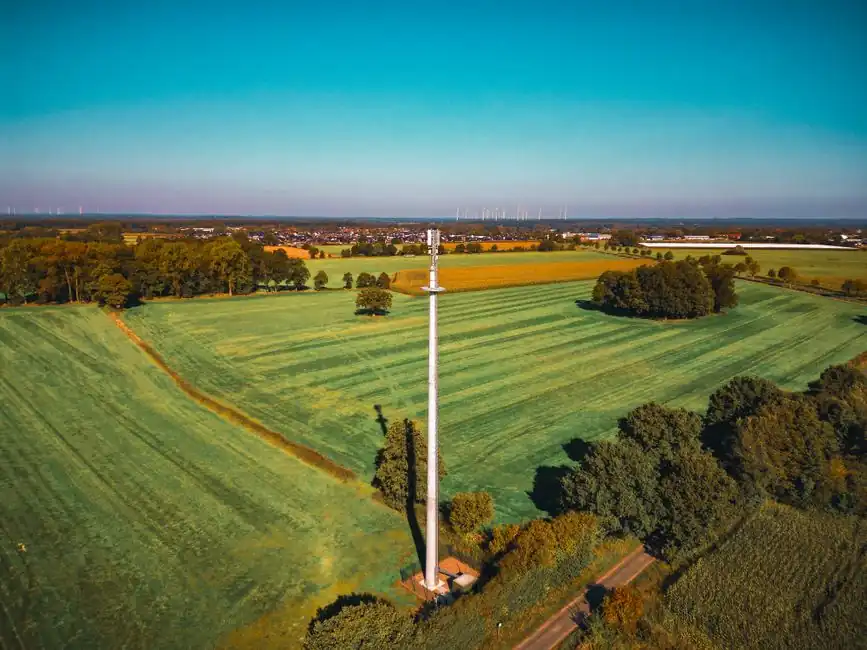
RF capacitance level transmitters are specified for liquids and homogeneous slurries whose dielectric constant is stable and above roughly 1.5, because the probe and the metallic vessel wall form a capacitor whose change with immersion is what the instrument reads [S3][S5].
Radar, guided-wave radar, hydrostatic, ultrasonic, and magnetostrictive level transmitters cover everything capacitance does not: oil, LPG, foam, steam, hot tanks, and sanitary hygienic service where 3-A and CIP/SIP rules forbid a conductive probe path [S1][S2].
How a capacitance level transmitter actually works
Earthmech describes the principle as a high-frequency sine-wave applied between the probe and the metallic vessel wall, with the resulting capacitance converted to a level-proportional 4-20 mA signal [S3]. Toshbro's Nivometer MLC 860 adds that performance is "not affected by the properties of the material such as conductivity, corrosiveness and viscosity," which is why it is sold for acid tanks via a full PTFE twin-rod probe and for WFI storage [S5].
The catch is buried in the same Toshbro datasheet: the dielectric constant has to be "stable." Foaming, oil layering, and emulsions shift the dielectric and break the linear calibration, so capacitance sits behind radar in any interface or emulsion duty [S5].
When capacitance wins: dielectric, cost, and probe length
Capacitance probes are unbeatable on conductive, aggressive, and slurry service because the rod can be PTFE, PFA, or 316L without a reference leg inside the tank [S3][S5]. Against a 26 GHz RIL405 radar at mid-2026 Direct Industry pricing, a typical MLC 860 RF capacitance transmitter with twin-rod probe lands at a fraction of the radar price [S1][S5].
Common AliExpress hydrostatic probes cover 0-2 m to 0-15 m for roughly US$13-71 with 4-20 mA, 0-10 V, 0-5 V, and RS485 outputs, which sets the budget baseline a capacitance spec has to beat on installed cost [S4].
Where capacitance fails: low dielectric, foam, and high temperature

Hydrocarbons with dielectric constants near 2.0, cryogenic LNG at ~1.5, and any service with steam, foam, or vapor return are the classic radar territory, and 80 GHz FMCW radar has largely taken over outdoor tank farms for that reason [S1]. The 2026 spec map for outdoor tank farms ranks 26 GHz vs 80 GHz radar as the default first choice when dielectric is low or variable, and the 80 GHz option is the one that resolves close-to-wall reflections and short measuring ranges on stilling wells.
A short verbatim from the Toshbro product page is worth keeping in your spec file: "The RF Capacitance Level Transmitter is ideally suited for level measurement of liquids and some slurries of homogeneous composition having a stable dielectric constant" [S5]. Any spec that drops "stable" or "homogeneous" is a red flag the supplier is overpromising.
Decision matrix: capacitance vs hydrostatic vs radar vs ultrasonic
Across four common decision criteria, the comparison is sharp. On low-dielectric service (oil, LNG, solvents), hydrostatic and ultrasonic fail, capacitance is marginal, and radar wins. On conductive, corrosive, or coating-prone service, capacitance wins because the probe can be fully PTFE and tolerate coating up to a few millimetres. On foam or steam, capacitance fails, hydrostatic fails when the condensate leg blocks, ultrasonic fails on foam, and radar still reads. On price, the AliExpress 4-20 mA hydrostatic at US$13-71 is the floor, the capacitance MLC 860 class is mid-range, and 80 GHz radar is the ceiling [S1][S4][S5].
If you are a capacitance level transmitter buyer, you are FOR a stable-dielectric, possibly conductive, possibly aggressive liquid in a metal tank where coating is moderate and budget is tight. You are NOT for interface measurement, oil-on-water, low-dielectric hydrocarbon, foam, or any hygienic service where the wetted parts list must be 3-A and the probe must survive CIP at 121 °C [S2][S5].
Field constraints engineers actually hit

Coating and build-up are the number-one reason capacitance probes fail in the field. RF admittance variants compensate for conductive coating, and for outdoor tank farms with that exact problem, the 2026 RF admittance switch spec map walks through the shield length and calibration tricks to keep the reading stable. [S5]
Sanitary service is the number-two trap. GlobalSpec's sanitary-rated transmitter index lists only devices whose wetted finish, seal geometry, and CIP/SIP rating match 3-A and EHEDG, and most capacitance probes are excluded because the long rod and cable gland cannot be cleaned in place [S2]. For adjacent instrumentation, the same logic drives magnetostrictive level transmitter selection on hygienic storage because the rigid stainless tube cleans without dead legs.
Sourcing and standards to pin on the datasheet
For hazardous-area builds, the datasheet should name ATEX 2014/34/EU category and IECEx certification scheme explicitly, with the IEC 60079-0 / IEC 60079-11 series called out for the probe electronics [S1][S3]. For sour service, NACE MR0175 applies to wetted metallics and is the right callout for any 316L probe going into oil and gas [S1]. Sanitary builds need 3-A 74- and EHEDG doc references on the same line, not buried in a brochure [S2].
For hydrostatic comparison, the differential pressure transmitter class follows the same hazardous-area and material rule set, so the procurement checklist can be shared across both spec sheets. Where process temperature pushes past the probe head rating, a high-temperature bracket or a remote-mounted head is the standard fix, and the same temperature-discipline thinking carries over to temperature transmitter selection in the same loop.
Trackable signals for the next spec cycle
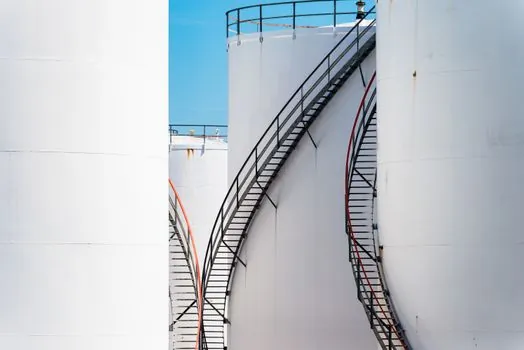
Watch the 80 GHz radar pricing on the RIL405 and equivalent mid-2026 product cards: the moment 80 GHz drops under roughly 1.5x the 26 GHz price, capacitance loses its last outdoor-tank-farm foothold [S1]. Also watch the AliExpress hydrostatic category for new RS485 + 4-20 mA dual-output models, because the listings are already standardising on 0-5 V, 0-10 V, 4-20 mA, and RS485 in the same probe at US$40-70 [S4].
Two trackable follow-ups: (1) whether Toshbro or a peer publishes a capacitance probe datasheet that explicitly quotes the dielectric-constant operating window (commonly εr ≈ 1.5 to 80 for general-purpose RF capacitance, with derating for coating) [S5]; (2) whether the next Earthmech brochure release revises the 316L vs PTFE probe temperature ceiling above 200 °C, which would extend capacitance into hot-oil and CIP return-line service that currently defaults to radar or pressure transmitter hydrostatic [S1][S3].
This topic is covered further in Outdoor Tank Farm Manometer Selection: Spec Map for 2026.