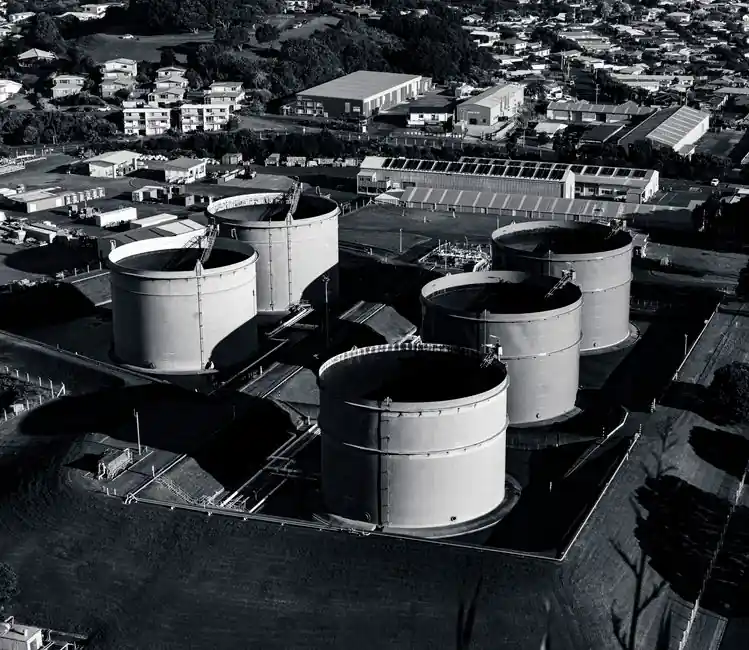
For atmospheric and low-pressure storage in outdoor tank farms, the spec window for 2026 collapses to four hard constraints: IP66 or IP6K9K enclosure, 316L stainless wetted parts (Hastelloy C276 or PTFE diaphragm for corrosive media), a measuring range set at 1.3x the maximum static head, and hazardous-area certification (ATEX 2014/34/EU or IECEx Zone 1) matched to the stored fluid class.
Selection should be treated as a decision matrix problem rather than a brand problem: rate each candidate manometer against ambient swing (typically -40 to +80 °C on an outdoor tank-farm skid), process connection size (1/2" NPT or DN15 flange), vibration exposure, and required accuracy class (1.0% to 2.5% FS for indication; 0.5% FS only when used as a local reference for a pressure transmitter check).
Range sizing and static-head headroom
Range must cover the maximum working pressure with at least 30% headroom and stay within the upper third of the dial at normal operating pressure, so that thermal expansion, pump surge, and water-hammer transients do not peg the bourdon. For a 4 m crude-oil tank with SG 0.86, the static head is roughly 0.35 bar; a 0 to 0.6 bar manometer reads at 58% of full scale at normal fill, leaving room for thermal expansion and pump-in pressure on the line [S2].
A selection matrix approach ranks the range, accuracy class, and ambient swing side by side: at -40 to +80 °C ambient with a 4 m water column, a 63 mm bourdon tube with 316L wetted parts covers the duty; a 100 mm case adds readability at the cost of larger standoff and bracket load. Operators routinely set the normal operating point at 25-75% of full scale to keep the bourdon in its elastic zone and avoid zero drift on cooldown.
Wetted material vs stored medium
316L stainless is the default for hydrocarbons, diesel, and lube oils; it tolerates up to roughly 200 ppm chloride at ambient and handles the vapour-space exposure seen on fixed-roof tanks. For methanol, MEG, amine solutions, and acidic water draws, specify a PTFE or EPDM diaphragm seal with Hastelloy C276 upper housing; the diaphragm isolates the bourdon from the process and absorbs temperature shocks before they reach the sensing element.
Differential manometers in tank container and IBC tank service typically run Hastelloy C276 or PTFE diaphragms when the carrier rotates between aggressive and benign loads. Avoid copper alloys (brass, bronze) on ammonia service and on any line carrying acetylene or H2S, because copper catalyses decomposition and stress-corrosion cracking. For high-purity solvent storage, electro-polished 316L with Ra ≤ 0.4 µm on the wetted path keeps extractables low and survives repeated CIP-100 steam cycles.
Enclosure, ambient, and IP rating
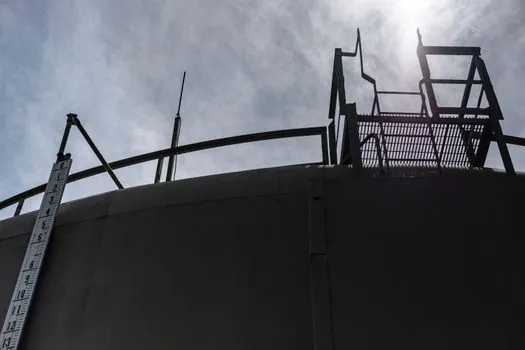
Outdoor tank-farm duty is IP66 minimum, with IP6K9K preferred on wash-down pads and on any gauge within reach of steam cleaning. The case should be die-cast aluminium with epoxy-polyester powder coating, or 316L stainless when the gauge sits inside a coastal or salt-spray zone. Ambient swing is the silent killer: a bourdon calibrated at 20 °C loses roughly 0.4% of full scale per 10 °C of temperature departure; over a -25 to +55 °C cycle that drifts the reading by about 3% FS if the case is not temperature-compensated.
Liquid filling (glycerine, silicone oil) is the standard fix for vibration and condensation, but it caps the case at roughly +80 °C ambient before the fill degrades; dry-case gauges with a baffle plate handle higher ambient at the cost of pointer jitter. For sun-exposed installations, a sun-shade hood and a white-painted case drop the case temperature by 10-15 °C in direct summer sun, which materially extends both the liquid fill and the elastomer seals on the bezel.
Explosive-atmosphere and compliance path
Class I Div 1 (NEC 500) and Zone 1 (IEC 60079 / ATEX 2014/34/EU) areas require the gauge to carry a matching Ex d IIB or IIC rating, with the nameplate stamping traceable to a notified body. ATEX 2014/34/EU places the manometer in equipment category 2 for Zone 1, meaning the housing must contain any internal ignition and survive a 1.5x overpressure burst test; IECEx follows the same IEC 60079-1 flameproof concept for cross-jurisdiction acceptance [S1].
For crude, naphtha, and gasoline tanks, IIC (hydrogen-class) is the safer label; IIB covers most hydrocarbon vapours. A flameproof case adds 2-4 kg and roughly 200-400 USD over a non-Ex equivalent, but the cost of retrofitting after an audit finding is typically 3-5x higher. ANSI/ASME B40.1 covers the accuracy grade and dial layout (1.0% and 2.5% FS are the common grades) and pairs with B40.100 on pressure gauge testing and calibration traceability.
Comparison: bourdon vs diaphragm-seal vs differential
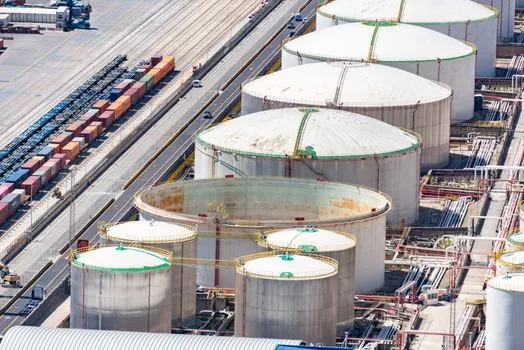
On a 4-axis comparison, the standard bourdon tube manometer (63-100 mm case, 316L wetted, IP66) wins on cost and simplicity, scoring 1.0% FS accuracy, 0-0.6 bar typical range, and ambient -25 to +60 °C with glycerine fill. The diaphragm-seal pattern (PTFE or Hastelloy diaphragm, 316L body) trades about 1.5x cost and 1.5% FS accuracy for chemical compatibility up to 200 °C process and the ability to handle viscous or polymerising media.
The differential pattern, used on tank-cleaning machine skids and on filter-status indication across two tank headers, adds a third chamber and a higher base price but delivers two simultaneous readings or a dp across a strainer, with 1.6% FS accuracy. Bourdon suits clean, non-corrosive service on atmospheric tanks; diaphragm-seal wins on chemical and temperature duty; differential earns its slot only when a second process variable is genuinely needed.
Who should NOT pick the cheapest bourdon
Cheap bourdon gauges with brass wetted parts should be excluded from any service carrying >50 ppm H2S, methanol, amine, or any chloride above 200 ppm at temperatures over 60 °C, because dezincification and stress-corrosion cracking fail the case within 12-24 months. They are also wrong for service where the operator needs a local reading traceable to better than 2.5% FS, since the calibration drift on a non-temperature-compensated bourdon is comparable to its accuracy class.
A 63 mm plastic-case gauge with IP54 is wrong for any outdoor tank-farm skid, regardless of how benign the service looks, because the case fails UV and water-ingress tests within one season. Where the local gauge backs up a flow meter or a level transmitter, a bourdon makes sense as a visual cross-check; where it is the only pressure indication on a pressurised line, step up to a 100 mm case with liquid filling and a calibration certificate.
Selection-matrix shortlist for 2026
Step 1, fix the duty: range, wetted material, Ex zone, ambient swing. Step 2, score 2-3 candidates against a Pugh matrix weighted 40% on wetted compatibility, 25% on accuracy, 20% on ambient, 15% on cost. Step 3, lock the shortlist to 316L bourdon for clean hydrocarbons, PTFE diaphragm-seal for methanol and amine, and differential pattern only when two simultaneous readings or a dp are real process needs. The outdoor radar level transmitter discussion covers the same ambient swing and IP rating on the level side and is worth pairing during the same specification review. [S2]
This topic is covered further in Ultrasonic vs Turbine Flowmeter: Liner Material Selection.