
Automotive-grade 3D LiDAR revenue is anchored at USD 1.8 billion in 2026, scaling to USD 10.31 billion by 2035 at a 21.4% CAGR, with Level 3+ ADAS and robotaxi programmes the dominant pull [S1]. The wider LiDAR sensor market, including surveying, robotics, and metrology, sits at USD 3.4 billion in 2026 at a 14.8% CAGR toward USD 9.0 billion by 2033 [S5]. Asia-Pacific captured 38.8% of 2025 revenue, the largest single regional share, and that mix is largely preserved through the 2026-2030 window [S5].
Volume is shifting from mechanical spinning units toward solid-state architectures, with MEMS-mirror, Flash, OPA, and VCSEL-based designs accounting for the bulk of OEM line-ups entering C-sample and SOP between 2026 and 2028 [S2][S3]. Per-vehicle sensor counts climb from one forward-looking unit in early L2+ programmes to two-to-four units once L3 highway pilot and urban L4 features activate, which roughly doubles addressable sensor volume per platform [S2].
Regional Demand Anchors, 2026-2030
China is the largest single-country market for solid-state LiDAR in 2026, sized at USD 1.2-1.5 billion and projected to reach USD 8.5-11.0 billion by 2035 at a 22-26% CAGR, with over 15 domestic vehicle models expected to ship factory-installed solid-state units by 2027, up from fewer than 5 in 2024 [S3]. Germany, the second largest European premium hub, is sized at EUR 180-220 million in 2026, scaling to EUR 1.2-1.6 billion by 2035 at a 22-26% CAGR, with L2/L2+ ADAS holding 55-60% of 2026 unit volume and L4 urban revenue crossing 30% of total by 2035 [S4].
The European Union bloc sits at USD 340-420 million in 2026, with automated emergency braking and pedestrian-detection systems using solid-state LiDAR projected to cover over 30% of new EU passenger car registrations by 2028, up from roughly 8% in 2024 [S2]. India, the United Kingdom, and Latin America trail at lower absolute bases but mirror the same architecture mix, with MEMS mirror-based units at 40-50% of 2026 sensor module shipments in India and growing aftermarket retrofit demand for commercial-vehicle safety upgrades in Germany at an estimated 8-12% of total unit volume by 2030 [S4][S7].
Architecture Comparison, 2026 Procurement Lens
MEMS-mirror solid-state LiDAR is the volume-default for L2/L2+ ADAS through 2028, with EU market share at 55-65% of solid-state architectures and German revenue share at 45-50% in 2026, dropping BOM cost toward USD 200-350 per unit by 2030 [S2][S4]. Flash LiDAR targets per-frame determinism and sub-50 m short-range with no moving parts, but its useful range is capped at roughly 50-100 m at current detector sensitivities, putting it in robotaxi corner-cases rather than highway forward-look [S5]. Optical phased array (OPA) silicon-photonics roadmaps are in pre-production sampling as of mid-2026, with widest near-term trajectory but no high-volume line yet [S5].
The engineering decision matrix for 2026-2030 sourcing looks like this: mechanical 360° wins on angular resolution and survey-grade accuracy but fails on vehicle-grade vibration and MTBF, MEMS wins on cost, size, and automotive vibration survival but loses on instantaneous FOV unless stacked, Flash wins on per-frame determinism and absence of motion artefacts and loses on range, OPA wins on the BOM roadmap and loses on near-term availability and beam-side-lobe control [S5]. A practical 2026 spec gate for an automotive Tier 1 is: AEC-Q102 qualified emitter, ISO 26262 ASIL-B or higher functional safety, Class 1 eye-safety per IEC 60825-1, and a documented path from current BOM cost toward sub-USD 200 module cost by 2028 [S1][S2][S5].
Wavelength, Component, and Cost Stack
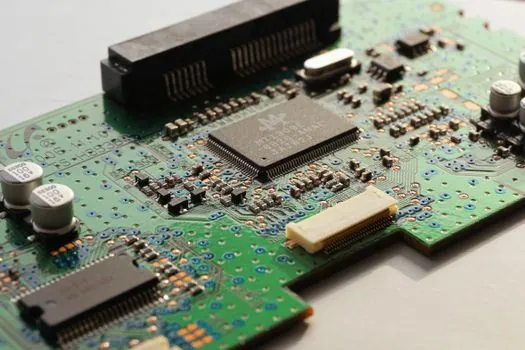
905 nm silicon-compatible emitters remain the automotive cost-default through 2026, with 1550 nm fibre-laser receivers reserved for highway forward-look and any application where retinal exposure limits dominate, tolerating higher eye-safe pulse energy and pushing detection range past 200 m [S5]. MarkWide's segmentation matches this: 1550-nanometre fibre lasers penetrate weather better for premium long-range stacks, while VCSEL arrays serve as the commodity short-to-mid-range option [S9]. Component sourcing is heavily Asia-concentrated, with over 70% of SPAD/SiPM detector, VCSEL array, and ASIC BOM value originating from Taiwan, South Korea, and the United States for both German and EU module assembly [S2][S4].
Qualification-grade wafer lead times for SPAD/SiPM and VCSEL arrays extended beyond 26 weeks in early 2026, with German integrators reporting 26-40 week waits for qualified components, constraining volume ramp schedules against fixed OEM SOP dates [S2][S4]. ASIC design and fab capacity is one of five named bottlenecks in the IndexBox regional reports, alongside mature SPAD/SiPM production, automotive-grade VCSEL supply at scale, long-duration environmental and reliability testing, and Tier 1 integration capacity [S2][S3][S4].
Functional Safety, Cybersecurity, and Type Approval
ISO 26262 functional safety certification at ASIL-B to ASIL-D is mandatory for automotive-grade LiDAR in EU programmes, and it adds 12-18 months to development cycles for new solid-state designs without a pre-certified reference platform [S2]. China adds ISO/SAE 21434 cybersecurity compliance on top, extending timelines by 18-24 months for smaller suppliers [S3]. Germany carries the same ISO/SAE 21434 burden plus UNECE type-approval uncertainty for L3/L4 systems, which raises non-recurring engineering cost per programme by an estimated 15-25% [S4].
Euro NCAP protocols, while voluntary, function as a de facto technology roadmap: achieving five-star safety ratings increasingly requires sensor suites that include solid-state LiDAR for vulnerable road user detection and automated emergency braking at higher speeds [S2]. The General Safety Regulation (GSR) in the EU and the equivalent C-NCAP 2025 protocols in China compress OEM adoption timelines by making AEB and ACC performance requirements effectively mandatory for top safety scores [S2][S3].
Application Sourcing Matrix, 2026-2030
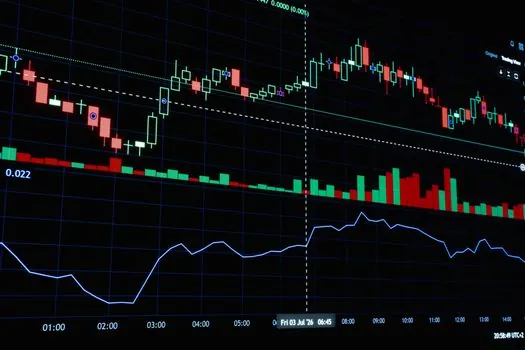
For a Tier 1 specifying a 2026 L2/L2+ ADAS forward-look sensor, the priority stack is: 905 nm emitter, MEMS-mirror scan, Class 1 eye-safety per IEC 60825-1, AEC-Q102 emitter qualification, ISO 26262 ASIL-B functional safety, target BOM cost below USD 300 by 2028, with a path toward sub-USD 200 by 2030 to enable C-segment vehicle penetration [S2][S3][S5]. For an L3 highway pilot programme entering C-sample in 2026, the stack upgrades to 1550 nm fibre-laser, ASIL-D, dual-sensor configuration for redundancy, and software-defined perception modules that cut vehicle integration time from 18 months to under 12 months [S2][S4][S5].
For a robotaxi or L4 urban deployment, Flash or stacked MEMS with wide FOV corner units becomes the build pattern, with the trade-off being useful range capped at 50-100 m for Flash and FOV stacking complexity for MEMS [S5]. For non-automotive buyers in surveying, bathymetry, or vegetation mapping, 532 nm green wavelength is specified for water and foliage penetration, and mechanical 360° spinning remains the cost-per-point-cloud default [S5]. Component price compression between 2026 and 2030 is anchored by wafer-level optics, ASIC integration, and SPAD/SiPM yield improvements, with system cost per vehicle projected to fall from USD 450-600 in 2026 toward USD 200-350 by 2030 in the EU and from USD 400-600 toward below USD 200 in China [S2][S3][S4].
Forecast Signals Worth Tracking to End-2026
Three verifiable signals will determine whether the 2026 anchors hold or slip. First, German L3 highway pilot C-sample validation outcomes, with series production expected to begin in 2028-2029, marking the first L3 series-production LiDAR SOP in Europe and roughly doubling addressable sensor volume per vehicle for those platforms [S2]. Second, Chinese OEM rollout beyond the 15-model 2027 milestone, with sensor module BOM cost crossing the USD 300 threshold in 2026-2028 and the sub-RMB 200,000 vehicle price band acting as the volume gate [S3]. Third, foundry capacity expansion at Taiwan, South Korea, and US fabs for automotive-grade VCSEL and SPAD/SiPM, with the current 26-40 week lead time acting as the binding constraint on every regional volume forecast in the IndexBox series [S2][S3][S4].
For a broader market view, MarkWide's 2026-2036 forecast frames LiDAR for autonomous driving around the same architecture split, with 1550 nm fibre-laser premium tiers and VCSEL-array commodity tiers separating by cost band and effective range [S9]. Engineering spec maps for adjacent sensing categories, including machine vision system demand 2026-2030 and the LiDAR vendor map by manufacturer, cross-check the same architecture mix and regional concentration, useful for any sourcing team building a multi-modal perception stack rather than a single-sensor bill of materials.
The underlying component specifications are covered under capacitive sensor, displacement sensor, and flow sensor.