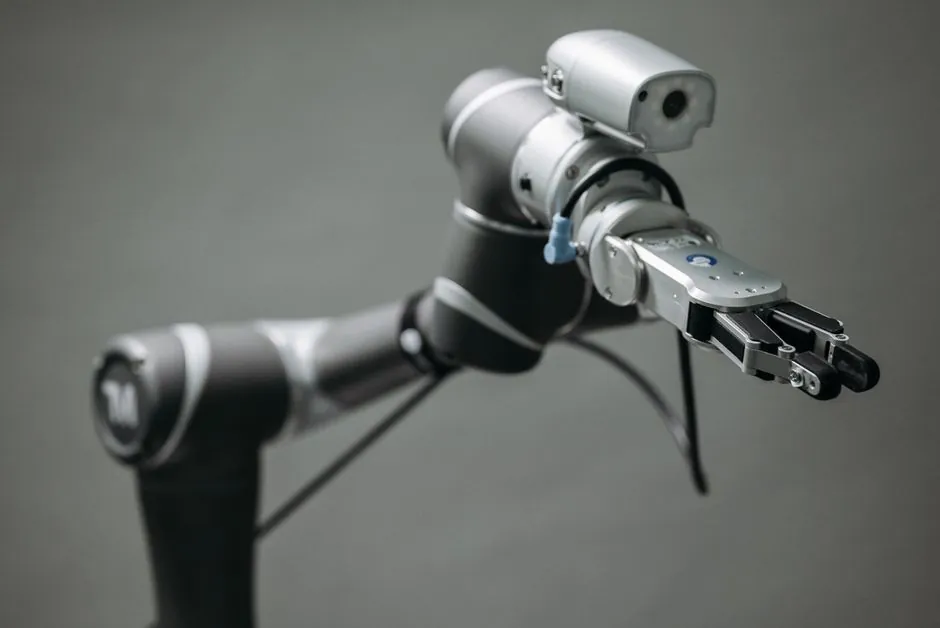
Tier-1 platform vendors (Cognex, Keyence, Basler, SICK, Teledyne) won the majority of 2026 automotive, pharmaceutical, and electronics OEM RFPs, while tier-2 smart-camera specialists (Festo, ifm, Banner, Wenglor) and roughly 2,000 tier-3 Asian OEM/ODM factories on Made-in-China closed the volume gap on price-sensitive lines [S4].
Global machine vision spend is projected to rise from USD 49.7B in 2023 to USD 159.2B by 2032, a 13.9% CAGR over 2024-2032, with the smart-camera sub-segment tracked at USD 6.3B in 2024 scaling to USD 17.97B by 2035 at 10% CAGR [S3]. Cognex alone holds roughly 20% of global machine vision share, anchored on the In-Sight and VisionPro lines priced between USD 6,000 and USD 20,000+ [S5].
Three-Tier Supplier Map and Where Each Wins
Procurement teams in 2026 typically shortlist 5-8 vendors, then narrow to 2-3 finalists using a spec matrix built around sensor resolution, frame rate, lighting interface, and PLC/robot protocol support, per supplier-tier analysis [S4]. The price gap between a tier-1 smart camera and a tier-3 Chinese equivalent can exceed 5x, while the functional gap on basic inspection tasks is often narrower than vendor marketing suggests [S4]. Tier-1 platforms dominate Western automotive, pharmaceutical, and electronics OEM lines; tier-2 specialists target factory-automation integrators with IP67-rated housings and fieldbus-native I/O; tier-3 covers Asian OEM/ODM plants that serve price-sensitive lines and label-customisation contracts [S4]. Directory counts are not interchangeable: a supplier showing 1 entry on DirectIndustry can have 2,000+ on Made-in-China simply because the indexing model differs [S4].
Spec-First Selection: Sensor Class, Resolution, and Shutter
Machine vision systems split into four technology classes (1D, 2D, 3D, and spectral/colour), with the choice driven by what must be detected rather than by camera brand [S1]. Two specifications dominate image-sensor performance: resolution (pixel count) and sensitivity (minimum detectable illumination), and the trade-off between them is the central engineering decision in any build [S1]. The rule of thumb is to size resolution to the smallest defect (at least 2-3 pixels across the feature) and frame rate to the line speed, then verify that a global shutter prevents motion artefacts on moving parts [S1]. High-resolution 2D area sensors (typically 5-20 MP) are standard for electronics and pharmaceutical packaging, where sub-millimetre features must be resolved; line-scan sensors with 2K-16K pixels per line are used for continuous webs at line speeds above 10 m/s [S1]. A related spec walkthrough on the machine vision imaging block details sensor sizing against defect size.
Smart Camera vs PC-Based Vision Measuring Machine
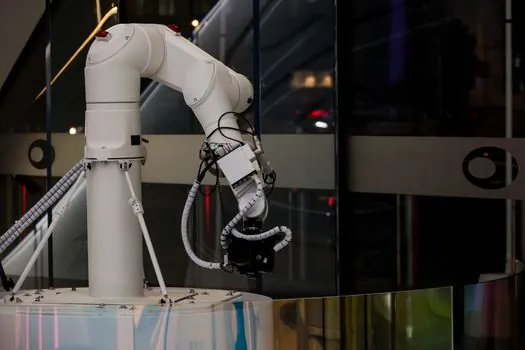
Vision systems split into two architectural classes: smart cameras (sensor, processor, lens, and I/O integrated in one housing) and PC-based or multi-sensor systems (separate cameras feeding an industrial PC or vision controller), with the decision governed by cycle time, number of inspection points, and environmental sealing [S1]. On cycle time, smart cameras typically handle 10-100 inspections per second, while PC-based rigs with FPGA acceleration push beyond 1,000 inspections per second on multi-point layouts [S1][S4]. Stand-alone smart cameras led unit share in 2024, but embedded cameras posted the fastest unit growth as AI/ML on-camera inference reduced host-controller load [S3]. A representative spec example: the Cognex In-Sight 2800 uses a 1/2.8-inch CMOS sensor at 1440 × 1080 or 720 × 540 resolution, captures up to 45 fps, and carries an IP67 rating, with list pricing between USD 6,000 and USD 12,000 [S2][S5]. For a vision measuring machine cell needing sub-pixel metrology, the PC-based rig with a telecentric lens and calibrated stage is the dominant choice, sourced from Basler, FLIR/Teledyne, or Hikvision industrial lines [S4].
Interface Standards and PLC Handshake
USB3 Vision accounted for 41.08% of camera shipments in 2025, yet CoaXPress is the fastest-growing interface, with approximately 9% CAGR through 2031 [S2]. The acquisition block combines camera, lens, and vision light source; the processing block executes algorithms on a smart-camera SoC, an industrial PC, or an FPGA; the result block delivers pass/fail, measurement values, or coordinates to a PLC over discrete I/O, EtherNet/IP, PROFINET, or OPC UA [S1]. OPC UA for Machine Vision (companion specification OPC 40100-1) standardises the information model with object types for VisionSystem, ConfigurationManagement, RecipeManagement, and ResultManagement, so a vision cell can publish structured results and accept recipe changes from a MES without custom drivers [S1]. For buyers, that standardisation is the single most important question to ask a vendor: which companion specifications and profiles does the system implement, and how are recipes and results exposed to higher-level systems [S1].
3D Vision Maturity and AI Inference Stack

3D vision is maturing on the back of laser triangulation, structured light, time-of-flight, and stereo depth; representative hardware such as the Photoneo MotionCam-3D produces up to 1.68 MP depth maps at 20 fps with integrated NVIDIA GPU acceleration [S2]. The structured-light family is the fastest for stationary parts, most affected by reflective surfaces; time-of-flight covers larger fields of view at lower resolution; stereo vision (two 2D cameras) gives good depth accuracy at the cost of complex calibration; laser triangulation delivers very high accuracy on shiny/reflective surfaces [S5]. On the AI side, deep-learning platforms such as MVTec HALCON 26.05 achieve up to 5x faster inference than previous versions and ship data-augmentation pipelines, enabling more complex inspection tasks on the edge [S2]. A machine vision system decision matrix for 2026 specifiers typically scores four criteria (defect class, line speed, communication protocol, environmental sealing) against three architecture choices (smart camera, smart sensor, modular vision controller) before vendor shortlisting [S3][S4].
Vertical Demand Drivers and Sourcing Signals
Three forces dominate 2026 machine vision purchasing: AI-enabled defect detection on SMT and semiconductor lines (the adjacent automated optical inspection market sat at approximately USD 1.8-2.1B in 2024); EV battery cell assembly and gigafactory lines requiring sub-pixel 3D metrology; and pharmaceutical serialisation pulling healthcare-segment growth to 15.3% CAGR, the fastest end-use vertical in the Allied forecast [S3]. Asia-Pacific is the fastest-growing region for both machine vision and machine control systems through 2030, driven by electronics manufacturing concentration in China, Japan, South Korea, and Taiwan; North America remains the largest single market in absolute terms, while Europe holds the second-largest share with strong automotive-tier demand in Germany [S3]. Plants running more than 20 stations usually standardise on the camera vendor's lighting to keep spares inventory simple; plants under 5 stations frequently buy the camera from one vendor and the lighting from a specialist [S4]. For traceability-coded pharmaceutical packaging lines, a separate machine vision ID spec is the more accurate procurement lane, covering 1D/2D code readers and OCR verification, often paired with the vision controller block on factory networks. Cross-vendor market-share context, including Cognex, Keyence, and Basler unit share, is laid out in the 2026 vendor map.
Trackable signals into late 2026: the next release of MVTec HALCON (post-26.05) and OPC UA companion-spec revisions for recipe management, both of which will reset the spec sheet on vision cells talking to MES layers.