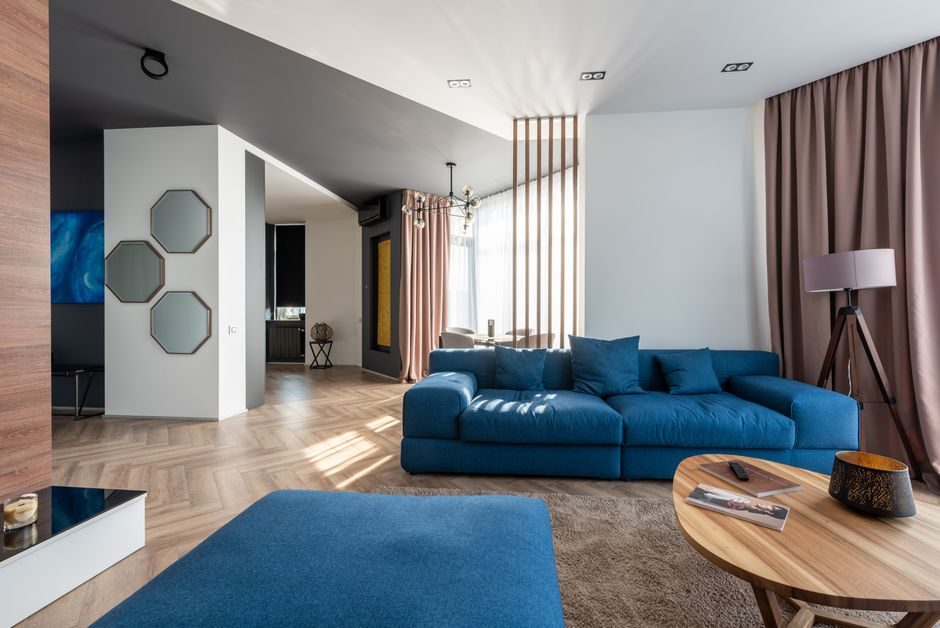
Lightweight partition panels (60-120 mm thick, ≤90 kg/m² panel mass, fire ratings of 3-4 h per GB/T 23451-2009 test methods, and 35-45 dB airborne sound insulation) are the dominant factory-built interior walling for hotels, offices, dormitories and industrial enclosures in 2026 [S1][S3].
Buyers who skip the spec gate — fire rating, density, acoustic class, dimensional tolerance, and certification — pay twice through rework, call-backs and inspection failures. The buying decisions in this category are driven by four levers: panel core (cement-polystyrene vs. gypsum vs. composite), thickness/mass per m², surface finish, and jointing system (tongue-and-groove vs. thin-bed mortar). For a broader material comparison across the walling family, see the ALC Panel 2026 Price & Cost Guide and the AAC Block Buying Guide 2026 for autoclaved alternatives.
Panel Definition, Scope and Where Lightweight Partition Beats Solid Masonry
DAQUAN defines its lightweight partition wall as a "solid-core thin-body new wall material" with a low unit mass that "greatly reduces the bearing of the building" compared with 200 mm clay-brick or 100 mm solid concrete blockwork [S3]. The category covers factory-moulded boards in the 60-120 mm thickness band, intended for non-load-bearing interior partitions in steel-frame and reinforced-concrete buildings.
The physical case for lightweight partition over solid masonry: a 75 mm cement-polystyrene panel typically weighs 55-75 kg/m² installed, roughly 35-45% of a 100 mm hollow concrete block wall (≈140-160 kg/m²) and 25-30% of a 115 mm clay-brick wall (≈200-220 kg/m²). The mass reduction lowers dead load on the floor slab by 80-130 kg/m² of wall area, and in a 10,000 m² hotel fit-out the cumulative saving on structural steel or concrete can run into double-digit tonnes.
Where lightweight partition is NOT a fit: load-bearing shear walls, basement walls subject to hydrostatic pressure (waterproofing is the limiting factor, not mass), external envelope walls without a separate weather-resistive barrier, and high-impact industrial partitions (forklift traffic zones) where ≥100 mm solid concrete block remains the default. For projects that mix precast and cast-in-place, also see the Shell Molding Machine 2026 Buying Guide coverage of panel-form equipment that complements prefabricated walling.
Core Types: Cement-Polystyrene, Gypsum, ALC and Composite Compared
The 2026 supply chain has consolidated around four core families, each with a distinct spec gate: (1) cement-polystyrene (EPS/cement) sandwich panel, (2) glass-fibre-reinforced gypsum panel, (3) autoclaved lightweight concrete (ALC panel) and (4) composite steel-mesh cement panels [S1][S3].
Decision criteria, side by side:
• Cement-polystyrene (EPS + Portland cement + additives): 60-100 mm stock, panel mass 55-90 kg/m², thermal conductivity 0.08-0.12 W/(m·K), fire rating 2-4 h with proper fire-stopping, acoustic 35-42 dB, water absorption ≤10% by mass. The workhorse for hotel and dormitory builds in 2026 [S1][S3].
• Glass-fibre-reinforced gypsum: 60-100 mm, 40-65 kg/m², λ ≈ 0.18-0.25 W/(m·K), fire 1-3 h, acoustic 38-45 dB, low water resistance — not for wet areas without a cement-board skin.
• ALC (autoclaved aerated concrete) panel: 50-150 mm, 50-85 kg/m², λ ≈ 0.10-0.13 W/(m·K), fire 3-4 h, acoustic 40-48 dB at 100 mm, higher water absorption (≈30-40% vol.) requiring site protection.
• Composite steel-mesh cement (with EPS core): 50-100 mm, 70-100 kg/m², fire 2-4 h, acoustic 40-50 dB, the strongest impact-resistance option for corridors and stair cores.
Cement-polystyrene wins on cost per m² and water tolerance; gypsum wins on acoustic and dimensional flatness for paint-grade finishes; ALC wins on thermal mass and fire rating; composite steel-mesh wins on impact and single-side-fix applications. For a parallel commodity-style buying logic, the AAC Block Buying Guide 2026 covers the block-format cousin to ALC panel.
Selection Criteria: Fire, Sound, Density, Tolerance and Certification
Fire rating is the single hardest spec to change after manufacture, so it has to be locked first. Chinese commercial fit-outs typically demand ≥2 h integrity (GB 50016-2014 building code class), with 3-4 h required for stairwell and lift-shaft enclosures; DAQUAN's stock range is built around this 3-4 h band at 75-100 mm [S1][S3].
Acoustic performance follows the mass-law plus panel damping: a 75 mm cement-polystyrene panel delivers 35-40 dB Rw, a 100 mm panel 40-45 dB Rw, and a composite steel-mesh cement panel 40-50 dB Rw. Hotel guestroom partitions (target ≥40 dB Rw) and hospital ward partitions (target ≥45 dB Rw) are where acoustic class, not just fire, decides the panel family.
Density and dimensional tolerance: most 2026 Chinese suppliers ship ±2 mm length/width and ±1 mm thickness tolerance, with panel mass within ±5% of declared value. A batch with >±3 mm thickness variance is a buildability red flag — it produces visible shadow lines on painted finishes and grout-bed inconsistency.
Certification to check on every quote: GB/T 23451-2009 (lightweight panels for steel-frame buildings), GB/T 23449-2009 (test methods), GB 8624-2012 (combustibility class A1/A2 for non-combustible cores, B1 for retardant), and the factory's ISO 9001 + ISO 14001 scope statements. European export orders additionally need EN 1364-1 fire test data and CE/UKCA marking per EN 14509 for self-supporting metal-faced sandwich panels.
Use Cases, Cost Levers and Where the Money Goes
Typical 2026 China-domestic price bands (factory gate, 75 mm cement-polystyrene, ≥3,000 m² single order): 38-55 RMB/m² for commodity EPS-cement, 55-80 RMB/m² for reinforced gypsum, 75-110 RMB/m² for ALC, and 90-140 RMB/m² for composite steel-mesh cement. Installation labour and jointing mortar adds another 25-40 RMB/m²; thin-bed adhesive systems run 12-20 RMB/m² but demand tighter substrate tolerance. [S1]
Total installed cost for a 75 mm cement-polystyrene partition typically lands at 75-120 RMB/m², versus 140-180 RMB/m² for a 100 mm solid concrete block partition plastered both sides. On a 5,000 m² hotel partition package, that is a 300-400 k RMB spread.
Where the money actually goes: panel body 45-55% of installed cost, jointing mortar / thin-bed adhesive 8-12%, reinforcement mesh at panel junctions 4-6%, labour 25-30%, surface skim-coat and paint 10-15%. Bulk-order discounts of 8-15% start at ≈5,000 m²; custom lengths or non-stock thicknesses can add 20-30% premium and 4-6 week lead time.
Lead time in 2026: in-stock 75 mm cement-polystyrene panel ships in 3-7 days ex-works, custom thickness 14-25 days, ALC panel 10-20 days (autoclave cycle is the bottleneck), composite steel-mesh 20-35 days. Plants in Jiangsu, Shandong, Henan and Guangdong dominate supply; DAQUAN and similar tier-1 lines operate continuous lamination with automated cutting [S1].
Limitations, Failure Modes and Common Buying Mistakes
The most common 2026 call-back: ceiling-crack propagation at the panel-to-beam interface, caused by underspecified slip joints or omission of a 10-15 mm compressible filler. The fix is design-stage, not site-stage: the structural drawing must show a vertical slip detail and the panel supplier must supply a compatible fire-rated sealant. [S2]
Moisture-driven failure mode: EPS-cement panels stored on site without tarp cover absorb 2-5% extra mass from rain, and a wet batch installed behind tile finishes later shows shrinkage cracking at joints. Insist on covered delivery, plastic-wrapped pallets, and a moisture-meter check at receipt (<8% moisture by mass for cement-EPS).
Acoustic underperformance: a single 75 mm panel frequently fails the 45 dB Rw hospital target because flanking paths (floor, ceiling, service penetrations) dominate. Specify a double-skin build-up (75 mm + 50 mm with 25 mm cavity) for ≥50 dB Rw, or move to ALC/composite core. For another spec-driven capital-equipment decision, the Motion Controller Price & Cost Guide 2026 applies a similar trade-off logic to axis count vs. bus architecture.
Sourcing Signals and 2026 Supply-Map Indicators
Two trackable 2026 signals worth monitoring on the buyer side: first, the migration of tier-1 Chinese panel makers (DAQUAN and peers) into higher-density ALC and composite-cored lines, visible in their English-language product and equipment pages [S1][S3]; second, the consolidation of regional distributors around 60-75 mm cement-polystyrene as the de-facto commodity spec for hotel and dormitory segments.
Third signal: the tightening of GB 8624-2012 class-A documentation in procurement contracts — public-tender and government-project specifications in 2026 are explicitly demanding A1 or A2-s1,d0 non-combustible cores for >24 m building partitions, pushing gypsum-only and EPS-heavy products out of these tenders. For adjacent spec-gate logic on another product family, see the Check Valve Buying Guide 2026 coverage of material/standard selection.
For component-level specifications, see lightweight partition panel, and linear guide.