
AAC (autoclaved aerated concrete) blocks for the 2026 procurement cycle are most commonly cut from 4.0 m, 4.2 m, 4.8 m and 6.0 m moulds, and the plants feeding them run in a 100,000–300,000 m³ annual-capacity band — that footprint is the first fact to pin down before comparing any quote [S1]. A 1.3 lakh-unit AAC line listed by an Indian supplier in early 2026 was priced around USD 700,000, with the bill of materials explicitly itemising the autoclave, pressure vessel (boiler), ball mill, slurry/foam mixer, mould assembly, side plate, autoclave truck, carrier car and the semi-/end-product cranes [S3]. That single line item list is the clearest window procurement gets into what an AAC plant actually contains, and therefore what capacity, energy and spares line items a buyer's TCO model must carry.
AAC is one of three lightweight wall-material families competing on the same specification sheet; the other two are CLC (cellular lightweight concrete) cast blocks and conventional clay-brick. The buying decision lives almost entirely inside four axes: dry density (kg/m³) versus compressive strength (N/mm²), thermal conductivity (W/m·K), fire rating (hours at a given thickness), and unit mass per m² of finished wall. For spec-led buyers the right reference object is the AAC block itself — its aerated-cell structure is what drives the 0.10–0.20 W/m·K band that makes it attractive against fired clay. Buyers who still need a denser masonry option for load-bearing plinths should also keep the conventional block brick comparator close at hand.
Density, Strength and Thermal Conductivity — the Hard Spec Triangle
Dry density is the single most quoted AAC parameter and it cascades into almost every other property on the data sheet. The commonly shipped B04 / B05 / B06 / B07 density grades (≈400, 500, 600, 700 kg/m³ nominal) cover the bulk of wall and partition applications, and compressive strength tracks that density on a roughly monotone curve — push density up and you generally gain bearing capacity while losing insulation value. For partition walls, B04/B05 is the default; for load-bearing inner leaf and most low-rise external walls, B06 is the practical sweet spot. [S1]
Thermal conductivity on AAC sits in the 0.10–0.20 W/m·K band depending on density and moisture state, which is roughly an order of magnitude below dense clay brick. Fire ratings of 2–4 hours at 100–200 mm thickness are routinely claimed for AAC walls in vendor literature, and the underlying reason is straightforward: the material is mostly inert calcium-silicate hydrate with a closed aerated cell structure, so it does not combust and does not release toxic smoke. That same inert chemistry is why AAC is also specified for hospitals, cold stores and pharma walls where clay brick would be over-specified on mass and under-specified on thermal.
Plant and Machinery — What a 100,000–300,000 m³ Line Actually Contains
Behind every pallet of cured AAC sits a fixed asset list that looks much the same regardless of OEM. The Okorder-supplied plant reference for 2026 explicitly itemises a Germany-technology process line offered in 100,000 m³, 200,000 m³ and 300,000 m³ annual capacities, with full- or semi-automation options and cutting tables sized to 4.0 m, 4.2 m, 4.8 m and 6.0 m green-cake moulds [S1]. The Ventura Wings inquiry packs the same line of equipment into a purchase list: pressure-vessel equipment (boiler, autoclave), crushing equipment (ball mill, crusher), powder mixer, pouring mixer, mould, side plate, autoclave truck, carrier car, and conveying equipment split into semi-product crane and end-product crane [S3].
For a buyer's TCO model that line list is a roadmap. The autoclave is the capex centrepiece — typically an 8–16 m pressure vessel rated for steam at roughly 1.0–1.6 MPa and 180–200 °C, and its diameter effectively sets the largest mould size the plant can pour. The boiler behind it is the operating-cost centrepiece, because AAC's curing cycle is steam-driven. Buyers comparing two OEM quotes should normalise on autoclave diameter, mould size, and stated annual capacity, not on brochure m³ figures, because the m³ number is a function of cycle time and mould density and is easy to overstate.
Production Process — From Slurry to Autoclave in Five Stages
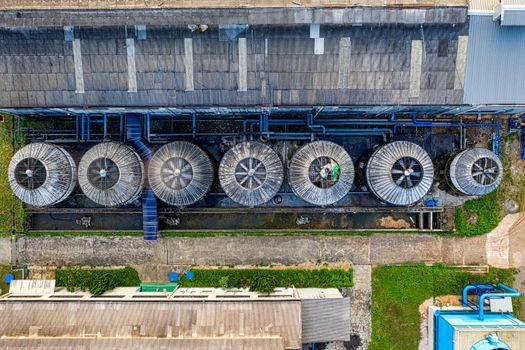
The process is identical across the major Indian and Chinese AAC plants and breaks into five stages. Stage one is raw-material preparation: cement, lime, sand (or fly ash), gypsum and water are weighed and ground — the ball mill in the crushing-equipment list is the workhorse here [S3]. Stage two is slurry and foam generation: the powder mixer combines the binder slurry while a separate foaming agent is whipped into a stable, fine-cell foam, then the two streams are metered into the pouring mixer at a controlled ratio.
Stage three is pouring and pre-curing: the foamed slurry is cast into the mould on the carrier car, side plates are fitted, and the green cake is held at ambient for several hours to gain initial set. Stage four is cutting: the green cake is de-moulded and pushed through a horizontal/vertical wire cutter that slices it into block sizes — and this is where the 4.0 m / 4.2 m / 4.8 m / 6.0 m mould geometry on the OEM datasheet directly determines the finished block size envelope [S1]. Stage five is autoclaving: the cut cakes are loaded into the autoclave on autoclave trucks, saturated steam is introduced at roughly 1.0–1.6 MPa for 8–14 hours, and the tobermorite crystal phase forms — that reaction is what gives AAC its final strength and dimensional stability.
Buying Criteria — 7 Spec Gates a 2026 PO Should Clear
Spec gate one, density grade: pin a B04 / B05 / B06 / B07 nominal dry-density figure with a tolerance band, because density drives both thermal and bearing capacity. Spec gate two, compressive strength: demand a class figure in N/mm² (commonly 3–7 N/mm² across the density grades) and reject any datasheet that quotes strength without naming the density class it pairs with. Spec gate three, thermal conductivity: ask for a W/m·K figure at declared moisture content, since wet AAC conducts noticeably better than dry AAC and many published figures are oven-dry values that overstate real wall performance. [S2]
Spec gate four, dimensional tolerance: AAC blocks are cut to length, height and width by wire, so length/height tolerances of ±1.5 mm and width of ±2 mm are realistic and worth writing into the PO. Spec gate five, fire rating: demand a test certificate naming the wall assembly, plaster specification, thickness and the hours achieved — generic 'fireproof' claims are not a spec. Spec gate six, autoclave cycle and source of steam: ask whether the supplier owns the boiler and what fuel it burns, because steam cost is the second-largest opex line after raw material. Spec gate seven, curing certificate per batch: a batch-level autoclave cycle printout is the AAC equivalent of a mill certificate in steel and is the cleanest defence against under-cured deliveries that later crack on site.
AAC vs CLC vs Clay Brick — a Decision-Matrix Comparison
The three wall materials compete on the same wall area but trade off very differently across the four decision axes below. AAC wins on thermal conductivity (≈0.10–0.20 W/m·K) and fire rating (2–4 h at typical partition thickness) and unit mass (roughly 400–700 kg/m³), at the cost of higher plant capex and tighter dimensional tolerances on site. CLC is cast rather than autoclaved, so plant capex is lower and the cured block can be poured to size, but it loses to AAC on thermal conductivity and on the tobermorite-driven strength gain that only autoclaving delivers. [S3]
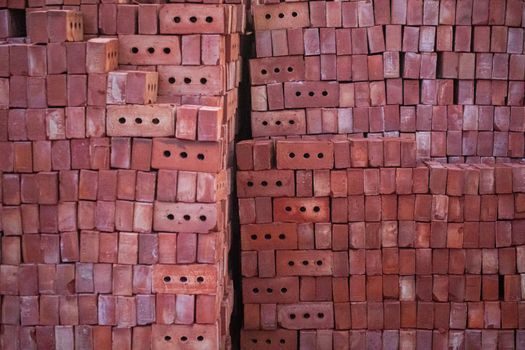
Clay brick remains the cheapest per piece in many regional markets and has the longest track record, but at roughly 1800–2000 kg/m³ it is roughly three to four times heavier per m³ than B-grade AAC, and at roughly 0.6–1.0 W/m·K its thermal conductivity is several times worse — so wall-area-normalised insulation cost on a clay-brick building is materially higher unless an external insulation system is added. For high-rise, hospital, cold-store and pharma walls the comparison tips hard to AAC; for low-rise boundary walls where thermal and fire are not critical, clay brick or CLC still hold a cost case. This is also where the broader masonry comparator matters: for heavier load-bearing units and retaining-wall applications the gauge block class of dense masonry is the more relevant reference, not AAC.
2026 Sourcing Levers — Where the Real Margin in a Quote Lives
Lever one is raw-material mix: cement, lime and sand (or fly ash) prices move independently, and a supplier substituting fly ash for sand at equivalent silica content can quote 5–10 % lower — but the trade-off is colour, finish and carbon footprint, all of which may matter to the project specification. Lever two is autoclave fuel: a buyer who can take delivery from a plant co-located with a captive waste-heat or biomass steam source should expect that savings to be visible in the per-block price, because steam is the dominant opex line behind raw material [S3].
Lever three is mould size and cutting yield: a 6.0 m mould line [S1] produces fewer cut-off losses on standard block sizes than a 4.0 m line, and that yield differential shows up in price. Lever four is automation: full-auto lines quoted with the Germany-technology process reference carry higher capex but lower labour cost per block, and at 200,000–300,000 m³ annual capacity the labour saving is large enough to shift unit price noticeably. Lever five is logistics: AAC is low-density but bulky, so the delivered cost is dominated by truck utilisation rather than per-tonne rate — buyers more than 200–300 km from the plant should fold freight into the comparison before selecting on ex-works price. For a buyer also specifying other light-machinery items on the same project, the shotcrete machine selection guide covers the wet/dry mix trade-off on adjacent equipment lines.
What AAC Is — and Is Not — the Right Answer For
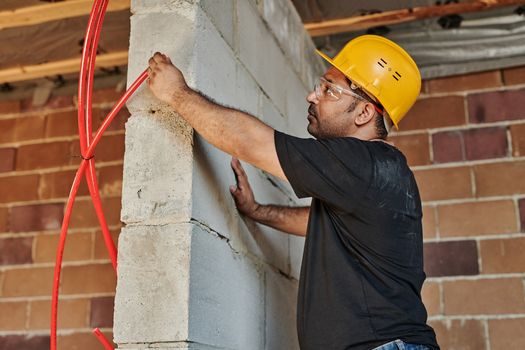
AAC is the right answer for partition walls, external walls of mid- and high-rise residential and commercial buildings, hospitals, schools, cold stores and pharma facilities where the combination of low thermal conductivity, 2–4 h fire rating and low wall dead-load directly reduces downstream HVAC and structure cost. It is the right answer for fast-track projects because the cutting tolerance of ±1.5–2 mm allows thin-bed adhesive mortar instead of conventional 10 mm cement mortar, which speeds the wall cycle and reduces on-site water demand. [S1]
AAC is the wrong answer where point loads are high and the wall is acting as a primary load-bearing shear element without a reinforced concrete frame; it is also the wrong answer for below-grade retaining walls exposed to persistent moisture, because the aerated cell structure will absorb water over time and the thermal advantage disappears. For buyers who have already narrowed the broader wall-material decision and are now pricing the mortar, ties and the electrical/terminal accessories that go into the same wall assembly, the terminal block reference is the matching detail component.
Two trackable signals will tell a 2026 buyer whether AAC pricing is firming or easing through the second half of the year: first, monthly cement and lime spot prices, because those are the largest single raw-material cost lines and are quoted openly; second, the utilisation rate of the autoclave fleet at the supplier being quoted, because a plant running at 100,000 m³ of nameplate 300,000 m³ capacity has materially lower unit cost than one running at 300,000 m³ — and asking the supplier directly for their current offtake ratio is the single most informative number a buyer can pull before signing a 12-month volume commitment.