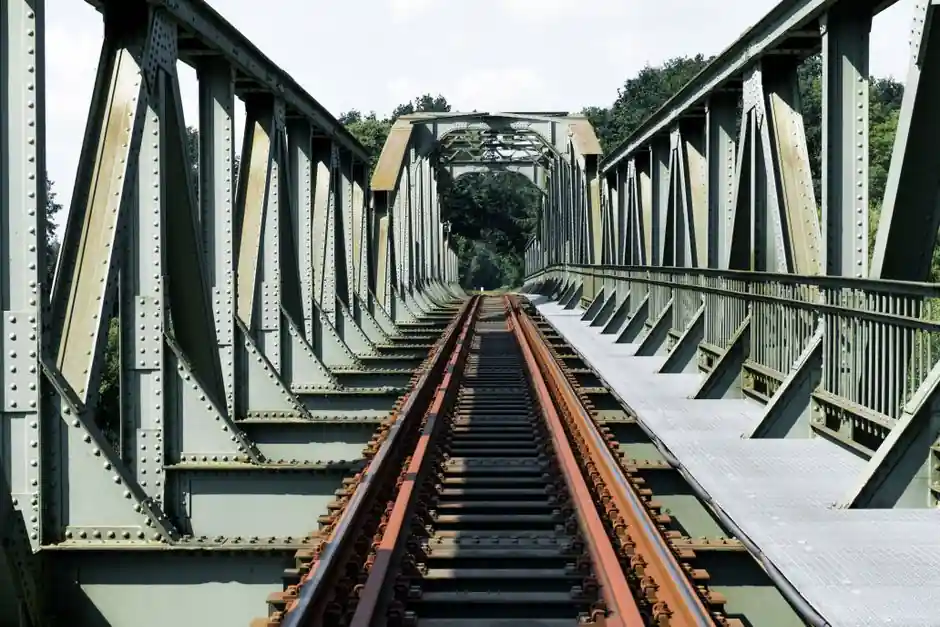
Profiled-rail ball guides in the HGR/HGH format at 15/20/25/30/35/45 mm rail widths are the 2026 default for CNC, packaging, and pick-and-place builds, with interchange-fit HGR20 blocks listed at FOB US $8 per piece on 2026-06-26 wholesale offers [S4].
Demand is being pulled by industrial automation, with the global linear motion system market pegged at USD 11.74 Bn in 2026, rising to USD 19.86 Bn by 2033 at a 7.8% CAGR, and the product mix underneath that headline is fragmenting: profiled-rail ball guides still dominate new builds, while solid-rail cam-roller and crossed-roller formats pick up share in heavy-load and dirty-environment retrofits [S4]. For the geometry conventions that every procurement spec inherits, see the linear guide reference, and for the moment-load cases where a four-row ball rail is the wrong tool, the crossed roller guide option deserves a parallel evaluation.
2026 Sourcing Map: Chinese OEM/ODM Hubs and European Niche
Procurement has consolidated around three Chinese OEM/ODM clusters (Lishui in Zhejiang, Qingdao in Shandong, and Chengdu in Sichuan) that handle light-load MGN-series and high-load HGW/EGW profile guideways side-by-side, with rail lengths specified from 100 mm to 3,000 mm and HRC 58–62 raceways as the default [S2].
European suppliers cover the high-precision and cleanroom end of the market, with SCHNEEBERGER MONORAIL ball and crossed-roller profile guideways (Type R, RN, RNG) serving semiconductor, metrology and medical-automation cells, and aluminum-bodied contact-shoe rails such as the CHAMBRELAN D48-AL60 (rail length 300–3,000 mm) covering cleanroom and laboratory builds [S2]. That map matters because the MGN-C and MGN-H 9 mm-width-class blocks carry the bulk of Chinese OEM volumes, while MONORAIL RNG is positioned for "delicate, precise, feedback-free movements with little effort" per the supplier, and the D48-AL60 is positioned for defined friction and quiet motion in medical and laboratory automation [S2].
Spec Ladder: Accuracy Grades, Load Ratings, and the H/C Tolerance Split
Accuracy grades for profiled-rail guides span C1 (highest precision) to C5 (standard) per ISO 14728-2, with repeatability from ±0.001 mm to ±0.01 mm depending on grade, and dynamic load ratings from 5 to 200 kN with static load ratings from 10 to 400 kN per ISO 14728-1 [S1].
Common rail material is GCr15 bearing steel (China's 52100-equivalent), induction-hardened to 58–62 HRC per GB/T 18254, with a 1–2 mm case depth, while the structural core stays tough to absorb shock loads during aggressive cutting [S1][S4]. Maximum speed is 2–5 m/s and operating temperature is −40 to 85 °C, with maximum speed bounded by lubrication regime and seal type, and rail width drives stiffness and load capacity [S1]. The practical sourcing decision in 2026 is no longer raw capacity: H-grade blocks (HGH-HA, HGW-HC) are typically specified over C-grade (HGH-CA, HGW-CC) where the runout envelope drops below roughly 10 µm per block, making tolerance class the differentiator for OEM sourcing under the same 7.8% CAGR backdrop [S4].
Three Rolling-Element Families: Ball, Crossed-Roller, and Contact-Shoe

Ball-bearing recirculating rails (HGW, EGW, MGN) give the lowest unit cost, the highest permissible speed, and the cleanest feel in long-stroke gantries, at the price of lower static stiffness per block than a crossed-roller equivalent [S2].
Crossed-roller MONORAIL profile guideways (Type R / RN / RNG) deliver roughly twice the moment stiffness in a comparable footprint, accept lower speeds, and are the first choice for high-precision semiconductor, metrology and medical-automation cells [S2]. Aluminum-bodied contact-shoe rails such as the CHAMBRELAN D48-AL60 trade some load capacity for corrosion resistance, low mass, and cleanroom compatibility, making them a common pick for medical and laboratory automation [S2]. On a 2–4 criteria shortlist, the comparison reads: ball (lowest cost, highest speed, lower moment stiffness), crossed-roller (~2× moment stiffness, lower speed, higher cost), contact-shoe (cleanroom-friendly, defined friction, mid load capacity). For the carriage block design that ties to these rails, the linear bearing page covers recirculation architecture and end-cap geometry. Where a packaged linear module makes more sense than rolling your own stack, the linear module reference covers the ball-screw and belt-drive integration options.
Roller Returns: Solid-Rail Cam-Roller Designs in Heavy-Load Retrofits
Solid-rail cam-roller guides are re-entering 2026 spec books for foundry, stamping, transfer systems, automatic storage, and material elevators, with Nadella's GC-series guide roller listed 2026-05-11 in outer diameters from 16 mm to 90 mm and inside diameters from 8 mm to 32 mm, executed in ball, needle, or tapered-roller bearing designs to span the heavy-load ladder [S4].
The underlying rail family (GU/FS/FSH/GP) is cold-drawn solid bearing steel with induction-hardened race surfaces, available up to 6 m single length and jointable, which lets one continuous rail run the length of a transfer line, AS/RS aisle, or elevator shaft without the butt-joint accuracy penalty of profiled-rail segments [S4]. The trade-off is velocity and noise: solid-rail cam-roller systems run slower and louder than profiled-rail ball guides, which is why they are creeping back into heavy-load retrofits rather than displacing HGR-format new builds, and why GC-series load capacity is published in diameter steps (16 → 90 mm OD) rather than the 15 → 65 mm width ladder that defines profiled-rail sizing [S4]. This is also why solid-rail formats tolerate dust, scale, and coolant mist that would otherwise chew a ball-bearing block, while profiled-rail ball guides need sealed end-caps and a linear actuator housing to survive the same environment.
Interchangeability, HGR Drop-Ins, and the China Wholesale Channel
Interchange-fit HGR/HGH-format rails in GCr15 bearing steel are flooding the Made-in-China.com wholesale channel through mid-2026, with Nanjing Xiongbao listing an "Interchangeable Linear Guide Rail Guideway for CNC" at 1-piece MOQ and FOB US $8–100 pricing on 2026-06-26 offers, and Heze Hento listing HGR20 blocks at FOB US $8 per piece with 1-piece MOQ [S4].
"Interchangeable" in this category almost never means the preload class, tolerance grade, and race-hardness depth are bit-for-bit identical to the reference brand; what is being interchanged is the mounting-footprint geometry, so a drop-in HGR20 block in H-grade typically has 2–3× the runout drift of a Japanese reference over a 5-year service life, and that is the real bearing cost curve behind the headline 7.8% CAGR [S4]. For packaging-line builds that live at the low end of the tolerance envelope, the linear guide selection for packaging lines spec path is a useful parallel, and for the drive side of those cells the servo drive competitive map maps how tier-1 and tier-2 sourcing lines up.
Standards, Verification, and Procurement Gating
Accuracy is graded per ISO 14728-2 (C1–C5) and load life per ISO 14728-1 (dynamic 5–200 kN, static 10–400 kN), with rail material verified to GB/T 18254 for GCr15 bearing steel at HRC 58–62, and Asian OEM plants are typically listed under ISO 9001:2008 certification for miniature MGN-class production [S1][S2].
Procurement should treat those certifications as the floor, not the ceiling, and the practical gating items in 2026 are: (1) confirm race-hardness depth is 1–2 mm induction case, not through-hardened, (2) confirm the preload class is held to the H-grade envelope, and (3) confirm the seal stack is rated for the cell's actual contamination profile, because a linear encoder feedback chain downstream cannot fix runout drift in the bearing block. Two trackable signals to watch through the back half of 2026: whether the HGR20 wholesale FOB floor breaks below US $7 per piece (suggests capacity is chasing demand), and whether Nadella-class solid-rail GC-series line extensions add sub-16 mm OD variants (suggests roller guides are moving down-payload into packaging and medical cells). For the upstream steel capacity that feeds all of this, the stainless steel cross-market brief covers the 2026 bearing-steel supply backdrop.