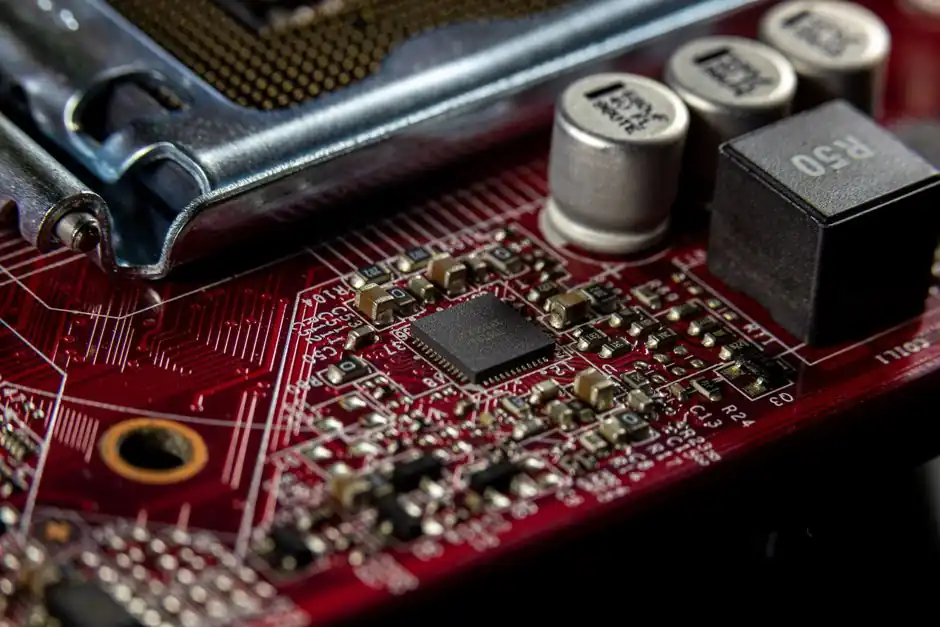
Ten established motion-control vendors hold the 2026 servo drive market, with the eight largest (Yaskawa, Mitsubishi, Fanuc, Siemens, Bosch Rexroth, ABB, Delta, Kollmorgen) accounting for roughly 90% of global unit sales [S2][S5].
Selection is driven by datasheet numbers, not brand preference: bus protocol (EtherCAT, PROFINET, Ethernet/IP), current-loop bandwidth, feedback resolution, and SIL-rated functional safety now decide every 2026 build, while a servo drive is inseparable from its paired servo motor and upstream controller [S2].
Three Power Tiers, Three Vendor Lineups
The 2026 market segments cleanly into three power classes that map to different vendor rosters [S2]. The low-voltage / small-payload class covers 50 W to 750 W at 48-230 V AC or 24-48 V DC, dominated by Delta Electronics, Yaskawa Sigma-7/Sigma-X micro, Mitsubishi J4/J5, and Asian ECMA platforms, with current-loop bandwidths above 3 kHz. The mid-voltage general-purpose class spans 750 W to 15 kW at 200-480 V three-phase, where Yaskawa Sigma-X, Mitsubishi MELSERVO J5, Siemens SINAMICS S210/S200, and Bosch Rexroth IndraDrive Mi sit on the most spec sheets. The high-power class, 15 kW and above at 400-690 V, is led by Fanuc, Siemens SINAMICS S120, ABB, and Bosch Rexroth IndraDrive XL for machine-tool and large-press references.
Major OEM catalogs confirm the wide envelope: Yaskawa Sigma-II drives run 30 W to 55 kW across two voltage families, with single-phase 200-230 VAC units up to 1.5 kW and three-phase 400 VAC units from 450 W to 55 kW [S9]. Automotive-tier families extend that range to 1.5-315 kW, covering everything from a 22/30 kW CNC lathe spindle to a 1.6-2.2 kW small-parts feeder [S3].
Four Decision Criteria That Separate the Field
Reading 2026 vendor catalogs against Texas Instruments' published servo control-module design checklist surfaces four quantifiable criteria that distinguish the contenders [S2]. First, current-loop bandwidth: 3.0-3.5 kHz is the new baseline for Sigma-X, MELSERVO J5, and SINAMICS S210; above 5 kHz appears only in Fanuc and high-end Bosch Rexroth units, while below 2 kHz signals a platform that has not been refreshed. Second, fieldbus: EtherCAT and EtherNet/IP show up on virtually every datasheet, PROFINET IRT remains strong inside Siemens-only lines, and CANopen / Modbus TCP are now treated as legacy fallbacks. Third, functional safety: STO is universal; SS1, SS2, SOS, and SBC are the differentiators on the mid and high tiers. Fourth, feedback interface: BiSS-C, EnDat 2.2, and Tamagawa are the high-end protocols, while drives relying on 12-bit resolvers stay confined to harsh-environment or cost-driven work.
For a comparison that an engineer can act on: 3.0-3.5 kHz baseline loop bandwidth with SIL 3 / PL e STO across Sigma-X, MELSERVO J5, and SINAMICS S210; above 5 kHz loop bandwidth with SIL 3 safety profiles on Fanuc and Bosch Rexroth IndraDrive; and 2 kHz-or-below platforms from older or cost-tier vendors that typically ship only SIL 2 STO. STO is the floor; SS1, SS2, SOS, and SBC separate the mid-tier from the high-tier [S2].
Spec Gates 1-3: Bus, Current Ratio, Feedback Resolution

Bus choice locks out half the catalog the day the I/O list is signed, and most 2026 servo amplifiers expose at least two protocols via a removable comms module, but only after the firmware variant is ordered correctly [S1]. A PROFINET-only drive on an EtherCAT ring will sit idle and force a full axis-cabinet re-spec, so the safe rule is to lock the controller family and protocol first, then filter the shortlist. Continuous-vs-peak current is the second gate: servo-class amplifiers are sized on continuous RMS current, not on peak, and the published peak is only usable within a defined cycle (commonly 1-2 s at 20-30% duty), with peak-to-continuous ratio near 3:1 against 1.5:1 for a general-purpose VFD [S1].
Feedback resolution is the third gate, and 16-bit single-turn absolute encoders (65 536 counts/rev) are the minimum for general automation, 19-bit (524 288 c/rev) the working point for machine-tool axes and semiconductor handlers, and 23-bit-plus reserved for high-end optical encoders with capacitive or optical second-loop commutation [S1]. The same drive hardware is often sold in -DS, -EN, -HS firmware variants for EnDat 2.2, BiSS-C, or Hiperface DSL protocols, and the wrong suffix means the encoder will not enumerate.
Spec Gates 4-6: Safety, Power Density, Ecosystem
Functional safety is gate four: only some 2026 catalogs (Festo CMMP-AS with safety card, Beckhoff AX5000, Elmo, KEB F5) declare integrated SIL-rated STO in the listing text, while the broader Tier-1 shortlist (Sigma-X, SINAMICS S120, IndraDrive) carries TÜV-certified SIL 3 / PL e profiles as the default for collaborative-robot and mobile-platform OEMs [S2][S8]. For machine tools and semiconductor handlers where lost-position after E-stop is unacceptable, the right call is a drive that natively reads EnDat 2.2 or BiSS-C and holds absolute position on its own backup, a 2-3x price difference that pays back the first time the line trips and restarts [S6].
Power density and ecosystem are the fifth and sixth gates, and reference designs crossing a controls engineer's desk in mid-2026 repeatedly show 400 W to 7.5 kW three-phase 230/400 VAC servo amplifiers paired with low-inertia brushless servo motors, with the Kinetix 5300 0.72 kW (3x 230 VAC) and 0.46 kW (1x) platforms carried by EU automation distributors as typical examples [S1]. The reference controller is the automotive-qualified TMS320F28379D-Q1, a 32-bit C2000 MCU at 200 MHz with 800 MIPS, dual CPUs, dual CLAs, FPU, TMU, 1024 KB flash, and a 16-bit ADC, which has become the de-facto real-time controller for high-end automotive servo loops; the lower-tier TMS320F28375S-Q1 at 400 MIPS with 12-bit ADC is sufficient for handling axes but tight on torque-loop bandwidth [S3].
Who Should Specify a Servo Drive and Who Should Not
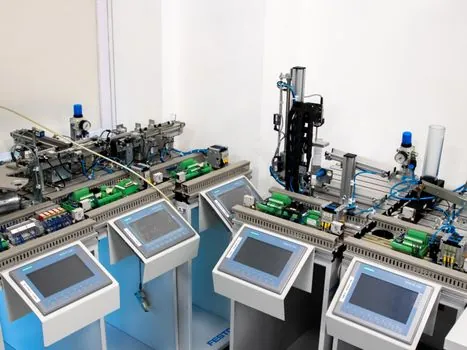
A servo drive is the correct choice when the application demands closed-loop speed or position control below 0.5% steady-state error, fast dynamic response under 10 ms, and reversible regenerative braking, and when the move profile is dominated by acceleration intervals that the 3:1 peak-to-continuous current ratio can actually deliver [S1][S5]. It is the wrong tool for low-dynamics, fixed-speed auxiliaries (coolant pumps, tower lighting, conveyors under 0.5 kW), where a simple VFD or direct-on-line starter is more cost-effective [S3]. For warehouse automation buyers cross-referencing motion platforms, the 2026 warehouse robotics vendor map lines up the same Tier-1 servo vendors against the AMR and AS/RS integrators that consume them, and confirms Delta and Yaskawa at the low-voltage end while Fanuc and Siemens dominate the high-power spindle class.
A 2026 build that needs a 1.5-7.5 kW, 400 V, 3000 rpm PMSM drive-motor pair for a high-volume handling axis will find the broadest catalog at Delta, Yaskawa, and Mitsubishi; a 15-75 kW, 400 V, 8000 rpm multi-axis build for press-feed or welding will end up at Fanuc, Siemens, or Bosch Rexroth by bandwidth and functional-safety depth [S3]. Engineers buying from a stepper drive base and stepping up to closed-loop servo should expect a 5-10x jump in price per axis but a 2-3x improvement in dynamic stiffness, with the right feedback choice often being the dominant factor in whether the line actually holds tolerance [S4].
Trackable Signals for the Next Quarter
Two data points to watch before the next sourcing cycle: the Q4 2026 release notes from Yaskawa (Sigma-X firmware updates), Siemens (SINAMICS S210/S200 safety expansion), and Bosch Rexroth (IndraDrive Mi second-generation), and the refreshed SIL 3 / PL e certificate listings on the Festo CMMP-AS, Beckhoff AX5000, Elmo, and KEB F5 catalogs, which currently distinguish the mid-tier safety-integrated set from the broader Tier-1 field [S8]. Engineers evaluating new 2026 builds should also pull the CTB 1.5-315 kW catalog cross-reference, the A206WS 22/30 kW CNC lathe spindle datasheet, and the BT40D 13 kW / 12 000 rpm milling spindle entry, because those three documents together define the 1.5 kW to 75 kW envelope that covers the bulk of new automotive and machine-tool RFQs through year-end [S3].