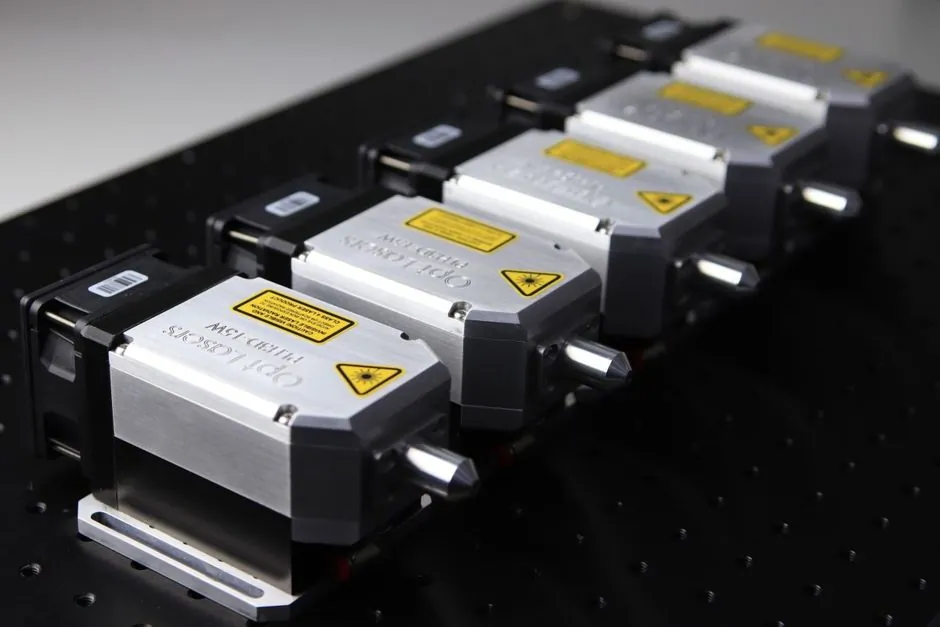
Linear motors deliver high acceleration, long travel, and extremely accurate positioning by generating linear force directly, without a belt, screw, gearbox, or coupling [S1]. They are most compelling in semiconductor metrology, metrology, CNC equipment, printers, and other high-dynamic motion systems [S1][S3][S4].
The engineering trade-off is clear: linear motors remove transmission wear and backlash, while adding thermal-management, contamination-protection, cable-management, and capital-cost constraints. Linear motors can provide high acceleration rates, long travel lengths, good thrust forces, and extremely high positioning accuracy, while belts, screws, and rack-and-pinion drives must sacrifice at least one of these requirements to achieve the others [S1].
Performance Benefits of Direct Linear Motion
Linear motors combine useful thrust with high acceleration, long travel, and extremely accurate positioning. Belt, screw, and rack-and-pinion systems normally have to compromise at least one of those characteristics to obtain the others [S1].
A linear motor can be thought of as a rotary servo motor unrolled to produce linear motion, whereas a traditional linear actuator converts a rotary servo motor's turning motion into straight-line travel [S2]. This supports fast response, high positioning accuracy, low transmission wear, and a compact mechanical arrangement [S1][S3].
Published industry guidance places linear motors where acceleration, speed, and precision are demanding. Semiconductor metrology is a representative application because both motion resolution and throughput affect equipment productivity [S2]. Suitable applications also include CNC machine tools, automated production lines, printers, medical equipment, and semiconductor manufacturing [S1][S3][S4].
The linear motor is therefore a motion component rather than a complete machine axis. It still requires mechanical guidance, a feedback system, suitable electrical drives, and an engineered support structure. The absence of a transmission train reduces one source of error and wear, but it does not remove the need for alignment, rigidity, and thermal control.
Iron-Core Versus Ironless Selection
Iron-core designs generate the same force with smaller magnets than an equivalent ironless design, making them appropriate when force is the primary requirement and some cogging disturbance is acceptable [S2]. Ironless and iron-core linear motors are both product categories offered by SINA Drives [S3].
Ironless forcers also encapsulate their windings in epoxy, which transfers heat less readily than iron or aluminium [S1]. This makes thermal rejection a central selection constraint even when the motion specification is satisfied. The stated use case for an ironless motor is precision positioning, while an iron-core motor is more suitable where higher force density and lower magnet cost are more important [S2][S3].
Three criteria separate the main motor choices. Iron-core units favour force density and lower magnet demand, ironless units favour motion purity, and belt or screw actuators favour acquisition cost and compact system packaging. Linear motors tend to shine in applications requiring high acceleration, high speeds, or high precision, while the choice between a linear motor and a traditional linear actuator depends on the application [S2].
Heat, Force Output, and Cooling Demand

Linear-motor selection must be based on continuous and intermittent force capability under defined thermal conditions, not peak force alone. Heat accumulation can reduce continuous force output even when the load is not directly damaged [S1].
Heat transfer is more troublesome in many linear axes because the load attaches directly to the forcer, which contains the windings. Heat can then pass into the load and surrounding components, causing thermal expansion, material degradation, or, in severe cases, damage and failure [S1].
Forced-air or liquid cooling can control this thermal load, but it adds cost, floor space, plumbing or ductwork, and commissioning complexity [S1]. A protective cover presents a second thermal trade-off: it can exclude contamination while reducing the motor's ability to reject heat, which in turn lowers usable output force [S1].
Review the force-speed curve for the complete motor and drive combination, calculate the duty cycle, and verify continuous thrust at the required ambient temperature. This review is especially important when using an ironless linear motor, because epoxy encapsulation limits heat dissipation relative to exposed metal structures [S1].
Contamination Protection and Mechanical Robustness
Flat iron-core and U-channel ironless designs expose the magnets, making ferrous particles and airborne debris practical contamination concerns in machining and factory environments. Liquid contamination can also damage sensitive electronics or interfere with feedback systems [S1].
Covers and enclosures can protect exposed components, but they interfere with heat dissipation and may reduce continuous force. Linear guides can use available seals and scrapers, yet those measures do not by themselves protect the motor magnets or the forcer [S1].
Longer strokes add structural and cable constraints. Magnet-track rigidity must be maintained over the full travel, while the moving forcer normally requires high-flex power cables and raceways across the stroke [S2]. High-flex cable and its raceway increase cost, and cable failure remains a significant failure point in motion-control systems [S2].
One alternative is to fix the forcer and move the magnet track, keeping power cables stationary. The trade-off is lower acceleration because the heavier magnet track must be accelerated, and the arrangement is unsuitable for high-G motion [S2]. A fixed-forcer design therefore suits applications where cable protection and maintenance access outweigh peak acceleration.
Cost and Stroke-Length Constraints
Linear motors generally cost more than mechanically transmitted linear drives because they require precision manufacture, assembly, high-quality magnetic materials, and a compatible feedback and drive system [S4]. Rare-earth magnets also contribute to cost, particularly in long-stroke U-channel configurations [S2].
The practical linear-motor range is described as a few millimetres to several metres. Below that range, a flexure may be more effective; above it, belt drives and then rack-and-pinion drives are often better candidates [S2]. This range is a selection guideline rather than an absolute equipment limit.
Published examples show that individual Aerotech linear servo motors have peak forces from 28 to 900 lbf, while combining six units can produce almost 6,000 lbf [S2]. The example demonstrates that force can be scaled through multiple motors, but it does not remove the thermal, rigidity, and cost consequences of the larger installation.
Use the linear motor types and classifications comparison to separate iron-core, ironless, magnet-track, and moving-forcer architectures before comparing prices. A cheaper actuator can still deliver the lower total cost if its service life, positioning accuracy, and production throughput justify the additional mechanical transmission.
Application Fit and Failure Modes
Linear motors are a poor default for low-demand positioning, very short strokes, highly contaminated spaces without an enclosure, or installations where the initial budget outweighs motion performance. In those cases, a screw, belt, rack-and-pinion, or flexure may deliver a better engineering result [S1][S2].
They are also unsuitable as an unqualified solution for long, high-acceleration strokes. In such a case, the designer must address moving-cable cost, raceway construction, track rigidity, heat rejection, and the inertia of whichever assembly travels [S2].
The principal failure modes are thermal expansion and force reduction, debris attraction, contamination of electronics or feedback devices, cable fatigue, insufficient structural rigidity, and loss of alignment. Covers address exposure but can impair cooling, while cooling systems introduce their own leaks, pumps, controls, or maintenance demands [S1][S2].
For a servo-driven alternative, compare positioning accuracy, acceleration, peak and continuous force, stroke, thermal margin, contamination exposure, initial cost, and maintenance exposure. A VFD-duty motor may remain preferable when rotary motion is adequate, but it does not remove the need for a transmission when the process requires linear travel.
Engineering Decision Checklist
A linear motor is justified when the axis requires high acceleration, high speed, or nanometre-class positioning and the thermal, contamination, and cable consequences are properly designed. The decision is driven by required performance rather than by the technology label [S2].
Define payload mass, travel length, acceleration, peak force, continuous force, duty cycle, positioning resolution, and allowable heat rise before choosing iron-core or ironless construction. Then allocate cooling, enclosure, guide stiffness, encoder selection, and cable travel into the mechanical envelope [S1][S2].
For a final cross-check, compare at least four alternatives: an iron-core linear motor for force density, an ironless linear motor for motion purity, a belt or screw actuator for economy, and a rack-and-pinion drive for long travel. Score each option against acceleration, positioning accuracy, thermal margin, and installed cost rather than relying on headline speed alone [S1][S2].
The practical rule is straightforward: specify linear motion when its acceleration and positioning benefits outweigh the added system complexity, and validate the decision with continuous thermal data, contamination controls, and full-stroke cable details.