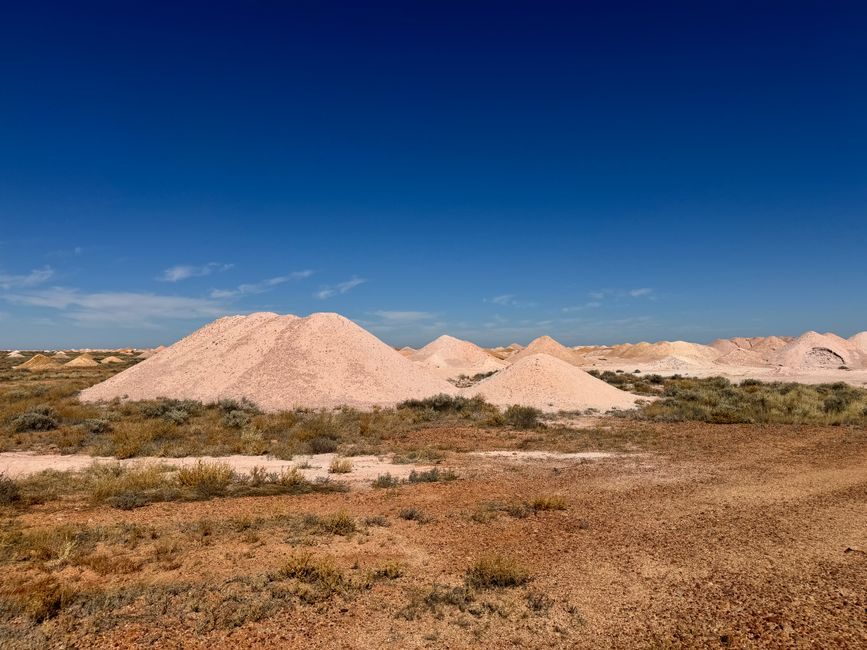
Australia remains the single largest mined-lithium source by contained LCE, with Western Australia spodumene output from Greenbushes, Pilbara, Wodgina and Mt Marion feeding a conversion hub dominated by Chinese processors; the country held roughly half of global hard-rock concentrate capacity going into 2026 [S2][S5].
The Lithium Triangle (Argentina, Chile, Bolivia) holds the world's largest brine reserve base, but its share of finished lithium chemicals is gated by evaporation-cycle time, altitude logistics, and lithium-grade ceiling; the conversion step is where China captures margin, not the mine gate [S2].
Africa (Zimbabwe, DRC, Mali) and a re-emerging North American footprint (US Thacker Pass, Canada James Bay) are the 2024-2026 capacity-add headlines, while European brine and geothermal pilots remain sub-10 kt LCE/year demonstrators rather than commercial plants [S2][S5].
Three-Tier Country Map by Chemistry and Cost Position
Tier 1 — mined concentrate / brines at scale: Australia (spodumene concentrate, ~5-6% Li2O) and Chile / Argentina (brine, ~1,000-1,500 ppm Li). Australia supplies the largest mined-tonnage share globally; Chilean and Argentine brine is sold mostly as technical- or battery-grade carbonate after on-site processing [S2][S5].
Tier 2 — conversion hub: China processes well over half of global lithium chemicals (carbonate, hydroxide, metal), fed by both domestic brines (Qinghai, Tibet) and imported spodumene and brine concentrate. Ganfeng alone lists resource positions across Australia, Argentina, Mexico, Ireland, Mali, Republic of Congo and Chinese provinces including Qinghai, Inner Mongolia, Jiangxi, Hunan and Yunnan, illustrating the geographic spread of a single Chinese converter's upstream [S5].
Tier 3 — emerging producers: Zimbabwe (Bikita, Arcadia, Kamativi), DRC (Manono), Mali (Goulamina), Brazil (Sigma/Mibra), Namibia, Portugal, plus US/Canadian lepidolite and clay projects. These are typically single-asset developers with first production between 2024 and 2027, and most feed toll-conversion arrangements with Chinese or Korean refineries [S2].
Capacity Bands and Process Routes Side by Side
Spodumene-to-converter (Australia → China): 6-8 t spodumene concentrate at 6% Li2O yields roughly 1 t battery-grade Li2CO3 equivalent. The route dominates cost-curve volume; the kiln-acid roast step at 1,050-1,100 °C is the capex bottleneck and the main emissions source (Scope 1 process CO2) [S2].
Brine evaporation (Chile / Argentina): natural solar pond cycle 12-24 months yields technical-grade Li2CO3, with a selective adsorption or solvent-extraction upgrade step to battery grade. The 2024 Nature Communications review reported 5th-percentile and median carbon footprints for carbonate sourced from Latin-American brine that are materially below the spodumene-acid-roast route at equivalent purity [S2].
Direct-lithium-extraction (DLE): adsorption or solvent columns with 1-7 day residence time, recovery 70-90% versus pond ~40-50%, but the route is currently demonstrated at <5 kt LCE/year per project in 2025-2026. Capital intensity per ton LCE remains the gating metric; operating data is still thin for independent benchmarking [S2].
Lithium hydroxide monohydrate (LiOH·H2O): the 2020 marketsandmarkets baseline valued the global lithium compounds market at USD 5.3 billion in 2020, projected to reach USD 13.5 billion by 2025, a 20.6% CAGR, with LiOH growth running above carbonate because high-nickel NMC811 and NCA cathode lines specify hydroxide feed [S4].
Who This Map Is For — and Who It Is Not For

Buyers specifying battery-grade lithium carbonate (≥99.5% Li2CO3, Na ≤500 ppm, Ca ≤50 ppm, magnetic Fe ≤50 ppb) or LiOH·H2O (≥56.5% LiOH basis) at >1,000 t/year are working with the Tier 1 and Tier 2 map — Chinese converters, Albemarle, SQM, Livent, Ganfeng, Tianqi — and need offtake contracts, not spot [S2][S4][S5].
Cell and pack integrators watching cost per kWh should track the spodumene-converter cost curve and the Chinese converter utilisation rate, since most spot pricing on Spot Chinese battery-grade carbonate bands in 2026 is set at the conversion margin, not the mine gate.
Glass, ceramics and lubricant buyers consuming technical-grade carbonate or butyl-lithium are a different market — annual volumes are 1-2 orders of magnitude lower than battery-grade and price-discovery is regional. The same applies to lithium metal for pharma / alloy use [S4].
Selection Criteria for Sourcing by Application
Battery-grade Li2CO3 vs LiOH·H2O: LiOH is specified for high-nickel cathodes (NMC811, NCA), Li2CO3 is specified for LFP and NMC622-and-below. The conversion step from carbonate to hydroxide adds ~USD 1,500-2,500/t of processing cost, so a buyer should match the chemistry to cathode before negotiating volume [S4].
Spodumene source vs brine source: spodumene yields a tighter impurity profile on magnetic Fe and is the workhorse for cathode plants that demand ≤50 ppb Fe; brine-derived Li2CO3 commonly needs a polishing step (oxalic acid or Na2CO3 carbonation) to reach the same spec [S2].
Toll conversion vs integrated: cell makers and cathode makers increasingly sign multi-year tolling agreements with Chinese converters (Ganfeng, Yahua, Yongxing) to lock converter capacity without carrying spodumene price risk; the trade-off is dependence on a single geography for the chemical step [S5].
Real Use Cases and 2024-2026 Sourcing Signals
South Korean cell makers expanded in-cell capacity in China through 2021-2024 — LG Energy Solution had built over one third of its global production capacity in China by mid-2021 — which means the converter offtake volume ultimately routes through Chinese refiners regardless of where the cathode and pack are assembled [S3].
Upstream integration is the dominant 2024-2026 capital pattern: Ganfeng's published resource portfolio spans hard-rock (spodumene) in Australia and Jiangxi, salt-lake brines in Qinghai and Argentina, and clay projects in Mexico and Yunnan — a deliberate vertical from mine to metal [S5].
Carbon-footprint disclosure is now a buy-side requirement for EU and US cell plants; the 2024 Nature Communications analysis published emission curves and 5th / 50th / 95th percentile footprints for lithium, nickel and cobalt by route, so a battery maker can write a carbon-intensity spec into the offtake contract rather than just a chemistry spec [S2].
Limits, Failure Modes and Open Constraints
Reserve base ≠ production: Bolivia sits on the largest identified brine reserve but produced a small fraction of Chile's and Argentina's 2024-2026 output because of indigenous land process, lithium-grade ceiling (~200-400 ppm Li in Uyuni), and political constraints. Reserve data is not a forecast [S2].
DLE capacity is real but small: announced project pipelines exceed 500 kt LCE/year by 2030 on paper, but as of early 2026 cumulative operating DLE tonnage is a small share of total lithium supply; treat capacity announcements as paper-tonnage until the operator publishes 12-month operating data [S2].
Conversion tightness binds, not mining: the 2024-2025 price reset was driven by Chinese converter utilisation dropping and spodumene destocking, not by mine-gate shortage. Buyers watching price should watch Chinese converter run-rates and inventory days, not just headline mine output [S2][S4].
Standards, Sourcing Reference and Trackable Signals
Battery-grade Li2CO3 is typically traded against Chinese national standard YS/T 582-2013 (battery-grade lithium carbonate, Li2CO3 ≥99.5%, Na ≤500 ppm, Ca ≤50 ppm, Fe ≤10 ppm) and LiOH·H1O against YS/T 829-2012. Cathode makers then layer tighter internal limits on magnetic Fe (≤50 ppb) and moisture; the spodumene-to-LFP route is a different buyer than the spodumene-to-NMC811 route [S2][S4].
Trackable signals for 2026 H2: (a) Australian spodumene concentrate (SC6, 6% Li2O basis) FOB Australia spot price vs cost-curve 50th percentile, (b) Chinese converter utilisation rate Q3 / Q4 2026 reported by Ganfeng, Yahua and Tianqi filings, (c) Argentina brine project first-of-kind DLE operating data published in 2026.
Battery-grade lithium hydroxide and carbonate sit at the top of the cost and purity stack; readers cross-referencing cell-pack economics and pack-level price should also follow the related coverage on Hydrogen Fuel Cell Price Trend and 2026 Outlook, since alkaline electrolyser stacks and lithium-battery packs share overlapping rare-metal and converter-capacity constraints.
For component-level specifications, see pressure transmitter, flow meter, and industrial valve.