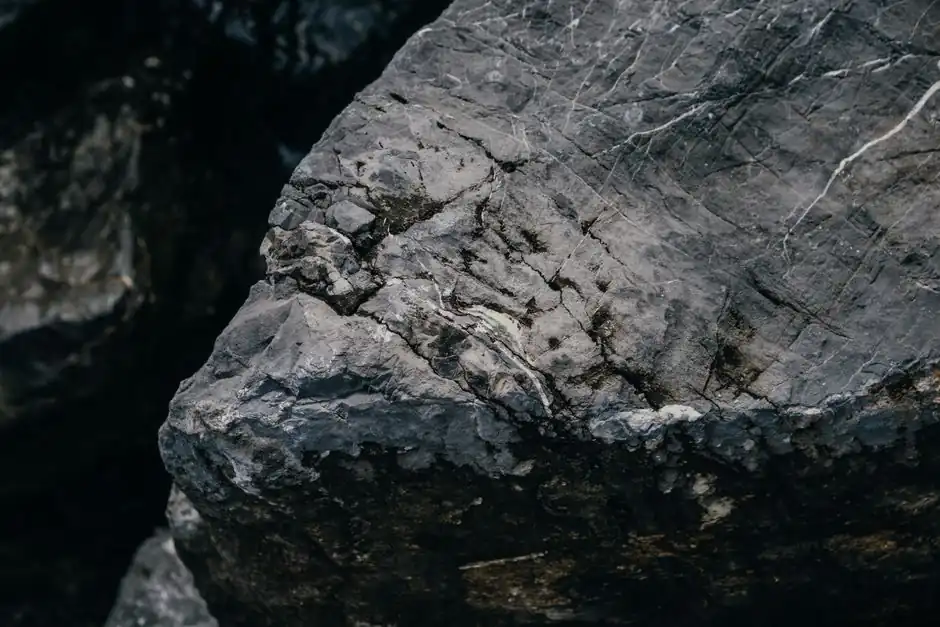
Lithium raw material sourcing in 2026 is anchored to two distinct geological pathways: continental brines ranging from 100 ppm to 7,000 ppm Li in Chilean salt flats, and hardrock pegmatite ores such as spodumene (LiAl(SiO3)2), lepidolite (K(Li,Al)3(Al,Si,Rb)4O10(F,OH)2), and petalite (LiAlSi4O10) with a 1.35-3.6% Li ore-grade range and flotation concentrates up to 7.5% Li2O [S5].
Three countries, Australia (hard-rock spodumene), Chile (brine), and China (brine plus lepidolite), dominate the supply map; the U.S. National Blueprint for Lithium Batteries 2021-2030 frames domestic battery manufacturing as a 5x-10x demand expansion over the next decade, making raw-material access the binding constraint [S1][S5].
Deposit Types and Lithium-Grade Comparison
Brine deposits in the Lithium Triangle (Chile, Argentina, Bolivia, Tibet, China) routinely test at 100-7,000 ppm Li, while mid-level North American brines at Silver Peak (Nevada) and Searles Lake (California) sit lower, and the Lida Valley deposit measures just 98-120 ppm Li, a 50x spread that dictates the cost-per-kg-Li recovery curve [S5].
Hardrock spodumene ore grades run 1.35-3.6% Li across primary minerals, and froth flotation upgrades concentrates to roughly 7.5% Li2O; mining and separation costs are higher than brine evaporation, but the higher grade offsets the capex per tonne of lithium carbonate equivalent (LCE) delivered [S5]. Sourcing engineers should treat the brine-vs-hardrock decision as a cost-vs-cycle-time tradeoff, with brine favoured for steady-state chemical-grade lithium carbonate and hardrock preferred when lithium hydroxide monohydrate (LiOH.H2O) is the target chemistry.
Selection Criteria for Procurement Engineers
A spec-first lithium sourcing checklist must lock four gates: ore/concentrate grade with assay method (ICP-OES), IRMA Standard for Responsible Mining audit status or equivalent OECD-aligned due diligence documentation, ISO 9001 + ISO 14001 at the converter, and chain-of-custody traceability down to the mine of origin [S3][S4][S6].
Mercedes-Benz has stated that, in the future, lithium will only come from mines audited in accordance with the IRMA mining standard, and that mine-level auditing is now executed with RCS Global against OECD Due Diligence Guidance, an escalation that the buyer side can mirror contractually [S3]. Umicore, by contrast, reports that it "tracks the origin of all its lithium raw materials to the level of the mine in the case of primary raw materials" through a robust lot-receipts process, giving a working model for upstream pass-through traceability [S6].
Who Lithium Sourcing Is For, and Who Should Skip It

Direct mine-of-origin or converter-level lithium sourcing fits Tier-1 cell makers, OEM cathode active material (CAM) producers, and stationary energy-storage integrators (ESS, data-centre UPS) whose procurement volumes justify the IRMA / OECD paperwork and the long-term offtake commitment [S1][S4].
Smaller buyers (golf-cart converters, light-EV retrofit shops, low-volume forklift fleets) are better served by LiFePO4 cell suppliers carrying UL 1973 (stationary) or UL 1642 (cell-level) certification, because the per-kWh cell premium from a battery integrator already amortises the raw-material audit work the buyer would otherwise have to repeat [S4]. The cut-off roughly tracks 1 MWh of annual cell draw, below which the audit overhead exceeds the cell-price premium.
Use-Case Mapping: Chemistry, Application, and Sourcing Route
Lithium Iron Phosphate (LiFePO4) cells dominate stationary energy storage, forklift traction packs, and data-centre backup (UL 1973 + UL 9540A), with procurement specs calling for ≥3,000 cycles, high depth-of-discharge, and an advanced BMS; this is the chemistry where LFP-grade lithium iron phosphate precursor sourcing matters most, and where Chinese brine-derived Li2CO3 is the dominant feedstock [S4].
For higher energy-density packs (NMC for golf carts and light EVs, NCA for premium traction), the upstream requirement shifts to low-impurity lithium hydroxide monohydrate, which favours Australian spodumene and Chinese lepidolite converters; both Mercedes-Benz's lithium audit framework and Umicore's mine-level traceability apply here, with cobalt and nickel chains now folded into the same RCS Global audit programme since 2022 [S3][S4][S6]. Buyers mapping the cell-chemistry and total-cost-of-ownership layers above the raw-material gate can borrow the decision tree laid out in EV battery procurement strategy: cell chemistry, TCO, and supply mapping.
Limitations, Failure Modes, and Standards Discipline
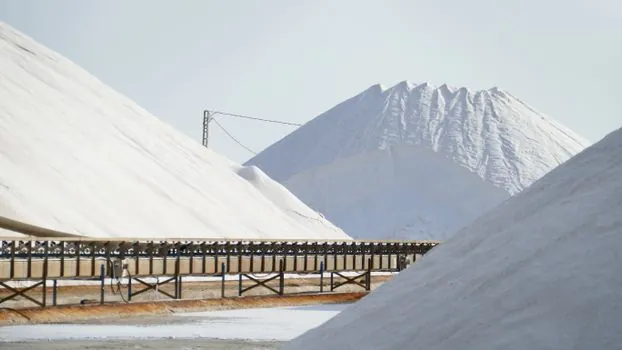
Brine evaporation cycles are weather-sensitive (rainy-season dilution in the Atacama, Tibet, and Qinghai operations), while hardrock spodumene is energy-intensive in the kiln-decrepitation and acid-roast step; both routes concentrate supply risk into three jurisdictions, so dual-source qualification (one brine, one hardrock) is the standard mitigation in long-term offtake contracts [S1][S5].
Conflict-mineral compliance, environmental permitting, and indigenous-community consent are now the disqualifying failure modes rather than price: a procurement note from Leoch Lithium's USA guide requires suppliers to "ensure no conflict minerals are used and that sourcing complies with environmental and social responsibility standards," aligning the buyer checklist with IRMA's human-rights and environmental clauses [S4]. Standards to anchor in the contract text include UL 1642 (cell), UL 1973 (ESS), UL 9540A (fire propagation), ISO 9001 / ISO 14001 (converter QA and EMS), and the IRMA Standard for Responsible Mining plus the OECD Due Diligence Guidance for Responsible Business Conduct [S3][S4]. For buyers whose portfolio extends into adjacent process equipment, the upstream/downstream risk map in hydraulic cylinders: upstream and downstream industry map shows how raw-material shocks propagate into motion-control component lead times.
Sourcing, Due Diligence, and Specification Discipline
The FCAB's National Blueprint for Lithium Batteries 2021-2030 names ten vital battery minerals in scope (lithium, cobalt, nickel, copper, natural graphite, manganese, aluminium, iron, plus phosphorus and rare-earth-related inputs), and the Manjong et al. criticality study (cited 22 times as of 2024) formalises a 0-100 ESSENZ scoring axis that ranks supply regions on socioeconomic availability, social compliance, and environmental compliance separately, so no single region scores low on all three [S1][S2].
Practical due diligence translates this into a four-step contract clause: (1) mine and country of origin declared at lot level, (2) IRMA or IRMA-equivalent third-party audit report attached per shipment, (3) chain-of-custody from mine to converter to cathode precursor, with mass-balance reconciliation, and (4) right-to-audit and termination-for-non-compliance language aligned to OECD Due Diligence Guidance; the Umicore lot-receipts process is the published reference implementation [S3][S6]. Buyers working across multiple critical-mineral categories should note that the same criticality lens now covers cobalt, nickel, graphite, manganese, and copper, an integration that started with cobalt in 2022 and has since been extended across Mercedes-Benz's cell supply chain [S3].
Trackable Signals for the Next Procurement Cycle
Two near-term signals will reshape 2026-2027 lithium sourcing: (a) the USGS Commodity Summaries 2026 lithium chapter (pp. 118-119) for updated U.S. production, reserve, and price reference data, and (b) the count of IRMA-audited mines that ship commercial tonnage, currently a single-digit population that limits the addressable supply pool for compliance-strict buyers [S5][S3].
Contract language that hardens around mine-level traceability today will outlast price volatility, and dual-source qualification between a Chilean/Argentine brine operation and an Australian spodumene converter remains the cleanest hedge against both weather-cycle and ESG-event disruptions through 2026 [S1][S3][S5].
Spec-level background on the components involved: linear guide, crossed roller guide, and advanced material.