
Hydraulic systems usually sit between 250 and 700 bar in industrial service and account for roughly 8-15% of heavy-machinery capital cost, yet they drive a disproportionate share of unplanned downtime on presses, balers, tippers, and marine deck equipment [S2].
A 2026 total-cost-of-ownership (TCO) framework replaces the old "cheapest line item wins" rule with a four-pillar scorecard: technical capability against ISO 4413, regional service depth, R&D intensity (4% of revenue or higher), and verified life-cycle data on contamination tolerance and seal life [S1][S2].
Define the Duty Before You Open a Catalogue
Pressure rating, flow envelope, fluid compatibility, duty cycle, and ambient conditions must be locked in writing before any vendor shortlist is built, because the same pump spec can be "near enough" for a conveyor and catastrophic inside a 24/7 press line [S1].
For procurement teams, the first technical gate is to score each candidate hydraulic cylinder, hydraulic motor, or hydraulic actuator on operating pressure (typical 250-700 bar industrial band), flow rate envelope, volumetric and overall efficiency, and conformance to ISO 4413 for fluid power safety [S2][S3].
Duty-cycle mismatch is the single most common silent failure mode: a pump sized for light cyclic use in a continuous-shift, shock-loaded press will see premature seal failure and elevated particle generation, both of which shorten the life of downstream valves and hydraulic cylinder seals [S1].
Total Cost of Ownership vs Invoice Price
UK procurement guidance treats TCO as the true total of purchasing, operating, replacement, and upgrade costs across an asset's life cycle, a definition that fits hydraulic systems almost one-to-one because downtime rarely stays limited to the failed component [S1].
Quote a lower-cost pump, fit it to a critical asset, and the hidden math is brutal: redirected maintenance labour, lost production, expedited freight, and a panic replacement that wasn't on the local shelf, which together erase the original saving and frequently overshoot it [S1].
A practical TCO model for a 5-7 year hydraulic life should include at minimum: acquisition cost, install and commissioning, expected energy draw (variable-speed pump drives such as Sytronix-class units can cut kWh materially), scheduled filter and seal replacement, mean time to repair (MTTR) under regional service support, and end-of-life residual or rebuild value [S2].
Vendor Scorecard: Four Pillars That Actually Predict Risk

Score every shortlisted supplier against four weighted criteria: (1) technical capability at the operating pressure and flow you actually need, (2) regional service footprint and spare-parts lead time, (3) R&D investment of 4% or more of revenue as a proxy for smart-hydraulics roadmap depth, and (4) documented MTTR benchmarks with named in-country application engineers [S2].
Manufacturers with thin service coverage in your region lose points regardless of technical merit, because a credible fluid-power partner with local engineering presence is the single biggest lever on MTTR and on long-term resale value of the machine [S2].
Bosch Rexroth's CytroPac compact power units and Sytronix variable-speed pump drives are cited as benchmark energy-efficient references; when comparing similar classes from other vendors, hold each candidate to the same volumetric-efficiency and variable-speed control test, not to marketing language [S2].
R&D-to-revenue ratio is a useful early filter: vendors reinvesting 4% or more consistently outpace peers on electrohydraulic actuator development and IoT-enabled condition monitoring, both of which feed back into lower TCO over a 7-10 year asset life [S2].
Hybrid Architectures: When Not to Buy Hydraulic at All
Electromechanical alternatives are gaining ground specifically in light-duty actuation, indoor industrial automation, and applications where precise position control outweighs raw force density, so procurement should evaluate hybrid architectures before defaulting to a pure hydraulic bill of materials [S2].
For off-highway construction, marine deck machinery, primary metals forming, and aerospace actuation, hydraulic drive remains the right answer because of force density, shock tolerance, and harsh-environment reliability; that list is the negative filter for where not to electrify [S2].
Demand is clustering into four segments that each impose distinct technical requirements: off-highway construction equipment, industrial automation retrofits, offshore wind installation vessels, and defence modernisation, and the vendor that can credibly serve all four is rare, so most buyers should match vendor strengths to a single primary segment [S2].
Contamination, Spare Parts, and the Hidden 30% of Lifetime Cost
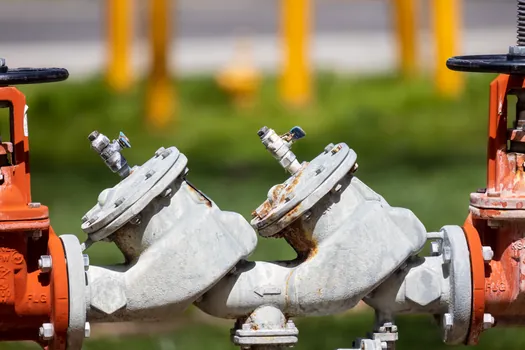
Reliability, contamination tolerance, efficiency, repairability, lead time, support, and end-of-life value all move the TCO needle far more than the catalogue price, and contamination control alone can swing a hydraulic power unit's service interval by a factor of three or more [S1].
Procurement should treat spare-parts lead time as a priced line item, not a maintenance afterthought, because the machine that cannot wait 6 weeks for a seal kit is operationally a different asset than the one on the spreadsheet [S1].
For related context on how cylinder sourcing decisions ripple through the upstream and downstream chain, see this hydraulic cylinder industry map and a tier-by-tier hydraulic cylinder supplier shortlist, both of which apply the same spec-first logic at the component level.
Contract Clauses That Lock the TCO Win In
Write the TCO into the purchase order, not into a follow-up email: required fluid cleanliness per ISO 4406, MTTR commitment with named service centre, guaranteed spare-parts availability for at least 7 years, fixed-price service intervals, and a clause tying warranty terms to documented operating conditions [S1][S3].
Quality clauses should reference ISO 4413 for fluid power safety, ISO 4406 for fluid cleanliness codes, and any OEM-specific contamination thresholds, and suppliers should be asked to certify compliance in writing rather than at the quote desk [S3].
For adjacent risk-management thinking, this industrial fastener supply risk playbook covers steel-traceability and continuity clauses that translate directly to hydraulic manifold and fitting sourcing.
Trackable signals to watch through year-end 2026: published service-centre expansions by top-tier hydraulic drive vendors, revised MTTR benchmarks in industry studies, and any tightening of regional spare-parts stocking for industrial pressure bands above 350 bar.