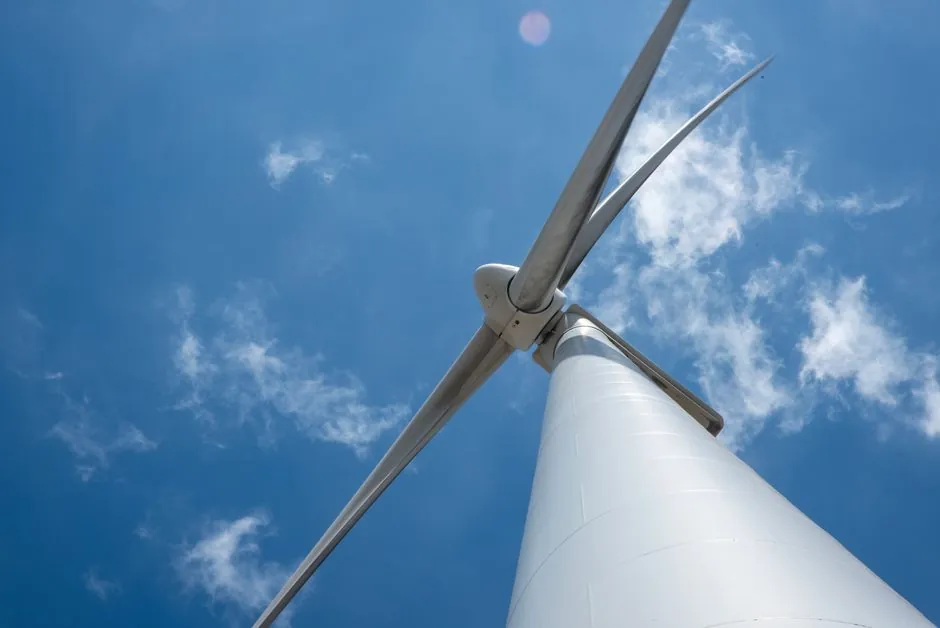
China controlled 67% of global wind turbine blade manufacturing capacity by megawatts in 2024, with nacelles at 60% and gearboxes at 79% over the same base [S4]. Sinoma Wind Power Blade Co. led the global blade market with over 10% share in 2025, and the top five suppliers (Sinoma, Zhongfu Lianzhong Composite Material Group, Vestas, LM Wind Power, TPI Composites) collectively held 43% [S5].
For a buyer outside China, three commercial routes exist: direct purchase from OEM blade makers, joint development with a mold-shop that supplies resin-infusion tooling, and trading-house consolidators that aggregate factory output. Each route carries a different exposure to material specification drift, mold amortisation, and blade-length logistics.
Manufacturing Process Reality: Resin Infusion Dominates, AFP Rising
Vacuum infusion is the dominant blade manufacturing process, with the 94-page Offshore Renewable Energy Catapult literature review documenting it as the baseline for current state-of-the-art blade production [S2]. Epoxy resin systems are the standard matrix for utility-scale blades, with polyester and vinyl ester reserved for smaller and lower-load applications [S2]. Automated fiber placement (AFP) is identified as an emerging process improvement for higher material yield and lower scrap rates [S5].
For a procurement engineer, the immediate consequence is that blade laminate quality is governed by infusion vacuum integrity and cure schedule, not by press tonnage. Specify ramp/hold/dwell times, exotherm limits, and gel time windows on the purchase order, not just generic epoxy tensile data. Glass fibre is the default reinforcement, with carbon fibre and hybrid architectures entering procurement for offshore and >5 MW turbines [S5].
Blade Length, Logistics, and the 90 m Threshold
Global Market Insights segments blades by length into ≤30 m, 31–60 m, 61–90 m, and ≥90 m, with transportation and logistics constraints listed as a primary market challenge [S5]. The longest onshore blades shipping out of Chinese factories in 2024 exceeded 100 m, and road, bridge, and port-clearance envelopes become the binding engineering constraint long before material cost. Chinese suppliers have solved this with dedicated inland-waterway and coastal barge routing from Inner Mongolia, Hebei, and Xinjiang plants to Tianjin, Dafeng, and Fangchenggang ports.
Buyers specifying ≥90 m blades should lock transport responsibility, route survey, and escort-permit scope into the Incoterm (DAP vs. EXW changes who owns a stuck blade at a low bridge). A buyer also negotiating turbine rating and blade size together should treat blade length as the cap on road-legal transport, not as a free design variable.
Top Supplier Tier: Who Actually Holds the Capacity

Sinoma Wind Power Blade (Sinoma Science & Technology) and Zhongfu Lianzhong (a subsidiary of China National Building Material Group) are the two state-affiliated tier-one blade makers in the consolidated 2025 ranking [S5]. Goldwind, Envision Energy, and MingYang are turbine OEMs that also produce blades in-house, with Goldwind alone installing 20 GW of wind turbines in 2024, up more than 20% from 2023 [S4]. Hunan ZKenergy Wind Power Industrial Technology is a smaller-scale player that has adapted wind turbine technology for affordable distributed units [S3].
For a buyer outside China, the practical decision is whether to contract a tier-one captive (Sinoma, Zhongfu Lianzhong, or the blade division of a turbine OEM) or to source from a tier-two mold-shop that can co-develop a custom aerodynamic profile. Tier-one capacity is sold out 12–18 months ahead on standard LM-style airfoils, while tier-two shops offer shorter lead times but require the buyer to bring or commission the aerodynamic and structural design package.
Material Specification: Fibres, Resins, Cores, and Bondlines
The Catapult review identifies four material families to specify: fibres (glass and carbon), matrices (epoxy, polyester, vinyl ester), sandwich core materials (balsa, PVC, PET), and bonding materials for root and trailing-edge joints [S2]. Polyurethane resin systems are now offered into the Chinese blade market by raw-material suppliers as an alternative to epoxy, with Covestro having produced polyurethane raw materials specifically for the Chinese blade market [S2].
A spec-driven buyer should not accept a single generic "composite blade" line item. Separate purchase-order lines for triaxial glass cloth, unidirectional glass, carbon-fibre spar caps, balsa or foam core, root insert (typically stainless or forged steel), and lightning-receptor system let the supplier quote each at current market price and let the buyer audit substitution. The same logic applies to the flow meter and pressure transmitter instrumentation that the turbine control loop depends on: separate, named part numbers beat a bundled BOM.
Recyclability and End-of-Life: Specifying the Next Buyer's Problem

Blade recycling methods and resource utilisation are now an active procurement specification area, with academic literature tracking mechanical, thermal, and chemical recovery routes for fibre and resin [S1]. China-specific recycling patterns differ from Europe and the US because of differences in installed fleet age, regional waste-arising forecasts, and resin system history [S6]. Thermoplastic resin systems are identified as a recyclable composite platform under industrial development, alongside advances in AFP and infusion [S5].
A buyer writing a 2026 blade specification should ask the supplier for a documented end-of-life plan, including resin chemistry identification (thermoset grade family), filler and core separability, and any take-back or co-processing commitment. This is no longer a nice-to-have, since European tender documents for offshore wind increasingly require it. It is also a hedge against future extended-producer-responsibility fees landing on the asset owner.
Trade, Tariff, and Geopolitics: The Hidden Specification
Chinese wind-tech foreign direct investment pledges outside China totalled an estimated USD 450 million in 2024, down from nearly USD 600 million in 2023, with China overtaking Denmark and Germany as the largest source of wind-tech FDI for the first time [S4]. Local-content rules are pushing Chinese OEMs to set up regional manufacturing hubs, with Envision Energy and Sany building turbine plants in Kazakhstan, Titan Wind Energy planning a EUR 300 million monopile factory in northern Germany, and Goldwind opening a wind equipment hub in Bahia, Brazil in August 2024 [S4].
For a buyer, the practical implication is that direct export of complete blades from China is increasingly subject to anti-dumping actions, national-security reviews, and local-content thresholds in the destination market. Sourcing through a Chinese OEM's offshore plant, or through a joint venture that meets local-content rules, is now a route some buyers prefer over direct shipment. The same scrutiny that applies to blades now applies to the industrial valve and rotating-machinery subsystems bundled with the turbine scope, so the sourcing strategy needs to be consistent across the whole bill of materials.
Qualification Gates: What to Audit Before the First PO
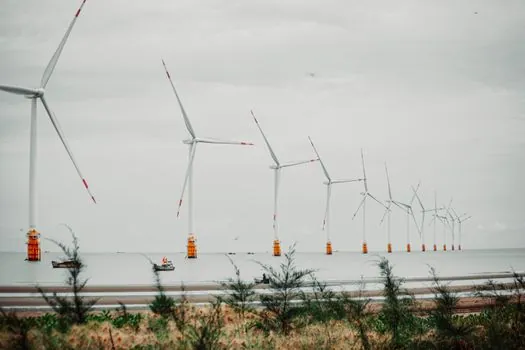
A minimum qualification package for a Chinese blade supplier should include: a documented infusion process capability study, sample-coupon test data for laminate mechanical properties (tensile, compressive, shear, ILSS), type-test or design-evaluation certificates against IEC 61400 (the wind-turbine design standard series), a documented root-bolt torque and pre-load procedure, and a quality system certified to ISO 9001 with blade-specific audit history. The supplier's mold health and mold-amortisation accounting is also a financial due-diligence item, not a quality item, because the mold cost is recovered across blade sets and a worn mold shows up as scrap-rate drift in year three. [S2]
For buyers with low volume, a sourcing playbook modelled on packaging-machinery qualification translates well, since both sectors share a tier-one/tier-two split, mold-shop economics, and Incoterm-driven logistics risk. The same spec-first gate logic used in lithium procurement for upstream material continuity applies here for resin and fibre supply security.
Trackable signals to watch: 2026 Q4 Sinoma and Zhongfu Lianzhong capacity announcements, GWEC's 2026 supply-chain report update for any shift in the 67% blade-capacity figure, and EU/US anti-dumping review calendars that affect Chinese blade import pricing. A 10–20% capacity reallocation offshore by Chinese blade makers, comparable to the 2024 FDI shift, would be the next major sourcing-route change.