
Additive manufacturing (AM) procurement is now a four-bucket category: printers, powder/filament, post-processing services, and engineering data with associated IP rights, per the Meyer et al. systematic literature review of buyer-supplier relationships in 3D printing [S1].
For engineers and buyers, the practical question is no longer "should we install a 3D printer" but "which part families move to AM, which stay with conventional suppliers, and what contract clauses protect the data that makes the part reproducible" [S1][S3].
What AM Changes Inside the Procurement Function
AM restructures the procurement category tree: the buyer of a finished metal bracket no longer sources the bracket alone, but also a digital twin, a powder certificate, a post-processing quote and a recurring qualification file [S1]. Stratasys' 2025 procurement guidance flags that 3D printing shifts spend from finished parts toward printer capex, raw material powder, and recurring engineering services, a re-bucketing that must be reflected in spend-analytics taxonomies [S3].
Logistically, AM collapses the inbound pipeline. A conventionally machined aerospace bracket may carry 12-16 week lead time plus a 1,000-piece minimum order; the same bracket printed in Ti-6Al-4V at a qualified bureau often lands in 2-4 weeks with no MOQ, as documented in GEP's 2024 procurement analysis [S2]. The Meyer review confirms that AM is most defensible for low-volume, high-mix, or long-lead legacy parts where carrying cost of safety stock exceeds the per-part AM premium [S1].
The Sourcing Levers That Decide Make or Buy
Meyer's 2020 framework distils AM sourcing into five levers, and any procurement strategy should score parts against each: (1) part complexity and consolidation potential, (2) annual volume, (3) qualification and certification burden, (4) data/IP sensitivity, and (5) logistics cost of the incumbent supply chain [S1]. When three of the five score in AM's favour, internal printing or a dedicated bureau beat the conventional RFQ.
The DoD-sponsored Acquisition Innovation Research Center study at Purdue frames the same problem as a sustainment question: identify the critical system elements, then map the contractual levers (IP rights, data deliverables, option clauses) that the buying organisation needs to retain the right to re-print a part at a different supplier or in-house at any time during the program life [S5]. The AcqIRC roadmap also calls out digital technical data packages (TDPs) as the non-negotiable deliverable, because a part without its TDP cannot move between printers or bureaus without re-qualification [S5].
Comparison: Make In-House vs Print Bureau vs Conventional Supplier
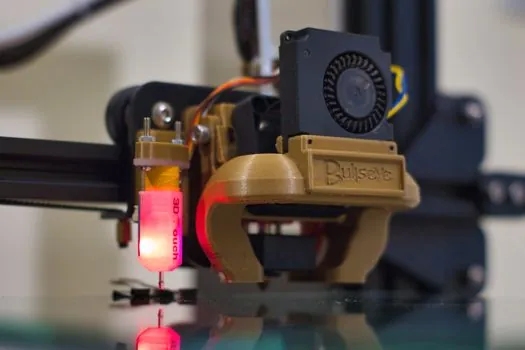
The three execution paths score differently on the criteria that actually drive a buy decision. A spec-first comparison for a non-safety, mid-complexity part:
In-house printing wins on lead time (often 24-72 hours for polymer, 3-7 days for metal after powder is on hand) and IP control, but loses on per-part cost below roughly 50-100 parts per year because capex and powder qualification are amortised across a small volume [S1][S3]. Conventional machining and injection moulding still win on per-part cost above approximately 200-500 parts/year and on materials (PPS, PEEK, glass-filled nylon, tool steels) where AM systems lag in certification [S1][S3].
AcqIRC's framework adds a fourth, often-overlooked dimension: contractual data rights. If the part design or print recipe is owned by the supplier, the buyer cannot re-source it without renegotiation, which neutralises AM's main strategic advantage, supply-chain optionality [S5]. The Meyer review reaches the same conclusion from the buyer's side: AM sourcing strategies that omit the data clause are not really AM strategies, they are subcontracted print orders [S1].
Spec-First Selection Criteria for AM Sourcing
Before evaluating vendors, lock the part specification. A defensible AM part data sheet includes material grade (e.g. Without these, the buyer is comparing vendors on price for non-equivalent parts.
Vendor evaluation then runs on four axes: process certification (ISO 9001 baseline, AS9100 for aerospace, ISO 13485 for medical, Nadcap for heat-treat/NDT), material traceability (powder batch certificates, recycled-powder ratio, lot retentions), capacity redundancy (multiple machines of the same model, not one unique unit), and IP/data posture (who owns the print file, the build parameters, and the post-processing recipe) [S1][S3]. Stratasys' 2025 guide also emphasises second-source qualification: a part that can only be printed on one machine at one site is a single point of failure and should not be sole-sourced [S3].
Where AM Sourcing Works and Where It Does Not
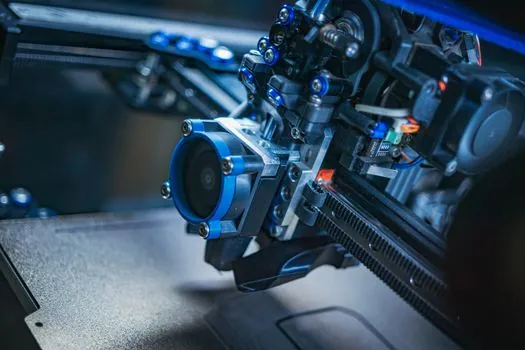
AM sourcing is a strong fit for: legacy parts with obsolete tooling (aerospace MRO, power generation spares), low-volume high-mix industrial spares, jigs/fixtures/soft tooling for the factory floor, mass-customisation products (orthotics, dental, hearing aids), and any part where geometry consolidation removes fasteners, welds or assemblies [S1][S2][S5]. The DoD AM Strategy lists sustainment of aging weapon-system parts as a top use case, precisely because the original tooling has often been destroyed or written off [S8].
AM sourcing is a poor fit for: high-volume commodity parts (a printed bracket rarely beats a stamped steel bracket at 50,000/yr), parts requiring full traceability to a wrought material certificate (forged pressure-vessel heads remain a forging), parts in materials without qualified AM processes (most engineering thermoplastics above 30% glass fill, most high-chrome tool steels), and any safety-critical part where the buyer cannot absorb the qualification cost on the part's annual volume [S1]. For these categories, the AM exercise becomes a distraction from conventional supplier management.
Risk, IP and Contract Clauses Specific to AM Procurement
Three contractual items separate a serious AM procurement from a print-order: (1) ownership of the digital build file, including the parametric CAD and the printer-specific build recipe, (2) a perpetual, royalty-free licence for the buyer to re-print or re-source the part, and (3) data-acceptance testing, i.e. the right to re-qualify a part printed at a different facility or on a different machine against the original TDP [S5]. AcqIRC's research explicitly lists these as critical negotiation points during the contract phase, not after the first delivery [S5].
Quality clauses should also require powder-batch traceability, retention of witness coupons for destructive testing, and disclosure of recycled-powder ratio (some metal AM processes reuse 30-70% of unmelted powder, which can shift chemistry and mechanical properties over time) [S1][S3]. For buyers new to AM, the safest first step is a pilot on 3-5 non-safety part numbers with dual sourcing (one in-house capability or bureau plus a conventional backup) before re-architecting any category spend [S3].
How This Connects to a Spec-First Buying Workflow

AM procurement works best when the rest of the buying workflow is already spec-first: locked part specifications, written acceptance criteria, and vendor scorecards that include data and IP metrics, not just price and on-time delivery [S1][S3]. A spec-first workflow also makes it easy to apply the same sourcing levers to adjacent categories, from the additive manufacturing material page where powder certificates and recycled-powder ratios are catalogued, to the industrial valve and flow-meter lines where AM is increasingly used to consolidate bodies and reduce lead time on obsolete spares.
The next trackable signal for buyers in this space is the publication of updated qualification standards: ASTM F42 committee work on process-category performance specs, ISO/ASTM 52900 series updates for polymer and metal process nomenclature, and revisions to Nadcap AC7110/12 for AM heat-treat and NDT, all of which directly change which part families can move to AM under what contract terms. Procurement teams should also watch the DoD AM Strategy implementation deliverables and AcqIRC follow-on reports for updated contract-clause language that the defence industrial base will eventually flow down to commercial suppliers [S5][S8]. On the sourcing side, expect the linear guide and crossed-roller guide categories to see growing bureau-printed part numbers as the bearing-equipment OEMs begin publishing their own print-bureau-approved supplier lists. For adjacent equipment decisions outside of AM, this spec-first discipline is laid out in the Automotive Molding Line Selection: Injection vs 3D Printing Spec Guide and the Bearing Manufacturing Quality Standards: ISO, ABEC and Forging Specs in 2026 reference pieces.