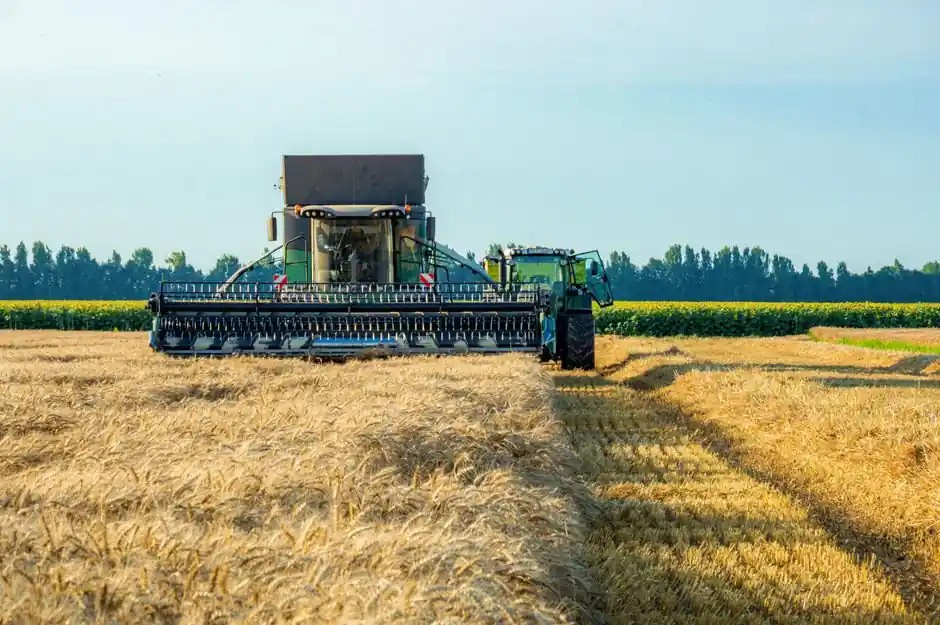
On a combine, planter, or baler running at 1,500–2,200 rpm engine speed over uneven ground, a plain hex nut is rarely the right call. Sustained lateral vibration and thermal cycling drive the Junker-effect thread slippage that drops preload and walks a nut off a bolt, so the question is which lock nut type matches the joint.
Agricultural OEM fastening falls into two broad bands: powertrain and wheel-hub joints, which run hot and oily (typically 80–150 °C near gearboxes, 200 °C+ near exhaust and disc-brake assemblies) and need all-metal prevailing-torque nuts or serrated flange lock nuts, and lighter chassis, cab, and sheet-metal joints where nylon-insert lock nuts (DIN 985 / ISO 10511) are the workhorse because the temperature stays under the 120 °C nylon ceiling [S1][S4].
Lock Nut Types Mapped to Vibration and Temperature
Selection on an ag machine starts with the locking principle, not the thread size. The seven families buyers actually see on tractors and implements are: non-metallic insert prevailing-torque nuts (nylocks), all-metal prevailing-torque nuts (DIN 980 / ISO 7042, DIN 982 / ISO 7040), thin prevailing-torque nuts for stamped sheet-metal, fine-pitch lock nuts, serrated flange lock nuts, jam-nut arrangements (two nuts torqued against each other), and specialized mechanical nuts such as SKF KM/KML keyway lock nuts used on bearing sleeves [S1][S3][S9]. Nylocks work by compressing a nylon ring that grips the bolt thread, all-metal nuts do the same with a deformed top section of the nut itself, and serrated flange nuts bite into the mating surface with radial teeth [S1][S4][S8]. For bearing locknut duty on implement wheel hubs and disc-harrow gang shafts, SKF's KM, KML, and HM series use a separate locking washer and tab to lock the nut to the shaft [S9].
For a row-crop tractor axle or combine rotor bearing, the locking method must hold at least 80% of the original pre-tensioning force under high dynamic load, which is the threshold Böllhoff defines for safety-relevant anti-rotation locks [S4]. That rules out a bare hex nut with a spring washer; it points to DIN 980 all-metal prevailing-torque nuts in 8, 10, or 12 grade, or to a serrated flange lock nut where the joint surface is clean and unpainted.
Agricultural Use Cases: Where Each Nut Belongs
On a CNH agricultural or construction machine, OEM lock nut 14084111 is a typical bulk-fitment part used across cab, chassis, and various small bracket assemblies where vibration is moderate and access for re-torque is limited [S5]. For heavier joints, flange lock nuts are described as among the strongest anti-vibration nut options available and are commonly specified in agricultural OEM and heavy-truck assemblies [S2]. A practical rule from field experience: nylon-insert nylocks for one-time-use bracket and shield fasteners, top-tanged (deformed-thread) lock nuts and flange serrated lock nuts for powertrain, hub, and wheel fasteners, and two-nut jam arrangements only where the stud is long enough to take both nuts and where periodic re-torque is acceptable [S1][S6].
For plough disc and coulter bearings, the locking function is often a slotted thin nut with a tab washer rather than a prevailing-torque design, because dust, mud, and chemical fertilizer exposure attack polymer inserts. In those zones, all-metal deformed-thread lock nuts (DIN 980) or all-metal lock nuts with a captive washer (Böllhoff B 53010 / B 53011) maintain friction in the thread even after several reuse cycles, which a nylock cannot do [S1][S4].
Comparison of the Main Lock Nut Types for Ag Machinery
The comparison below lines the four families an ag buyer will actually quote against temperature limit, reuse count, typical size range, and the ag joints they fit: [S1]
Nylon-insert lock nut (DIN 985 / ISO 10511): nylon ring insert; service ceiling around 120 °C; single-use, reuse drops prevailing torque sharply; sizes M3–M24 typical; fits cab brackets, shields, plastic trim, light sheet-metal. All-metal prevailing-torque lock nut (DIN 980 / ISO 7042, DIN 982 / ISO 7040): deformed top thread; 300 °C capable; reusable 5–10 cycles if inspected; sizes M5–M36; fits engine brackets, gearbox casings, axle hardware. Serrated flange lock nut: radial teeth under flange; service ceiling set by base material (zinc-plated steel ~120 °C, stainless 400 °C+); reusable, the serrations renew on each install; sizes M6–M20 typical; fits implement frame joints, wheel-motor mounts, combine header drives [S1][S2][S4][S8]. Bearing lock nut with keyway (SKF KM, KML, HM series): separate tab washer locks nut to shaft; service ceiling set by washer and nut material; designed for repeated precision re-positioning; sizes M10–M200+; fits bearing sleeves on harrow gang shafts, planter row-unit shafts, and feeder-house bearings [S3][S9].
The decision logic in plain numbers: if joint temperature stays under 120 °C and the nut is installed once and never touched, a DIN 985 nylock is the cheapest correct answer. If the joint runs over 120 °C, is safety-relevant, or will see more than two re-torques, step up to DIN 980 all-metal or a serrated flange lock nut. If the joint is a bearing position that needs axial location plus locking, use a KM/KML series with a tab washer rather than a generic prevailing-torque nut [S1][S4][S9].
Material, Property Class, and Finish Choices
Steel dominates ag lock nut production, but the property class and the coating decide whether the nut survives a season. Standard offerings run in steel (various strength grades), A2 and A4 stainless, plastic, and brass, with surfaces available uncoated, zinc-plated, thick-layer passivated, mechanically zinc-plated, yellow galvanized, blackened, or with zinc-flake coatings for high-corrosion duty [S4]. On tillage and harvesting implements that see fertilizer, manure splash, and daily wash-down, zinc-flake or A4 stainless lock nuts are the practical choice because standard zinc plating sacrifices 5–15 µm per season in that environment.
Property class should match the bolt: an 8.8 bolt should be paired with a class 8 prevailing-torque nut, a 10.9 bolt with class 10. All-metal prevailing-torque nuts to ISO 2320 and DIN 980 are functionally tested for prevailing torque and torque/clamp-force behaviour, which is the test a buyer should require on the certificate, not just a dimensional check [S1]. For OEM volume on tractors and combines, prevailing-torque type nuts in 8 and 10 grade, zinc-flake coated, cover most chassis and powertrain joints.
Standards, Sourcing, and Reuse Discipline
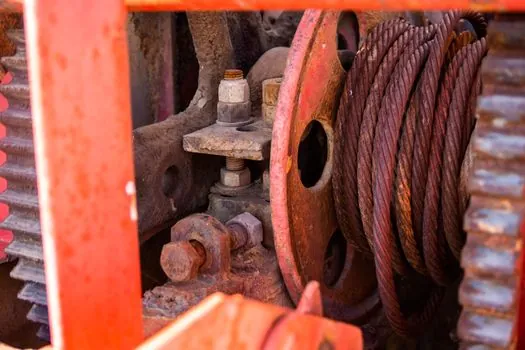
The standard stack an ag engineer should keep on the desk: ISO 2320:2015 for prevailing-torque functional properties on steel nuts, DIN 980 similar to ISO 7042 for all-metal type, DIN 982 similar to ISO 7040, DIN 985 similar to ISO 10511 for the nylock, DIN 6924 / DIN 6925 / DIN 6926 for flange variants, and DIN 7967 for pal-type self-locking nuts. For railway-adjacent ag equipment Böllhoff lists compliance with the federal railway standard via the Vargal all-metal lock nut [S1][S4]. For bearing lock nuts the relevant references are the SKF KM/KML/HM/AN/N tab-and-washer series [S3][S9].
Reuse is the discipline most field failures trace back to. A nylock is rated for a single installation; each re-torque drops the prevailing torque and the locking function is gone. All-metal deformed-thread nuts can be reused a handful of cycles if the deformed thread is intact, and serrated flange nuts renew the bite on each install as long as the mating surface is clean. Böllhoff's Vargal all-metal design is explicitly engineered so clamping force stays constant through multiple reuses, which is why it shows up in safety-relevant and railway-spec applications [S1][S4][S6].
Limits, Failure Modes, and Selection Pitfalls
The common failure pattern on ag equipment is not the nut itself; it is the wrong nut for the environment. A nylock on a gearbox housing near a hot exhaust manifold softens past 120 °C, the nylon ring creeps, and the nut walks. A serrated flange nut on a painted, oily, or rough surface cannot bite, so the locking feature is decorative. A bearing lock nut without its tab washer is just a thin nut and will drift under vibration. A plain hex nut with a split lock washer is still the cheapest, but the split washer does not prevent Junker-effect thread slip on a combine rotor bearing, and it is not a substitute for a true prevailing-torque or flange lock nut [S1][S2][S7].
Two operational rules that save rebuilds: first, never mix a prevailing-torque nut with a zinc-lubricated bolt and assume the published torque figure still applies, the prevailing torque is added on top of the seating torque and the total can easily exceed the bolt's clamp limit. Second, on a used machine, replace every prevailing-torque nut during a driveline or hub service; the cost of the nut is trivial compared with a stripped stud or a lost wheel [S1][S4][S6].
Buyer's Quick Checklist for an Ag Lock Nut Order
For most ag OEM and replacement buyers, the order specification reads: locking principle (all-metal prevailing-torque per ISO 2320, serrated flange, or nylock), standard reference (DIN 980, DIN 985, or KM/KML), property class (8 or 10), thread size and pitch, material and coating (steel zinc-flake, A2, or A4 stainless), prevailing-torque test certificate, and the intended joint (bracket, powertrain, hub, or bearing). On a CNH or Case-IH platform, cross-check the OEM part number, for example 14084111 for the bulk-fitment lock nut used across cab and chassis assemblies, against the machine's parts catalogue before substituting a generic [S1][S2][S5].
The same selection discipline shows up in adjacent fastening decisions on ag and industrial equipment; a useful parallel is how bearing and pulley positions are locked against axial drift, covered in Locking Assembly Selection for Material Handling Drums and Pulleys, and how a lock nut is differentiated from a plain hex nut on a spec sheet. For the broader machinery context the construction machinery and equipment family, including the implements these nuts get fitted to, sets the duty cycle the locking principle has to survive.
Spec-level background on the components involved: pressure transmitter.