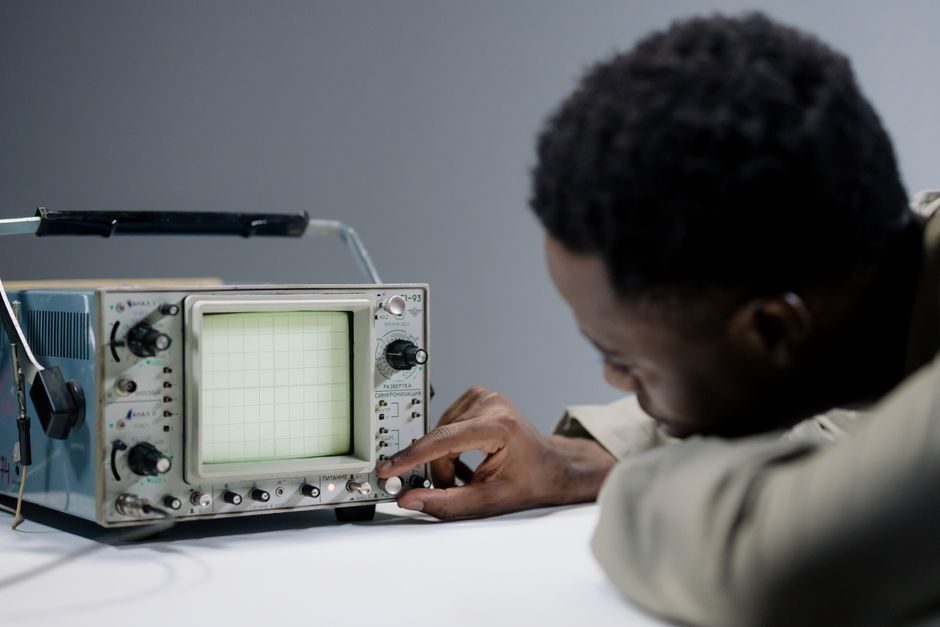
A loop calibrator is a handheld tool dedicated to sourcing, simulating and measuring 4-20 mA current loops with an integrated 24 V loop supply, while a multifunction process calibrator layers thermocouple (TC) and RTD simulation, DC voltage, resistance and frequency on top of the same mA core [S2][S7]. The decision is functional scope versus bench weight, not brand loyalty.
Pricing in 2025 vendor data places dedicated mA loop calibrators such as the Fluke 705 and Fluke 707 in the sub-$2,000 band, while multifunction process calibrators such as the Fluke 725 ($4,042.99) and the higher-accuracy Fluke 726 ($5,394.99) sit roughly 2x to 8x higher depending on feature tier [S1][S7]. Spec-first buyers should match instrument capability to the loop types on the plant floor, not to a catalog page count.
Functional Scope: What Each Tool Actually Sources and Measures
A loop calibrator centers on dc current in the 0-24 mA range, typically with readouts in mA and percent of 4-20 mA span, plus a built-in 24 V loop power supply so the technician can energise a 2-wire transmitter without a separate supply [S2][S6]. The Fluke 705 datasheet confirms a 0-20 mA / 4-20 mA source-measure range and a separate 0-28 V dc measurement input, with the explicit note that the unit does not source and measure simultaneously [S8]. Fluke 789 ProcessMeter models add full digital-multimeter functions and a 24 mA source/measure, blurring the line into the multifunction process calibrator category [S6].
A multifunction process calibrator inherits the loop-calibrator mA core and extends it. The Fluke 725/726 family sources and simulates 14 RTD types and 17 thermocouple types, with resistance to 4000 Ω on the 726 versus 3200 Ω on the 725, and 75 mV / 30 V source ranges for millivolt instrumentation [S4]. PIE's Model 820/830 competitive comparison lists mA, V, TC, Ω, RTD, Hz, and pressure on the multifunction side, with pH on the 830, against a basic mA loop on dedicated loop calibrator units [S3].
Accuracy Class and Reading Resolution
Loop calibrators such as the Fluke 707 and 789 quote 0.01% of reading accuracy in the mA band, which is the figure that drives the test uncertainty ratio (TUR) of at least 4:1 against a typical 0.05% process transmitter [S1][S6]. For control-valve testing the Fluke 710 mA loop calibrator combines 0.01% mA accuracy with pre-configured valve signatures and HART communication, so the loop tool itself is allowed to talk to the positioner rather than just force a current [S6].
Multifunction process calibrators add an accuracy penalty on the extra ranges. Across the 725/726 family, the 726 publishes tighter specifications on the 30 V dc, 24 mA and 4000 Ω ranges than the 725, with the published process-tool selection guide calling out the 726 as the "Precision" tier against the 725 standard tier [S4]. Buyers should verify the TC and RTD accuracy figures separately from the mA figure, because the headline 0.01% mA spec is not repeated on the temperature ranges.
HART and Digital Protocol Behaviour
A loop calibrator is a transparent device on the loop: it sources the analog 4-20 mA and lets any HART communicator ride on top, or it sources the digital mA and passes HART data through. The Fluke 710 is the clearest example of a loop calibrator that adds a HART modem for valve diagnostics rather than treating HART as a separate category [S6]. The Fluke 773 mA clamp meter extends this further by measuring 4-20 mA without breaking the loop, which is the single biggest field-time saving for I&E techs on live loops [S6].
A multifunction process calibrator must document whether HART communication is supported on each channel, because the additional voltage and resistance ranges do not change the HART behaviour, but the HART presence does change the loop calibrator class. For HART-only loops the multifunction process calibrator needs an explicit HART resistor and modem; for Foundation Fieldbus or PROFIBUS PA segments the calibrator is a different class altogether and is not addressed by the loop-vs-multifunction decision in this article.
Decision Matrix: Loop Calibrator vs Multifunction Process Calibrator
The four-criterion comparison below lines the two tool classes against the decisions that drive a purchase order: [S1]
1. Cost. A dedicated loop calibrator typically lists between $665 (PD9501-class) and $1,500 (Fluke 707 / 789), while a Fluke 725 multifunction lists at $4,042.99 and a 726 at $5,394.99 [S1]. Capital exposure differs by 3x to 8x.
2. Functional coverage. A loop calibrator covers the 0-24 mA band, percent-of-span readout, 24 V loop supply and (in some models) HART/valve diagnostics [S2][S6]. A multifunction process calibrator adds 14-17 TC types, up to 14 RTD types, voltage to 30 V, resistance to 4000 Ω, frequency and, on the 830-class, pressure modules [S3][S4].
3. Field time per loop. A loop-only job (commission a 4-20 mA level transmitter) is faster with a loop calibrator because there are no unused menus. A cross-discipline work order that combines mA, TC and RTD runs faster with a single multifunction unit rather than swapping tools.
4. Calibration workload. ISO 9001 and ISO/IEC 17025 environments require 6 to 24 month recalibration cycles [S1]; sending one multifunction unit to a cal lab is cheaper and easier to track than sending a loop calibrator and a separate TC/RTD source.
Use-Case Selection: Who Each Tool Is For
Choose a loop calibrator if the daily work is troubleshooting, commissioning, or valve signature testing on 4-20 mA loops, especially when HART communication or non-intrusive mA measurement is required. The Fluke 710 (HART + valve), 773 (clamp-on mA) and 789 (DMM + mA) cover the three common variants and are still loop-class instruments [S6]. A loop calibrator is the wrong tool for a full temperature calibration workload because the TC/RTD ranges are missing.
Choose a multifunction process calibrator if the job mixes temperature, pressure, voltage and mA on a single work order, or if the calibration lab needs a single instrument to back-trace spans to NIST. The Fluke 725 suits routine cross-discipline work; the Fluke 726 suits the 0.01%-class process instrumentation and lab reference use where the wider 4000 Ω range and tighter voltage accuracy are required [S4]. For working through a loop tester verification on multiple transmitter types, the multifunction unit removes the tool-swap penalty. For a spec-first read on bench pressure instrumentation, the same decision logic extends to deadweight tester selection in the pressure loop.
Standards, Calibration Interval and Documentation
Process instrument calibration is governed by ISO 9001 (quality system) and ISO/IEC 17025 (calibration laboratory competence), with a typical recalibration interval of 6 to 24 months depending on use environment [S1]. PIE ships a signed and dated NIST-traceable certificate as standard and recommends annual factory recalibration, while Altek ships an unsigned statement of calibration practices and charges extra for a signed certificate [S3]. The Fluke 725/726 selection guide lists a traceable certificate as a baseline accessory in the 725/726 feature set, meaning the loop calibrator tier also needs a traceable cert to meet ISO/IEC 17025 audit trails [S4].
For hazardous-area plants, neither the loop calibrator nor the multifunction process calibrator is the item that carries the ATEX or IECEx certification for the loop itself; the transmitter and the barrier do. The calibrator must be rated for the work area, and most handheld Fluke and PIE units are specified for ordinary locations unless a manufacturer variant is documented. Specifiers should confirm the zone rating on the specific model number before taking a loop power distributor into a classified area, because the 24 V loop supply is itself an ignition source if a loop wiring fault is present.
Selection Signals to Track Through 2026

Three signals indicate where this category is heading. First, vendor datasheets published through 2025 continue to widen HART functionality inside loop calibrators (Fluke 710, 773), so the next spec refresh should clarify whether the HART modem stays a loop-calibrator feature or moves into the multifunction class [S6]. Second, multifunction process calibrator pricing remains anchored to the $4,000-$5,400 band for the Fluke 725/726 tier, with a sub-$700 entry point at the loop-calibrator end, so a new mid-tier release at $2,000-$3,000 would be the disruptive move [S1]. Third, the ISO 9001 and ISO/IEC 17025 6-24 month recalibration cadence is unchanged in the public guidance, so the aftermarket recal-lab pipeline is the steady indicator of installed-base health [S1].