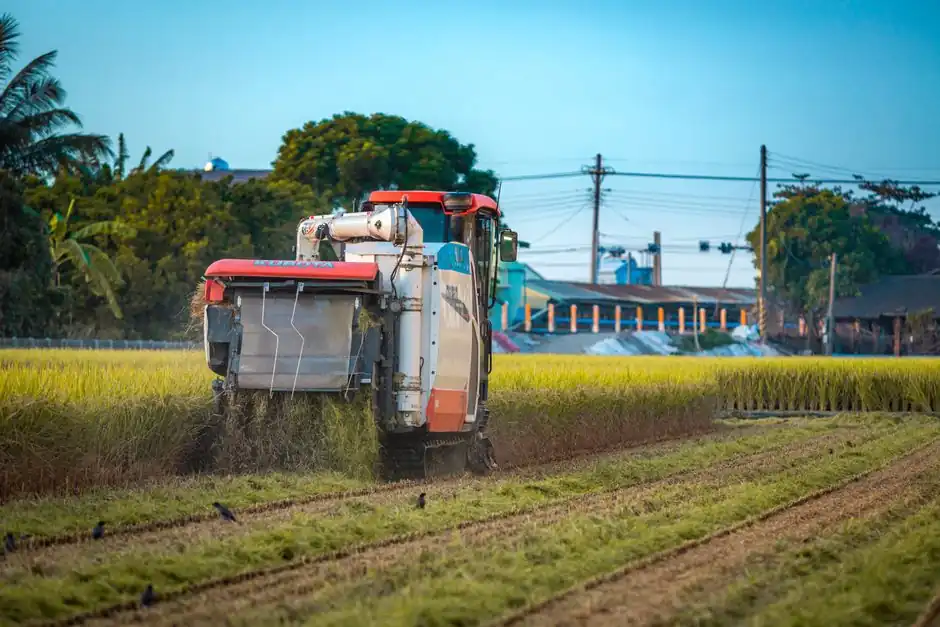
Agricultural machinery castings such as gearbox housings, plough shares, hitch brackets, and axle supports are the natural fit for lost foam casting, with the process delivering near-net-shape parts in cast iron and aluminum alloys that skip most post-machining on complex internal passages [S2][S3].
Selection starts from three numbers: target part weight (typically 20-200 kg for tractor and implement components), annual tonnage requirement, and maximum pattern envelope, because the EPS molding machine, sand flask, and pouring capacity must be matched to the largest single pattern, not the average [S1][S6].
Why Agricultural Machinery Is a Strong Fit for Lost Foam
Agricultural parts carry thick walls, internal ribbing, and irregular parting geometry that traditionally force foundries to add cores or accept heavy grinding; lost foam eliminates the core step because the polystyrene pattern vaporizes when molten metal contacts it, leaving a single-piece cavity [S2][S3].
The unbonded sand bed used to back the pattern is reported at roughly 98% reusable, which keeps recurring media cost low for high-mix agricultural part runs [S3]. The process is classified as expendable-pattern casting alongside investment casting, the only two mainstream methods where the pattern is destroyed in every pour [S4].
Equipment Stages That Make Up the Line
A complete agricultural-machinery lost foam line stacks five stations: EPS pre-expander, EPS molding machine, optional EPS block molding for large patterns, pattern drying/coating station, and the molding/sand-and-pour section tied to a line-frequency furnace for iron pour at 1380-1450 degrees C [S1][S2].
For agricultural patterns exceeding 1500 mm in any single dimension, the EPS block molding machine is added in parallel to the standard molding press, because a single die cavity that large becomes uneconomical for low-volume replacement parts [S1][S6]. Pattern geometry, not just platen size, must drive the molding press choice: deep-draw rib patterns require higher steam pressure and longer dwell than flat housings [S6].
For guidance on the upstream pattern-prep sub-line itself, the molding line entry covers the press-side controls, while the automatic molding line page maps the higher-volume flask-handling variants used in iron foundries running 20-30 molds per hour.
Material and Process Boundaries
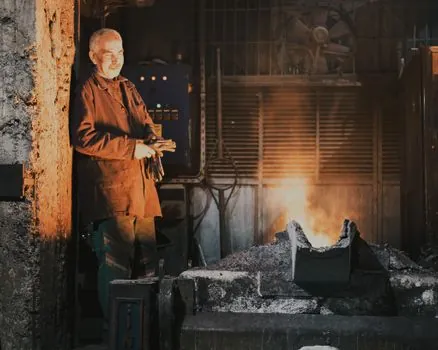
Lost foam works cleanly with gray iron, ductile iron, and aluminum alloys in the temperature range 680-1450 degrees C; stainless steels, high-chromium wear alloys, and other high-melting-point grades are flagged as problematic because the vaporized polystyrene creates gas and inclusion defects above roughly 1500 degrees C [S3].
For a tractor gearbox housing in ductile iron, the process typically hits CT8-CT10 dimensional accuracy, surface roughness Ra 12.5-25 micrometers straight from shake-out, and reduces internal passage machining by 60-80% versus green sand coring [S2][S3]. A refractory coating of 1-2 mm dried thickness is applied to the foam assembly before sand burial to control gas permeability and surface finish [S2].
Decision Criteria Against Sand Casting
For foundries comparing the two routes on cost alone, a useful break-even rule is that lost foam wins above 1500-2000 castings per year per part number, and sand casting remains the default for short-run service parts, prototypes, and any grade above stainless or heat-resistant alloy [S3]. Material selection, not part shape, is the harder constraint on the lost foam side [S3].
Who Should Pick Lost Foam, and Who Should Not
Lost foam is the right call for foundries producing cast iron or aluminum agricultural housings, gear cases, pump bodies, and complex manifold-like shapes in batches of 1500+ per year where reducing post-machining drives the total cost [S1][S3].
It is the wrong call for low-volume prototype runs (under 500 parts per year), for any grade outside the cast iron/aluminum envelope, and for foundries that need to change pattern geometry weekly: the aluminum die is a sunk cost that punishes frequent redesigns [S3]. Sand casting remains the better default for under-500-piece runs and for exotic alloys [S3].
Capacity Sizing for an Agricultural Foundry
Sizing the line to annual tonnage is the next step: a mid-volume agricultural foundry running 3000-5000 t/year of iron castings typically needs a flask size of 1200-1500 mm by 1000-1200 mm, an EPS molding press with 1500-2000 kN clamping force, and a 3-5 t line-frequency induction furnace matched to a single-station pour at 8-12 molds per hour [S6].
For foundries running both iron and aluminum, the line-frequency furnace entry covers the dual-frequency configuration that lets the same melt deck pour aluminum at 700-750 degrees C and iron at 1400-1450 degrees C with different coil taps; the conveyor sorting line reference covers the post-pour cooling and shake-out handling that keeps cycle time stable when pattern mix varies. Pattern quality inspection and a final part scan on a line-scan camera is increasingly specified for surface-defect detection on visible housing faces, where 0.5-1.5 mm defects must be flagged before machining.
Track the next decision node: validate the largest planned pattern against the molding press platen and the sand flask inner dimensions on the supplier's factory drawing, not on the catalog maximum, because agricultural implement brackets frequently exceed the practical envelope of a press rated for the headline platen size [S1][S6]. Also confirm the refractory coating supplier can deliver the 1-2 mm dip-and-dry film in volume, since this single consumable controls both surface finish and gas-defect rate on the final casting [S2].
See also our earlier report, Two-Hand Control Spec for Work at Height: Hands-Free Selection Map.