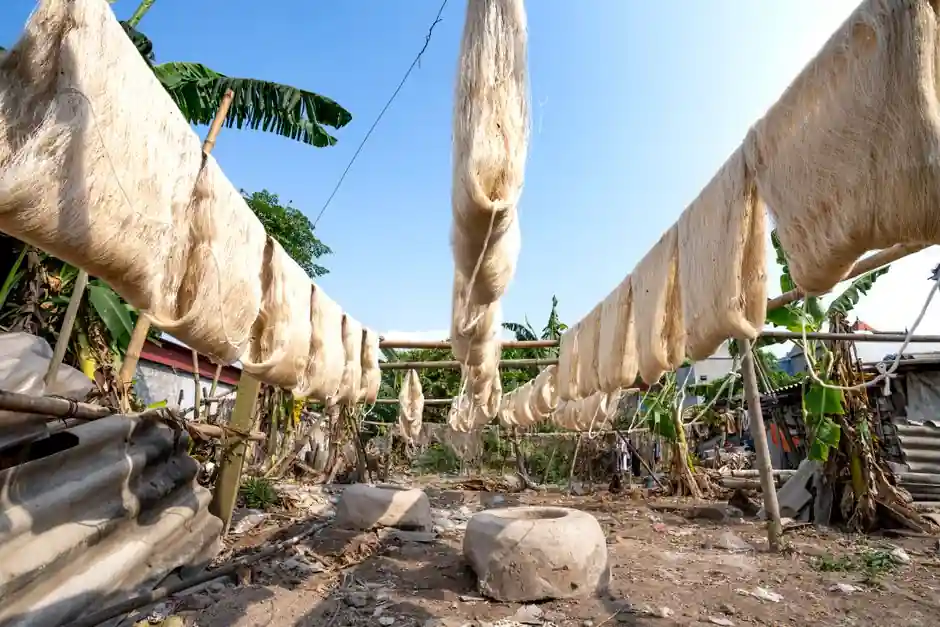
Low-dielectric glass fabric shortages are expected to persist beyond 2026, with Nittobo holding about 90% of T-glass supply and new capacity unlikely to arrive before mid-2027 [S2][S4].
As of March 2026, price increases of approximately 10% to 15% compared with 2025 levels were anticipated for advanced technologies and materials [S7].
Why Low-Dk Glass Cloth Is the 2026 Bottleneck
Low-Dk glass is not interchangeable with commodity fiberglass because dielectric loss, coefficient of thermal expansion, yarn diameter, weave geometry, surface treatment, cleanliness and thickness must remain within application-specific limits [S3].
T-glass provides lower dielectric constant, lower high-frequency signal loss, higher thermal resistance and greater dimensional stability than conventional E-glass [S1]. These properties support AI accelerators, advanced GPUs, PCIe Gen5 and Gen6 SSD controllers, high-bandwidth memory packaging and high-layer-count server PCBs [S1].
The demand shock is structural. AI server designs use larger substrates, more PCB layers and higher signal rates, while cableless rack architectures add midplane and orthogonal backplane consumption [S1][S2]. The resulting shortage is a qualified-material constraint, not simply a shortage of woven glass, because announced furnace or weaving capacity must pass laminate, PCB and often OEM qualification before it can support a released design [S3].
Specialty Supply Remains Concentrated
Nittobo holds approximately 90% of T-glass supply, leaving the market dependent on one producer for the most constrained low-Dk grades [S4]. Its new Fukushima building was scheduled to begin production in early 2027, but useful volume was not expected until the middle or latter part of 2027 [S4].
Kingboard and Jushi were increasing glass fiber output as AI demand reshaped PCB production, yet the added capacity could arrive too late for server build-outs planned for the second half of 2026 [S6]. Capacity additions in Thailand from late 2026 through 2028 include laminate, prepreg and glass-fabric plants, but high-end material remains dependent on imports [S4].
The low-dielectric glass fiber market was valued at USD 348.42 million in 2026, with glass fiber cloth accounting for 65.13% and high-performance PCB applications for 41.56% [S5]. New furnace lines may require 18 to 24 months to qualify, which makes announced capacity an unreliable near-term remedy [S5].
Price and Lead-Time Pressure Has Spread
Specialty glass cloth prices were anticipated to increase by approximately 10% to 15% compared with 2025 levels as of March 2026 [S7].
Standard FR-4 laminate lead times expanded from several days to approximately four weeks, while Kingboard recorded 10 price increases between 2025 and July 2026 [S4]. Thin styles including 2116, 1080 and 1078 were among the tightest grades because weaving looms, rather than raw glass production alone, formed a major bottleneck [S4].
Allocation remains differentiated. Mainstream boards remained obtainable at higher prices, whereas AI-grade boards and IC substrates faced allocation through 2027 and 2028 [S4]. Unimicron reported some equipment lead times reaching 30 months on 20 October 2026, showing that substrate expansion cannot instantly absorb constrained glass fabric [S4].
Material Options Require Engineering Qualification
E-glass, T-glass, NE-glass and low-CTE constructions are not interchangeable drop-in options because each changes electrical loss, thermal expansion, registration, warpage and long-term reliability [S1][S3]. Any alternative must be tested by the laminate producer, PCB fabricator and, for many platforms, the OEM before commercial substitution [S3].
Buyers Should Secure Qualification Before Capacity

This shortage is designed for procurement, laminate sourcing, PCB engineering and OEM material teams that control stackups and supplier approvals. It is not a general component shortage affecting every fiberglass product equally: ordinary FR-4 is available at higher prices, while advanced AI boards and IC substrates remain allocation-constrained [S4].
Buyers should separate three material states: physical glass production, woven fabric availability and material qualified for a specific laminate or released PCB stackup. Only the third state supports volume delivery [S3]. That distinction makes blanket “inventory” purchases less useful than secured allocations tied to a named laminate, fabrication route and OEM approval.
Engineering teams should review signal-loss budgets, layer count, board dimensions and thermal cycling before committing a substitute [S3]. Co-design between glass and resin can reduce fiber use per advanced substrate, but movement toward higher-performance grades can still sustain demand for scarce cloth [S5].
Supply Signals to Track Through 2027
Two trackable indicators will determine whether the constraint is easing: Nittobo's Fukushima commissioning and qualified output ramp, and the conversion of announced Thai, Chinese and other regional plants into released laminate and substrate capacity [S4][S6].
The low-dielectric glass fiber market was projected to grow from USD 382.81 million in 2027 to USD 612.88 million by 2032 at a 9.87% CAGR, while capacity relief was expected only gradually from the second half of 2027 into 2028 [S4][S5].