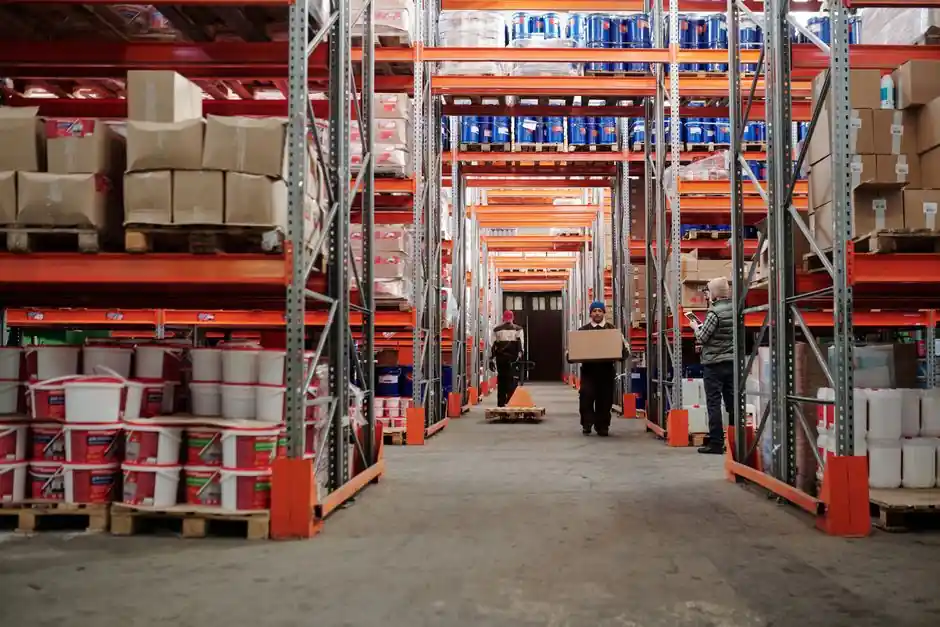
Low-level order pickers typically sustain 80–200 lines per hour across the 2026 benchmark literature, while mid-level order pickers (lift heights up to roughly 3–4 m / 10–13 ft) run 40–90 lines per hour once vertical travel and platform positioning are factored in [S1][S2][S5].
The gap is not a productivity problem, it is a physics problem: every pick at mid level adds a lift cycle, a platform stop, a harness check, and a wider travel envelope, and each of those steps silently eats the per-pick budget that floor-level picking spends entirely on walking [S1][S5].
Defining Low-Level and Mid-Level by Pick Face, Not by Machine
Low-level order pickers are designed to pick from the ground and the first rack level, with operator platform heights generally capped near 1.2 m (≈4 ft) and the work concentrated on a pallet or carton at floor level [S1].
Mid-level order pickers raise the operator and load platform into the second-to-fourth rack tier, usually between roughly 2 m and 4 m (≈6.5–13 ft) of lift, which is where the order picker category splits from the high-level / man-up turret truck territory that starts around 5 m+ [S1]. The 2026 piece-pick benchmark envelope from [S8] sits at 60–120 picks/hour for e-commerce piece picking and 80–150 cases/hour for case picking, and that window is the most defensible reference set for low-level performance; the [S3] 71 picks/hour average and the [S2] 50–90 unit/hour pharma range both fall inside or just below it, confirming where mid-level work lives once travel and lift overhead are added [S2][S3][S8].
Lines Per Hour: The Two Operating Envelopes
At the low level, grocery and ambient general-merchandise operations consistently log 120–200 cases or lines per hour in steady state, with cold storage dropping to roughly 80–120 units/hour and full-scan pharmaceutical distribution settling at 50–90 units/hour under chain-of-custody constraints [S2][S6].
The [S1] tier table places the mid-level picker alongside the low-level picker for ground and first-rack access, and the [S5] low-level optimisation model shows that 4 of 9 discrete pick actions involve forklift repositioning down the aisle, so adding a lift cycle to every pick is precisely the throughput tax that [S5] targets when it proposes cutting five seconds per pick [S1][S5]. For a deeper dive into how those per-pick seconds are spent, the Crown low-level pick optimisation work is the cleanest walkthrough of the 9-step pick sequence versus the 5-step remote-drive sequence that recaptures vertical-travel overhead [S5].
Where the Per-Pick Time Actually Goes

Travel time alone accounts for 50% or more of total picking time in conventional warehouses, and a 20% improvement in pick rate reduces picking labor cost by roughly 17% because picking drives around 55% of total warehouse operating expense [S4].
That travel share is the single biggest reason low-level and mid-level rates diverge: at floor level the operator walks to the pick face, lifts the case onto the pallet, and walks on; at mid level the operator walks to the pick face, stops the truck, ascends to the platform, lifts the case onto the working surface, descends, and resumes travel, a sequence the [S5] breakdown shows is 9 discrete actions per case at floor level and grows non-linearly when lift cycles are inserted between steps [S4][S5]. Labor stability amplifies the gap: an experienced picker in a well-slotted zone outperforms a new hire in the same zone by 30–40% in the first 60 days, and with annual turnover running 35–50% across most DCs the mid-level line-rate is the one that suffers first when staffing is thin [S2].
Selection Criteria: When to Specify Low-Level vs Mid-Level
Specify low-level order pickers when the pick face is at floor or first-tier level, SKU velocity is high, order profiles are single-line or short-batch, and the operating envelope of 80–200 lines/hour matches the throughput target without forcing the operator off the platform for every case [S1][S6][S8].
Specify mid-level order pickers when the storage rack is genuinely two to four tiers high, slotting cannot be flattened to floor level without sacrificing cube utilisation, and order profile tolerance for a 40–90 lines/hour operating point still meets service-level commitments; do not specify mid-level for sub-2 m pick faces where a low-level truck with a taller mast performs the same work at higher throughput [S1][S2]. A useful sanity check is the inventory accuracy reference on automatic level measurement: if the rack structure requires calibrated level control for load placement, mid-level picking is almost certainly the right class, whereas loose carton storage at floor level is the natural fit for low-level specification [S1].
Who Low-Level Is For vs Who Mid-Level Is For
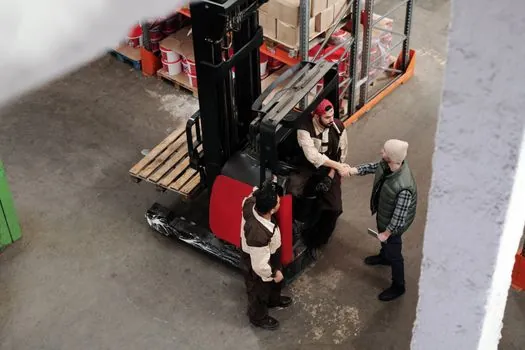
Low-level suits grocery case picking (120–200 cases/hour), ambient general merchandise (80–130 mixed batch / 150–250 at the high end), and cold storage operations that need to keep the operator on the platform with minimal PPE changes per cycle [S2][S6].
Mid-level suits 3PL operations running a mix of e-commerce and B2B lines where two-to-four-tier racking cannot be flattened, and any operation where the rack structure is a fixed constraint rather than a design choice; mid-level is the wrong tool for floor-loaded full-pallet work, where the lift cycle is pure overhead, and for very high SKU-count e-commerce piece picking, where the [S8] 60–120 picks/hour piece-pick envelope is only sustainable at floor level with batch or zone picking [S1][S8].
Comparison Table: Low-Level vs Mid-Level on Decision Criteria
Lining the two classes up against the criteria that actually drive a buying decision, the published 2026 data resolves cleanly: low-level leads on raw lines/hour, travel-time share, and operator fatigue cost, while mid-level wins only on rack-height flexibility and cube utilisation per square metre of floor [S1][S2][S5][S8].
Realistic Use Cases and the 2026 Operating Data Behind Them
Grocery distribution centers averaging 120–200 cases per hour and ambient general merchandise DC operations hitting 150–250 units per hour at the high end are the canonical low-level use cases; cold storage at 80–120 units/hour and full-scan pharma at 50–90 units/hour sit just below, all of them with a 35–50% annual turnover caveat that pulls headline rates down 30–40% in the first 60 days of a new operator's tenure [S2][S6].
Mid-level use cases are narrower and the 2026 evidence base is thinner: tier two-to-four pick faces in mixed 3PL operations, retail back-stock replenishment, and any site where the rack geometry is fixed and slotting cannot be re-engineered to floor level without losing cube; for these, budgeting 40–90 lines per hour per operator is the defensible engineering assumption, and any spec that promises higher rates without naming the lift-cycle reduction method is overstating the envelope [S1][S2]. The infrastructure side of those mid-level pick zones often runs through stacker-crane throughput math when the design crosses into AS/RS territory, and the per-pick sensor overhead that mid-level work imposes is the same class of constraint the inductive vs capacitive switching frequency reference addresses on the equipment side.
Limitations, Failure Modes, and Standards Anchors
The published lines-per-hour figures are operationally valid only when the warehouse is treating pick rate as a contextualised KPI, not a single number on a dashboard; the same 95 units/hour is top-decile in cold storage and a yellow flag in ambient general merchandise, and pushing pharmaceutical pick rates above the 50–90 unit/hour band without cutting scan verification is how audit exposure is created, not how productivity is gained [S2].
Mid-level picking is also where safety constraints start to dominate: ANSI/ITSDF B56.1 (the US safety standard for low and high lift trucks) and the equivalent EN ISO 3691-1 family govern operator fall-protection on mid-level platforms, and a spec that ignores platform-restraint, harness-check, and lift-cutout interlocks will underperform its lines-per-hour budget the moment a safety officer pulls a truck for a missing gate-switch check [S1]. The most common failure mode in mid-level specification is buying a high-lift turret truck to chase lines/hour, then running it on a low-level workload at the bottom of its lift envelope, a configuration that loses the throughput lead and adds the maintenance cost of a class-C truck to a class-B job [S1][S2].
Trackable Signals Going Forward
The third signal to watch is the labour-stability ratio: a site that is sustainably running at the top of its published band has a stable, experienced operator cohort; a site drifting below the band with the same truck class and layout is almost certainly absorbing 35–50% annual turnover, and the fix is staffing, not equipment [S2].
Detailed specification references: medium voltage vfd.