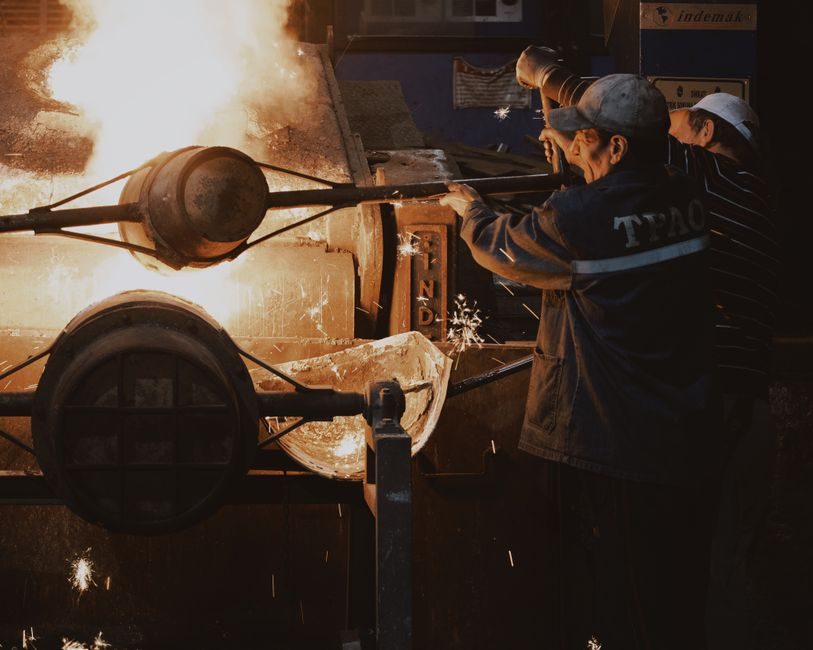
Low Pressure Die Casting Machine supply in 2026 is split between 9+ European tier-1 builders (Bühler, Kurtz, Shibaura, OTTO JUNKER, Galloni) and a much wider Chinese OEM/wholesale tier offering parts from US$ 0.90 to US$ 15.60 with 1-piece MOQ [S1][S6].
The 2026 sourcing reality for buyers is that catalog width, not machine count, drives choice: DirectIndustry lists 52 active die casting machine supplier product lines, with Kurtz alone showing 9 machines and Lanson Precision listing 11 — a clear signal that European builders expose more variants per brand, while Chinese suppliers compete on per-part pricing rather than platform breadth [S1].
Supplier Tier Split: European Tier-1 vs Chinese OEM/Wholesale
The DirectIndustry manufacturer index as of 2026-05-30 lists 13 active brands across the die casting machine category: Bühler Group (5), Kurtz GmbH & Co. KG (9), Shibaura Machine (7), OTTO JUNKER GMBH (3), ASEG GALLONI SPA (1), Yizumi (5), lanson precision machinery (11), tederic machinery (1), Titus Group (3), WANROOE-TECH (1), Changzhou New District JinKang Precision Mechanism (1), Chit Shun Machinery (4), and Areka Filtration Technologies (1) [S1].
On the Chinese wholesale side, made-in-china.com catalogs Diamond Member audited suppliers — Qingdao Hulk Metal Technology, Qingdao Hailong Machinery Group, and QianYin Die Casting Co. — quoting aluminum pressure die casting at US$ 0.90-10.00 per piece on 1-piece MOQ and US$ 1.30-15.60 per piece on 100-piece MOQ, which is 2-3 orders of magnitude below what a turnkey European LPDC cell costs [S6].
Pressure Regime and Process Boundaries Buyers Must Lock First
Low pressure die casting operates at injection pressures typically an order of magnitude below high-pressure die casting — gas pressurisation of a sealed furnace pushes melt up the riser tube into the die, with holding pressure usually in the 0.05-1.0 MPa range versus the 30-100+ MPa envelope of a cold-chamber HPDC shot. [S1]
This lower pressure regime is why LPDC is the default for safety-critical aluminum structural parts — wheels, suspension knuckles, subframes — where the controlled fill reduces gas entrapment and the slow intensification produces denser, heat-treatable castings than vacuum die casting or HPDC can deliver at similar tonnage [S4].
Buyers comparing process routes should weigh three concrete criteria: (1) achievable part weight — LPDC typically handles 5-50 kg aluminum castings per shot, well above the 0.5-10 kg band of aluminum die casting machine HPDC cells; (2) porosity level — LPDC routinely hits <1% porosity on T6 heat-treated parts, comparable to gravity die casting machine output; (3) cycle time — LPDC runs 4-12 minute cycles for thick-wall structural parts, 5-10x slower than HPDC's 30-90 second shots but acceptable for safety parts where cycle time is a secondary cost [S4].
Chinese OEM Cluster: Where Capacity Sits in 2026
Shandong province alone hosts three of the audited Diamond Member low pressure die casting suppliers on made-in-china.com — Qingdao Hulk Metal Technology, Qingdao Hailong Machinery Group, and Qingdao ACES Machinery Technology — alongside Zhejiang (Ningbo Beilun Allway Machinery) and Lianshan (QianYin Die Casting) [S6].
This Shandong-Zhejiang cluster matters because both provinces hold dense aluminum smelter and CNC machining capacity within 200-300 km, which is what lets a 1-piece MOQ Chinese supplier hit US$ 0.90-1.50 per-part pricing on aluminum pressure die castings while a European equivalent operates at lot sizes of 500+ pieces with NRE amortised across the run [S6].
For buyers cross-referencing related squeeze casting machine sourcing in 2026, the same Shandong cluster shows up — Qingdao Beilun Allway's mold polishing line at US$ 10,000-400,000 per piece and the squeeze-cast T6 valve plate product type both anchor to the same regional sub-tier.
European Tier-1 Spec Bands and What You Actually Get
European die casting machine builders on the 2026 DirectIndustry index expose clamp-force-banded product lines rather than price-banded ones — Bühler's 5 listed units, Shibaura's 7, and Kurtz's 9 typically segment by 200-800 ton clamping force for HPDC and 50-300 ton effective die-close force for LPDC cells [S1].
Kurtz GmbH and OTTO JUNKER are the two European names with explicit gravity and low-pressure casting machine specialisation on the index — Kurtz's 9 listed products and OTTO JUNKER's 3 cover the aluminum structural-part niche where LPDC and gravity die casting machine compete head-on for subframe, knuckle, and wheel-hub work [S1].
Practical sourcing signal: a buyer needing a turnkey LPDC cell with PLC-integrated holding-pressure profile control, vacuum assist, and T6 in-line heat treat will find 3-5 European bidders; a buyer needing 10,000 aluminum LPDC brackets per month at under US$ 3 per piece will end up at a Shandong Diamond Member within 2 RFQ cycles [S1][S6].
MOQ, Pricing and Lead-Time Reality Check
Made-in-china.com listings on 2026-06-11 show aluminum pressure die castings at three pricing tiers: bulk commodity at US$ 0.90-1.50/pc (1 pc MOQ, Qingdao Hailong and Qingdao ACES), mid-spec at US$ 1.30-15.60/pc (100 pc MOQ, Hulk Metal), and custom-engineered at US$ 10,000-400,000/pc on the mold/tooling side (Ningbo Beilun Allway) [S6].
That spread — three orders of magnitude between the cheapest per-part castings and the mold line — is the real procurement signal. Buyers who skip the mold-capex conversation and only chase per-piece price will end up with a 30-60 day lead time on a Chinese tool and a 120-180 day lead time on a European tool, with the per-piece delta shrinking to under 15% once amortised across 50,000 parts [S6].
For comparison, vacuum die casting machine sizing buyers face a similar 3-tier split, but the LPDC market is shallower — only 1-2 European builders list dedicated LPDC cells rather than HPDC platforms retrofitted with vacuum and low-pressure shot sleeves [S1].
Selection Criteria: Who LPDC Is For and Who It Is Not For
LPDC fits buyers needing 5-50 kg aluminum structural castings with T6 heat treatment, Class 1 pressure-tightness, and <1% porosity — automotive subframes, knuckles, control arms, and large pump housings are the canonical fit, with cycle time as a secondary cost [S4].
LPDC is the wrong choice for buyers needing sub-1 kg high-volume thin-wall parts (HPDC wins on cycle time and per-piece cost below 2 kg) or buyers needing magnesium structural parts (HPDC hot-chamber is the standard route, and magnesium die casting machine sourcing follows a different supplier map dominated by Shibaura and a few Chinese specialists) [S1].
Buyers sourcing LPDC for the first time should also screen for ISO 9001:2015 certification, which is the baseline audit stamp on made-in-china.com Diamond Member listings and the floor of what most European OEM tier-1s will accept as a sub-supplier [S3].
Trackable Signals to Watch Through 2026 H2
Three signals worth tracking: (1) whether Kurtz or Bühler add a dedicated LPDC product line to the DirectIndustry index above their current 9 and 5 listed units — any addition would signal a capacity push into the structural-aluminum segment [S1]; (2) whether the Shandong cluster price floor on US$ 0.90-1.50/pc castings holds through 2026-Q4 aluminum ingot pricing, since a 10% ingot move compresses that band to break-even on 1-piece MOQ runs [S6]; (3) Xuxing Machinery's 2026-07-01 catalog update claiming integrated aluminum, zinc, and CNC machining under one roof — a bundling play that could narrow the mold-to-part lead time from 60-90 days to 30-45 days for low-volume structural castings [S5].