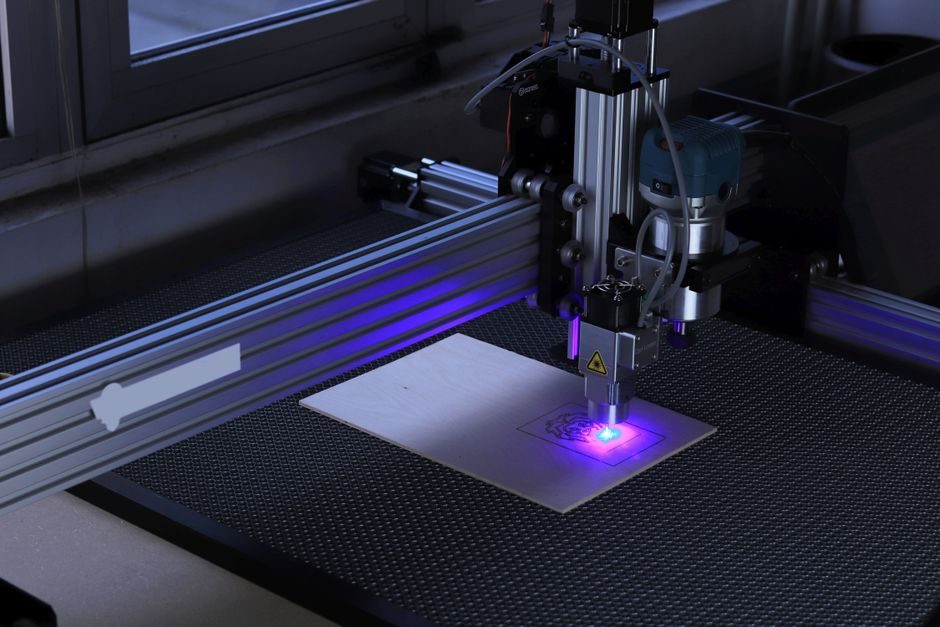
China's machine tool industry carries a market value above RMB 200 billion (~US$27.86 billion), and the segment has been growing steadily in both output and downstream demand, with foreign-supplied high-end CNC equipment continuing to dominate the premium tier [S3].
Domestic manufacturers have moved up the value chain in mid-range lathes, machining centres and linear components, but the dependence on imported five-axis machines, high-precision linear guides, ball screws and CNC controllers remains a structural feature of the 2026 procurement environment [S1][S3].
Market Size, Output Trend and Import Dependence
China's machine tool output and demand have grown steadily year-on-year, yet a wide import gap persists at the high end of the product spectrum, where foreign brands still set the technical benchmark for repeatability, thermal stability and controller architecture [S1][S3]. The RMB 200 billion-plus domestic market is the headline figure most often cited for industry scale [S3]. For buyers, this means domestic sourcing is competitive on general-purpose CNC lathes, vertical machining centres, and standard tool-die work, while five-axis simultaneous machining, high-speed spindles above 15,000 rpm, and ultra-precision linear guide rails typically still carry a 20-40% import premium in 2026 [S1][S2]. A relevant sector benchmark is the broader CNC machine market outlook through 2033, which frames where machine tools sit inside the global CNC spend curve.
Component Price Bands: Linear Guides, Collet Chucks, Servo Drives
Linear guide rails are the single most shoppable sub-component, and 2026 wholesale data from Made-in-China lists HGR15 / HGR20 / HGR25 / HGR30 / HGR35 / HGR45 / HGR55 / HGR65 sizes in the US$10-35 per piece band at 10-piece MOQ, with HGH65 4-metre rail assemblies quoted near US$1 per piece at 1,000-piece MOQ [S2]. The 65Mn-material ER collet family, sold in 25/32 mm bore variants, is the standard clamping interface for finishing work and continues to dominate CNC tool-holders in 2026 [S4]. Buyers comparing components should treat ball screw grade (C5/C7), guide-rail pre-load class (Z0/Z1), and servo drive bus type (pulse + direction vs EtherCAT) as the three independent levers that drive total machine cost more than the spindle nameplate does.
Selection Criteria: Five-Axis vs Three-Plus-Two vs 3-Axis
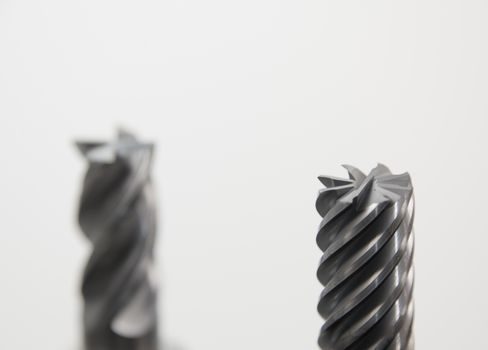
For workpieces with multi-face features in one setup, a true five-axis simultaneous machine is the only spec that removes the re-clamp tolerance stack, while a 3+2 (three-axis plus tilting rotary table) machine covers most mould-and-die jobs at roughly half the fixture and controller cost [S1]. 3-axis vertical machining centres remain the default for prismatic parts, with travel envelopes in the 800-1,300 mm X-axis band dominating the 2026 mid-range category [S1][S2]. Buyers should spec by workpiece envelope first, controller architecture second, and spindle speed third — inverting that order is the most common 2026 procurement mistake observed in mould-shop retrofits.
Standards, Materials and Tolerance Anchors
Machine tool structural components increasingly use cast iron with resin-sand moulding, while spindle housings and high-stress slides shift to mineral-cast or polymer-concrete for vibration damping — both approaches are common in 2026 OEM catalogues [S1]. ISO 230-2 positioning accuracy and ISO 230-4 circular tests remain the standard acceptance protocols for CNC machine procurement. Tool-die buyers working with SKD11 or DC53 should pair the tool-die steel specification with a machine repeatability envelope of ±0.003 mm to keep within EDM wire-cutting tolerances.
Process-Link Synergy: Coding, Cutting, Filling, Labelling
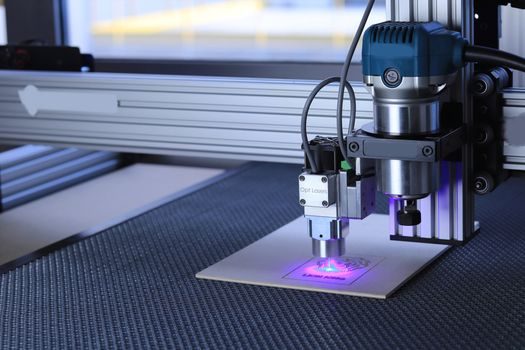
Machine tools rarely stand alone in a 2026 production cell — they feed downstream coding machines for date/batch marking, cutting machines for blank separation, and filling machines for lot-pack lines, with labeling machines closing the traceability loop. Sizing each station to the machine tool's takt time is what separates a balanced cell from a bottleneck line; a 30-second CNC cycle cannot be paired with a 90-second labeler without buffer accumulation. [S1]
Who Machine Tool 2026 Buys Are For — and Who Should Sit This Cycle Out
Process engineers running mould shops, aerospace aluminium structural parts, and medical-implant titanium blanks are the primary 2026 buyers for high-end five-axis machines; job shops running sub-1,000-hour annual spindle time on mild steel should keep buying used three-axis verticals, where the depreciated asset outperforms any new mid-range import on cost-per-part. For buyers entering packaging rather than metal cutting, the shell core machine supplier landscape is a closer reference than any CNC market report. [S2]
Constraints, Failure Modes and Sourcing Risk
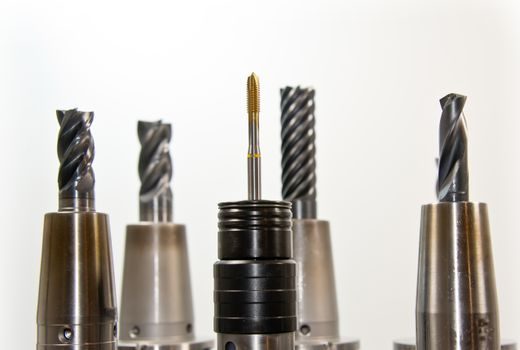
The 2026 buying risk is concentrated in three areas: controller-software licensing for FANUC / Siemens / Heidenhain retrofits, lead time on imported HGR-class linear rails beyond 45 mm width, and servo-drive supply for European-spec machines diverted to defence-adjacent customers [S1][S2]. Buyers specifying a 2026 machine should demand a written spindle-bearing L10 life rating (typically 10,000-20,000 hours at maximum RPM), an ISO 230-2 test certificate dated within 90 days of shipment, and a CNC controller option list that locks firmware version — vague "latest controller" wording is the single biggest source of post-installation integration pain.
Trackable signals for the next 90 days: domestic five-axis machine lead times (currently 4-6 months from major Shenyang and Qingdao builders) and HGR45+ linear guide rail spot pricing on the Made-in-China wholesale index [S2]; any movement on either will reset 2026 H2 capex envelopes for mould-and-die shops.