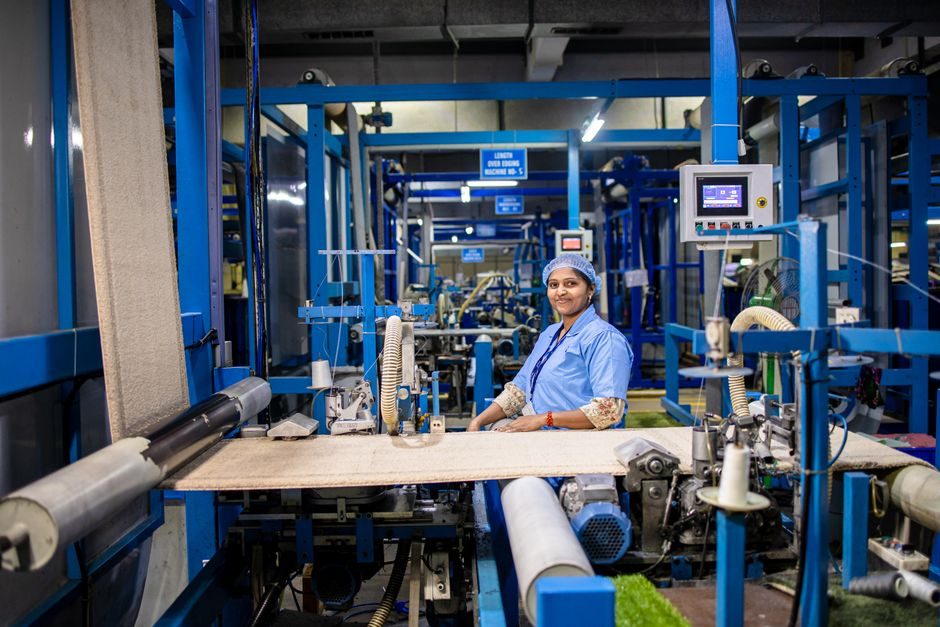
Buyers sourcing a shell core machine in 2026 face a market split: a small engineering-OEM tier on DirectIndustry (24 named manufacturers, with 6 product groups under Bühler Group alone) [S1] and a much higher-volume tier on Made-in-China.com where 1-ton MOQ castings start at US$ 1,400-2,100 per ton [S2].
The 2026 supplier landscape for shell molding equipment is dominated by Chinese foundry-machinery factories exporting through Goldsupplier and Alibaba-channel storefronts; Qingdao Huaxin Shengye Casting Machinery, established 2017-09-04 with 51 employees, lists automatic casting lines, foundry sand moulding machines and sand core making machines as three of its main product groups [S5].
Tier-1 Engineering OEMs: 24 DirectIndustry Manufacturers, 6 Under One Group
The 2026-05-22 DirectIndustry index for industrial shelling-machine manufacturers lists exactly 24 named companies: ABL srl, Alutec Food, CAMPESATO®, Boscolo, Brovind-GBV Impianti, Bühler Group, CIMBRIA, Defino & Giancaspro, F.H. SCHULE Muehlenbau, Hebei Maoheng Machinery, HENRY SIMON, HIDRONER AQUACULTUR EQUIPMENTS, Hughes Equipment, Nikko Co., Ltd., OCRIM, POLLAK SALA, SANGATI BERGA, SATAKE, SHAOXING WALLEY FOOD MACHINERY, TABANLI MAKINA, TECNOCEAM and Yaşar Makine [S1]. Bühler Group alone accounts for 6 of those product groups, making it the single largest cluster on the index.
This tier maps cleanly to the core machine specification envelope buyers in EU/US foundries actually quote: full traceability, CE/ATEX documentation, and PLC-controlled sand shooting with resin-binder dosing — a profile the shell core shooter segment standardises around. The trade-off is lead time: EU-tier OEM deliveries commonly run 16-24 weeks, with the engineering review, FAT and commissioning absorbed into the line-builder's project scope.
China-Channel Volume Tier: MOQ 1-Ton Castings at US$ 1,400-2,100
Made-in-China.com product listings for "Machine Shell Factory" components show a price band of US$ 1,400.00-2,100.00 per ton at MOQ 1 ton, supplied by Gold-tier manufacturer Huixian Tengfei Machinery Manufacturing Co., Ltd. [S2]. This is a casting-blank price, not a finished hot-box core machine or cold-box core machine assembly, but it sets the floor for what machine shells, gearboxes and structural frames cost as a Bill-of-Material input.
The same channel also surfaces component-level items at the opposite extreme of the price scale: a precision vibration atomising core for vape/heating applications lists at US$ 0.27-0.30 per piece at MOQ 1,000 pieces on a 1/6 product-page slot, a 3-orders-of-magnitude gap that illustrates how a single supplier directory spans both the foundry castings and downstream consumer-goods components [S3]. Foundry buyers using these directories must filter aggressively by product taxonomy or risk the wrong supplier shortlist.
Goldsupplier Vertical-Automatic Listings: Foundry-Line Packages From Qingdao
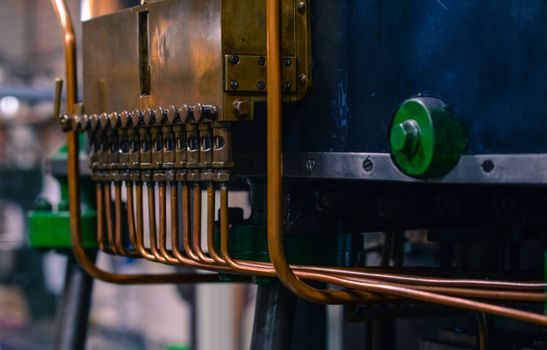
The 2026-06-12 Goldsupplier listing for a vertical automatic shell core machine (also called core shooting machine / shell molding machine) is positioned as a full foundry-line product from a Chinese export manufacturer [S4]. Qingdao Huaxin Shengye Casting Machinery, registered on Made-in-China.com since 2017-09-04, markets an automatic casting line, foundry sand moulding machine and sand core making machine as a coordinated package from a single vendor (51 employees, Haixi Road, Huangdao District, Qingdao) [S5].
That package orientation matters for procurement: a single-vendor line quote reduces integration risk between the sand mixer, the shell core machine and the downstream mold-handling conveyor, but it also concentrates warranty exposure. Most EU and US buyers using this tier specify a third-party FAT witness and a separate PLC/HMI integrator to de-risk the controls layer.
Selection Criteria: 4 Decision Levers Buyers Actually Use
Procurement engineers in 2026 typically shortlist shell core machine suppliers against four concrete criteria, in this order: (1) shot weight capacity in kg per cycle (commonly 5-50 kg for mid-tier lines, 100+ kg for foundry-line tier); (2) cycle time in seconds, with resin-cured shell cores typically targeting 30-90 s including curing; (3) heating method — gas-fired platen, electric IR, or hot-oil — which sets both energy cost and ATEX zoning for EU sites; (4) controls platform, with Siemens S7-1500/Allen-Bradley ControlLogix as the de-facto EU/US baseline and domestic Chinese PLCs on the value tier. [S1]
The buyer decision on those four axes is also where the two sourcing channels diverge sharply: DirectIndustry tier-1 OEMs (Bühler, F.H. SCHULE, CIMBRIA, Nikko, SANGATI BERGA) [S1] bid against published cycle-time and shot-weight curves with full CE/ATEX dossiers, while the Goldsupplier/Made-in-China tier [S4][S5] competes on integrated line price and accepts longer commissioning as a trade-off.
Use-Case Fit: Who Each Tier Is For — and Who It Is Not
DirectIndustry-listed OEMs [S1] are the right fit for tier-1 automotive, heavy-machining and ductile-iron foundries with audited IATF 16949 / ISO 9001 supply chains, installed-base lock-in, and a service-network requirement in the buyer's region. The 1-ton MOQ Made-in-China.com foundries [S2] and Goldsupplier automatic-line vendors [S4][S5] fit small-to-medium iron and non-ferrous foundries, job shops, and emerging-market greenfield lines where capex-per-station is the dominant variable and 16-24-week EU lead time is a deal-breaker.
They are not the right fit for: aerospace or nuclear-grade casting lines (no AS9100/NQA-1 supply-chain path in the China-channel tier), high-mix low-volume core shops needing rapid recipe changeover (the EU OEMs' recipe-management software is the differentiator), or buyers without on-site commissioning engineers to absorb a Chinese line-builder's FAT-to-SAT gap.
Standards, Limits and Sourcing Constraints Buyers Must Track
EU-bound lines must meet CE Machinery Directive 2006/42/EC conformity, with ATEX 2014/34/EU zone classification for the sand-bin/hopper area where resin fumes accumulate; US-bound lines need NFPA 70 electrical and, for some states, NFPA 652 combustible-dust assessments. Buyers should not accept a Goldsupplier tier supplier's CE/ATEX claim without a DoC document-number check on the manufacturer's EU authorised representative. [S2]
Three concrete supply signals to watch into H2 2026: (1) Bühler Group's 6-product-group footprint on DirectIndustry [S1] suggests further line-acquisition activity in the food-and-industrial shelling-machinery segment; (2) Made-in-China.com atomising-core page activity at 1/6 listing [S3] indicates the channel is broadening into non-foundry precision components, not consolidating — a signal that foundry-buyer search results will get noisier; (3) Qingdao Huaxin Shengye's 2017 incorporation date and 51-employee headcount [S5] puts it firmly in the small-cap exporter tier, so warranty-response SLAs should be negotiated contractually, not assumed.
For an apples-to-apples line comparison on shot-cycle and binder-system trade-offs, see the Shell Core Shooter vs Cold Box Core Shooter 2026 spec cut for foundry buyers reference page. Buyers building a full line should also pressure-test the sand-handling upstream with a climbing formwork 2026 buying guide cross-reference if the castings feed into civil-infrastructure pours, and confirm capex benchmarks against the top mining equipment companies 2026 OEM spec race data set for downstream mining-casting demand visibility.