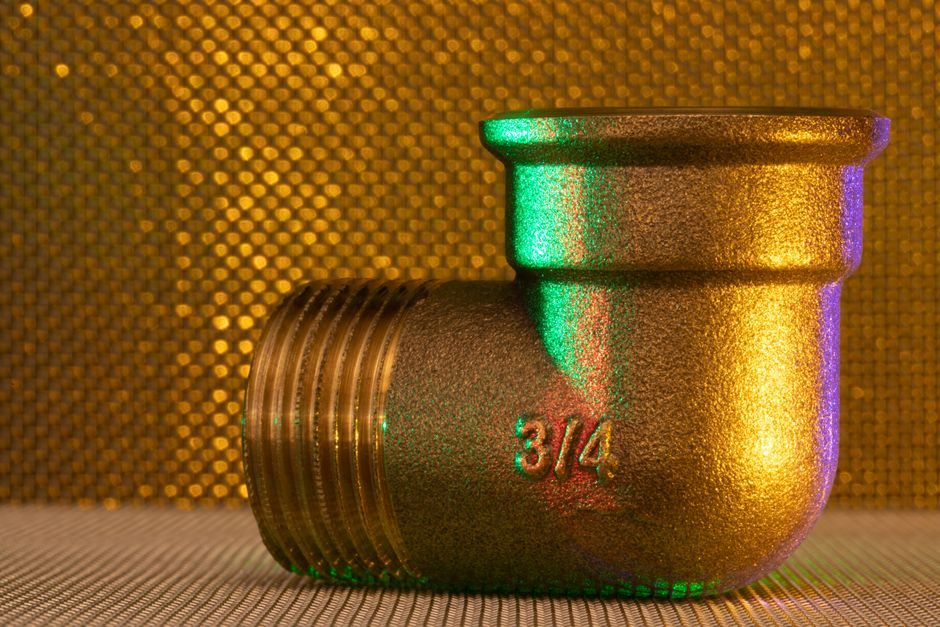
A low-pressure die casting (LPDC) machine is spec-selected, not brand-selected: the binding criteria are holding-pressure class, platen envelope, alloy window, furnace sealing class, control architecture, and throughput per shift, all of which have to be resolved before vendor shortlisting.
The category covers horizontal- and vertical-parting LPDC units with sealed crucibles and sealed furnace bodies, as defined in the Chinese mandatory safety standard GB 24391-2009 <em>Low-pressure casting machine — Safety requirements</em>, which is the operative document for buyers sourcing from Chinese OEMs and for end-users operating those units in regulated plants [S4]. The same source pins the subsystem scope — hydraulic system, electrical system, pneumatic system — that every selection checklist must touch.
Definition and scope: what an LPDC machine actually is
LPDC is a permanent-mold process where molten metal is pushed into the die from a sealed furnace below, under low regulated air pressure (typically on the order of 0.05–0.10 MPa working pressure at the crucible), held until solidification, then released — a description consistent with the cold-chamber LPDC machines listed by Chinese OEMs such as the Chit Shun CSC series, which pair a sealed furnace with a PLC-controlled hydraulic holding circuit [S1].
The machine envelope consists of four mandatory sub-assemblies under GB 24391-2009: the hydraulic system, the electrical system, the pneumatic system, and the furnace/crucible sealing system, with the pneumatic block required to conform to GB/T 7932 for the air-power side [S4]. Buyers who skip the furnace-sealing class end up with a unit that fails the safety file at commissioning; the standard exists precisely because unsealed crucibles and unsealed furnace bodies are the dominant incident root-cause in the category.
Selection criteria 1: clamping force, platen envelope and parting orientation
The first numerical decision is platen size and parting line. GB 24391-2009 explicitly covers both horizontal-parting and vertical-parting LPDC machines, meaning a single spec sheet must declare orientation before tonnage is even discussed [S4]. Vertical-parting units generally need a taller clear daylite and a deeper pit for the sealed furnace, which is a civil-work cost that does not show up in the machine price.
For aluminum LPDC of structural housings and cylinder cases, Chinese suppliers commonly publish platen windows in the 600×600 mm to 1200×1200 mm band, with holding-force class matched to projected area rather than to a fixed tonnage number; the published Shanghai-made aluminium LPDC cylinder case is offered at US$15.00–50.00 per piece at a 100-piece MOQ, which is the price band where the casting — not the machine — is the line item, but the machine's platen and shot size set whether that casting can be made at all [S3]. For a deeper spec pass on a related casting-process envelope, the squeeze casting machine buying guide covers the tonnage and fill-regime logic that overlaps with LPDC platen sizing.
Selection criteria 2: alloy envelope — Al, Mg and the die-steel decision
Alloy window is the second hard filter. Standard LPDC is aluminium-first (typical alloys in the Al-Si and Al-Si-Mg families, plus Al-Cu variants for higher-strength housings); magnesium LPDC requires a sealed, dehydrated cover-gas cycle and dedicated crucible materials because Mg melt attacks standard ferrous hardware, which immediately bumps the furnace and crucible spec class. Buyers running both Al and Mg on the same line generally run two machines, not one convertible unit, because the cross-contamination risk and the gas-atmosphere hardware swing do not amortize. [S1]
For foundries specifying die steel for the shot sleeve, plunger and die inserts, the tool and die steel buying guide covers H11/H13/P20 selection that crosses over cleanly into LPDC die construction, and the stainless steel selection reference applies to the furnace pressure-vessel shell and the pneumatic/hydraulic reservoir hardware. Sand-cast mold wear and sourcing, which is the upstream pattern side feeding LPDC dies, is covered in the sand casting mold vs mold base comparison.
Selection criteria 3: control architecture and hydraulics
Control architecture is the third gate. Production-grade LPDC units run a PLC with a colour HMI for parameter setting and alarm display, dual-proportional hydraulic valves for pressure/flow profiling, and a discrete I/O layer tied to the safety interlock chain defined in GB 24391-2009 [S1][S4]. The PLC brand matters less than the closed-loop pressure-control bandwidth: holding-pressure stability in the 0.05–0.10 MPa working window is what controls casting density, and a machine with on/off hydraulics will produce porosity even with the correct platen and alloy.
For panel-side integration, the relay and terminal-block partitioning question is covered in the industrial relay vs terminal block reference, which is the same I/O hygiene problem LPDC control cabinets face at the safety-interlock boundary. A practical spec line is "PLC with closed-loop pressure PID, dual-proportional valve, electronic proportional pressure transducer on the crucible gas line, and a Category-3 or higher safety stop on the furnace lid", but a buyer should verify each clause against GB 24391-2009 rather than accept the OEM marketing claim [S4].
Selection criteria 4: furnace, crucible and sealing class
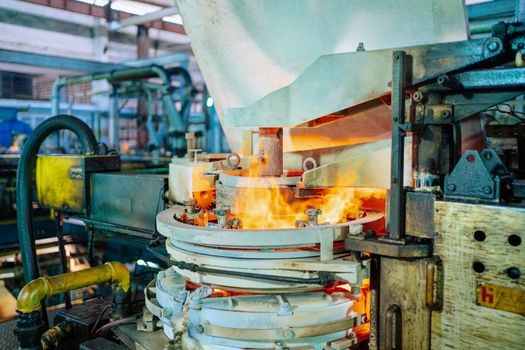
The fourth gate is the furnace and crucible sealing class — the part of the spec that GB 24391-2009 was written to lock down [S4]. Required elements are a sealed furnace body, a sealed crucible, a gas-pressure regulation block with redundant overpressure relief, and interlocks that prevent the lid from opening under pressure. Compressed-air supply to the pneumatic block has to satisfy GB/T 7932, and the electrical block has to be coordinated with the furnace thermal cutoff chain, with the full safety file delivered as part of the machine's CE/UKCA/EAC dossier.
Buyers running unattended shifts should specify crucible-overheat detection, crucible-burn-through detection (where the technology exists for the alloy), and a pressure-transducer health check on every cycle, because the failure mode of an LPDC line is almost always a sealing or gas-regulation fault, not a platen or hydraulic fault. For comparison against other casting process envelopes where the same safety logic applies, the CNC machine supply chain 2026 reference captures the supplier-side risk that also affects Chinese LPDC sourcing.
Selection criteria 5: throughput, cycle time and uptime class
Throughput is the fifth gate and the one that drives ROI. LPDC cycle time is dominated by the solidification hold (typically tens of seconds to low minutes depending on section thickness) and the furnace refill, not by the injection stroke; quoting a machine by "shots per hour" without naming the wall thickness and the alloy is meaningless. Buyers should request a cycle-time curve plotted against section thickness for the actual part mix, plus an uptime class (Availability × Performance × Quality) over a 90-day window on a similar part at a reference customer. [S2]
For volume planning, a useful internal pass is: target shots/hour × average cycle-time overhead × 0.85 OEE gives the realistic moulds/hour; from that, derive the number of machines required for the annual volume, and only then send the RFQ. This is the same logic the CNC machine supplier map 2026 uses to size spindle-hour budgets against supplier lead times, and it forces the LPDC spec to be stated in moulds/hour rather than in machine price.
Selection criteria 6: who LPDC is for — and who it is not for
LPDC is for foundries running mid-to-high volume runs of safety-relevant aluminium structural parts (cylinder cases, knuckle housings, suspension arms, compressor housings) where the sealed-crucible low-pressure fill beats high-pressure die casting on porosity and on heat-treated mechanical properties, and where the cycle-time penalty is acceptable. It is also for integrated automotive and motorcycle tier-1s running structural castings that downstream have to pass radiographic and pressure-leak tests, as the Shanghai aluminium LPDC cylinder case product line demonstrates [S3].
LPDC is not for short-run prototype work, not for parts thinner than roughly 2.5–3 mm where HPDC is faster and cheaper, and not for steel or copper alloys at production scale (those are investment-cast or gravity-cast problems). The dividing line against gravity die casting is fill regime and pressure: gravity casting has no active pressure step, which means lower equipment cost but worse density on thick sections; LPDC trades machine cost for fill control, and the buyer who picks LPDC for a thin-wall cosmetic part is paying for capability that the part will not use. Buyers evaluating the broader casting-machine envelope should treat die casting machine selection as the umbrella problem, with the aluminum die casting machine, low-pressure die casting machine and vacuum die casting machine pages as the process-specific sub-decisions; magnesium alloys are a separate hardware path covered under magnesium die casting machine buying rules.
Standards, sourcing and verification checklist
Mandatory safety reference for any LPDC unit sourced from or operated in China is GB 24391-2009, which covers both horizontal- and vertical-parting machines with sealed crucible and sealed furnace bodies, and which references GB/T 7932 for the pneumatic system [S4]. Verification asks the OEM for: a copy of the GB 24391-2009 compliance map, the safety integrity level claimed for the furnace interlock chain, the PID tuning method for the holding-pressure loop, the die-steel grade used for the shot sleeve and plunger, the crucible material and the maximum melt temperature rating, and a reference list with similar parts in similar alloys.
Trackable signals for the next buying cycle are: published response times on safety PLC faults at the OEM's reference customers, mean time between crucible changes on a comparable alloy, and the OEM's documented procedure for the GB/T 7932 pneumatic-side audit. None of these appear in the headline price, and all of them dominate the lifetime cost.