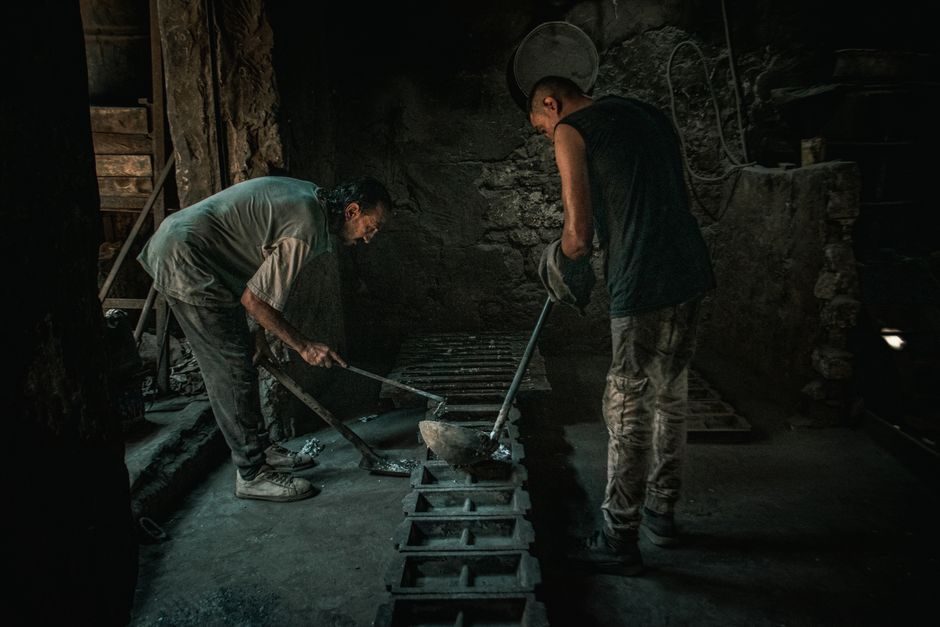
Squeeze casting machines apply direct high pressure — typically 50 to 300+ tonnes of clamping force — to molten aluminum or brass during solidification, suppressing shrinkage porosity to levels that conventional high-pressure die casting cannot hold at production cycle times [S1].
The process sits mechanically between gravity die casting and high-pressure die casting: a slow fill (often under 0.5 m/s gate velocity) followed by intensification pressures of 70-150 MPa applied to the casting until solidification completes [S1][S2]. Buyers comparing process routes for structural parts in 2026 most often narrow the decision to squeeze casting versus high-pressure die casting when ductility, heat-treat response, or pressure-tightness targets rule out a conventional die casting machine build.
Process Definition and Density Outcome
Squeeze casting consolidates molten metal under a punch or direct hydraulic ram during solidification; the applied pressure collapses gas porosity and feeds shrinkage so the casting densifies against the die wall [S1]. Research on 18-inch automotive wheel hubs reports density approaching theoretical (>2.68 g/cm³ for A356-class alloys) and tensile elongation gains when intensification pressure is raised from roughly 50 MPa to 100 MPa and held through solidification [S2].
ASTM B969-2009 covers aluminum-alloy castings produced by squeeze casting, thixocast, and rheocast semi-solid routes, giving buyers a single acceptance reference for alloy designation, heat-treat condition, and radiographic soundness in one document [S6]. For brass and copper-base alloys, vertical squeeze casting configurations from Asian OEM line cards explicitly target plumbing, valve, and decorative fittings where pressure-tightness matters more than thin-wall fluidity [S3].
Machine Architecture: Vertical vs Horizontal
Vertical squeeze casting machines position the shot cylinder above the die cavity, so gravity assists fill and the punch descends along the same axis to apply intensification force [S3][S5]. This configuration simplifies direct-pressure application on symmetric parts (wheel hubs, flanges, valve bodies) and is the dominant OEM offering listed on Taiwan and mainland China supplier channels for 2026 [S3][S5].
Horizontal squeeze casting machines align the shot cylinder beside the die and rely on a separate intensification ram to apply squeeze force. They accommodate larger projected areas and asymmetric parts, but require more floor space and tighter alignment between shot sleeve, plunger, and squeeze ram. The fill mechanics that govern a crossed-roller guide on the platen — stiffness, repeatability under off-center load — are the same ones a buyer should interrogate on a horizontal squeeze press, since deflection under intensification load directly maps to casting flash and punch tilt.
Key Spec Levers Buyers Must Lock Down

A buyer comparing a squeeze casting machine against a hot-chamber or cold-chamber die casting machine for the same part should weight intensification pressure, fill-velocity control, and PLC real-time pressure-time curve logging far more heavily than peak shot speed, because the process value comes from sustained pressure through solidification, not from injection velocity alone [S1][S2].
Alloy Fit: Aluminum, Brass, and Semi-Solid
Aluminum A356 and A357 dominate published squeeze-casting research because heat-treatable Al-Si-Mg responds strongly to densification: T6 tensile strength in the 260-310 MPa band and elongation of 8-14% are reported for squeeze-cast wheel-hub builds, versus 5-8% elongation on the same alloy in conventional high-pressure die casting [S2]. ASTM B969-2009 explicitly lists squeeze casting, thixocast, and rheocast semi-solid casting under one specification, so a buyer can write a single acceptance line for all three routes and select process per part geometry [S6].
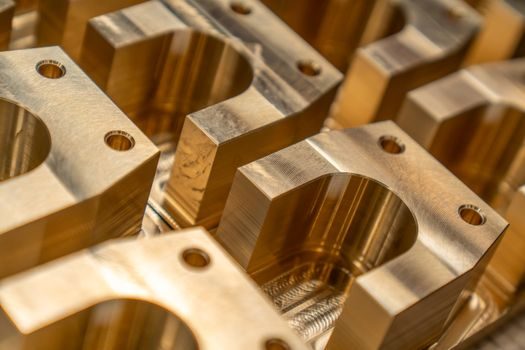
Brass and copper-base squeeze casting targets plumbing valve bodies, decorative hardware, and electrical fittings; OEM vertical machine listings pair the process with brass because the slow fill and high final pressure suppress gas porosity in long-free-path copper-alloy sections that gravity die casting struggles to feed [S3]. Buyers specifying brass should also note that die life is shorter than on aluminum at the same intensification pressure because copper-alloy hot-tears and soldering accelerate die-surface degradation.
Selection Criteria: Squeeze vs Competing Routes
A buyer should match process to part before matching process to machine. Use squeeze casting when the part is structural or pressure-tight, the section is thick enough (typically 5 mm+) to feed under intensification, and the volume justifies dedicated die investment; use high-pressure die casting when the part is thin-wall, high-volume, and tolerates 1-3% porosity from conventional cold-chamber fill. Use gravity die casting or sand casting when lot size is small, alloy is hard to machine, or lead time must be measured in weeks rather than months. Buyers evaluating a sand casting mold workflow for low-volume prototypes will find the squeeze casting cycle longer and die costlier, but the post-machining saving on near-net-shape hubs and flanges often flips the total-cost calculation above 5,000 parts/year. [S1]
A second axis is dimensional control. Squeeze casting typically holds ±0.05 mm/cm on machined surfaces after T6, better than sand casting's ±0.1-0.2 mm/cm but worse than high-pressure die casting on thin-wall features below 3 mm. Buyers targeting close-tolerance bores on valve bodies should budget post-casting machining despite the process's near-net-shape reputation.
Supplier Sourcing Levers and 2026 Pricing Signals
Three sourcing channels dominate 2026 squeeze-casting-machine RFQs: Taiwanese OEM line cards on trade portals, mainland China OEM/ODM factories, and a smaller tier of Japanese and European builders for high-tonnage (>4,000 kN) structural parts. Lead times on standard vertical machines run 90-150 days ex-works; custom horizontal configurations commonly run 180-240 days. A cross-reference of available CNC machine supplier clusters is useful because squeeze-casting cell buyers usually co-source trimming, drilling, and T6 heat-treatment fixtures in the same industrial park to cut logistics. [S2]
Buyers should lock PLC pressure-time curve logging, shot-velocity profiling in at least three stages (slow fill, fast fill, intensification), and tie-bar stretch monitoring into the RFQ rather than treating them as options. These three data streams drive process window qualification on a new die and are the single most common source of warranty disputes when omitted. Sourcing teams that bundle machine RFQs with tool and die steel sourcing for the die itself often negotiate better delivery terms because the steel mill and the press builder can be sequenced on the same shipping calendar.
Limitations, Failure Modes, and Acceptance Tests
Three failure modes recur in squeeze casting commissioning: (1) punch tilt from platen deflection, typically diagnosed by uneven flash on one side of the parting line; (2) die soldering on brass and high-copper aluminum alloys, accelerated by intensification pressure pushing molten film into die-surface micro-defects; and (3) cracking during ejection, driven by residual stress when intensification pressure is released before the casting reaches a coherent solid fraction.
Buyers should reject any RFQ that does not include a documented pressure-time curve from a trial shot, a platen-deflection number under full intensification load, and a thermal-balance simulation of the die at the buyer's projected cycle time. The linear guide and crossed-roller guide choices on the platen should appear in the BOM with brand and repeatability grade, not as a generic line item, because guide stiffness governs platen-parallelism drift over the die's first 10,000-shot break-in. For buyers running hot-chamber die casting cells on a separate line, note that a squeeze casting machine is not a drop-in replacement: shot weight, intensification pressure, and dwell-time controls differ enough that a shared PLC recipe is not safe to copy.
Track for the next sourcing cycle: ASTM committee activity on B969 revision status, plus any new vertical squeeze casting machine launches from established Taiwan OEMs (CHIU TA and peers) that bundle inline X-ray or pressure-leak stations. Watch the shot sleeve pricing trend — brass and high-silicon aluminum shot sleeves wear faster under squeeze cycles, so a sleeve cost spike two quarters before a planned machine delivery is a useful early warning to lock a multi-year sleeve supply agreement.