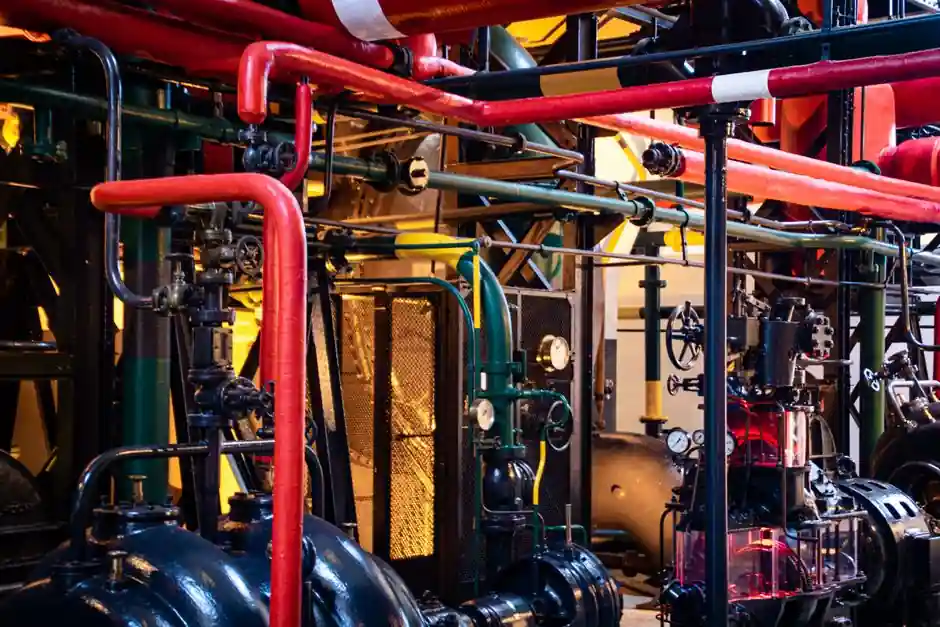
A magnesium die casting machine selected for pump and valve component work must deliver hot-chamber or sealed cold-chamber molten-metal handling, shot-end inert-gas cover, and a clamping force scaled to projected area of the housing rather than to wall thickness alone.
Pump and valve bodies are dominated by thin-wall geometry with internal porting, so the spec conversation sits on three pivots: machine tonnage (commonly 400 t to 5000 t for industrial magnesium HPDC, per current supplier capability listings [S2]), magnesium-grade selection (AZ91D, AM60B, or rare-earth-modified AE44 family), and corrosion-mitigation protocol (high-purity alloy, surface treatment, or a controlled atmosphere at the shot end).
Why Magnesium Is on the Pump-and-Valve Shortlist
Magnesium at 1.8 g/cm³ is the lightest of the structural metals commonly used in die casting, and it carries the best strength-to-weight ratio of that set [S3]. For pump housings, valve bonnets, and instrument manifolds that move with the process skid, mass reduction translates directly into handling, mounting, and transport savings. Magnesium is the 8th most abundant element in the earth's crust, is 100% recyclable, and its low heat content shortens cycle time versus aluminum at equivalent wall section [S3].
For pump and valve use, the relevant mechanical envelope is the 1-3 mm wall band typical of thin-wall die cast housings. The shrink rate of Mg alloys is consistent and predictable, which limits casting stress and post-cast distortion on ported bodies that must seal against an elastomer or a gasket face [S3]. The same low affinity for iron and lower pouring temperature reduce die erosion and thermal fatigue, which extends die life and lowers the per-piece tooling amortisation for a typical pump-body run [S3].
Machine Architecture: Hot-Chamber vs Cold-Chamber for Mg
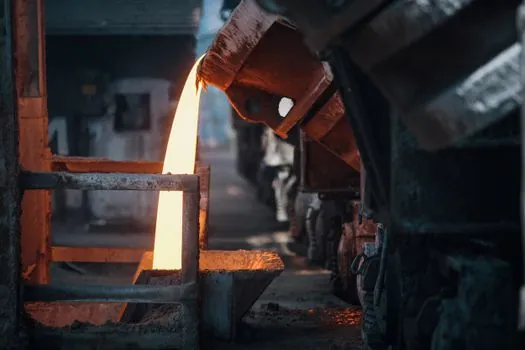
Magnesium is most often processed in a hot-chamber die casting machine, where the gooseneck and plunger stay immersed in molten metal and the protective gas cover (typically SF6/N2 or an SF6-free alternative such as N2 plus a fluorinated ketone) keeps the bath from igniting [S1]. Cold-chamber magnesium cells exist for larger parts, but the industry default for pump and valve geometry in the 0.1-5 kg range is hot-chamber with shot weights in the 1-8 kg band, and a clamping force chosen for the projected area of the part plus runner.
Modern magnesium die casting cells also integrate servo-driven shot control, real-time die-temperature mapping, and vacuum-assist or vacuum-sealed die packages to suppress porosity at the gate and at thick-to-thin transitions. Vacuum-assist is widely used on hydraulic and pneumatic valve bodies where internal leak paths cannot be tolerated, and it pairs with intensifier-accelerated injection to keep the gate velocity high enough to pack before the alloy skin freezes.
Tonnage, Clamping Force, and Projected-Area Math
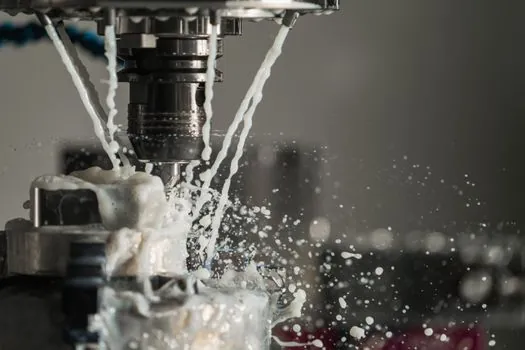
Clamping force selection is governed by projected area at the die parting line, multiplied by the specific injection pressure the machine can deliver and divided by a safety factor. A magnesium hot-chamber cell typically runs at intensification pressures of 25-50 MPa, so a 400 t clamp covers roughly 0.04-0.08 m² of projected area at the high end, and a 1600 t clamp covers roughly 0.16-0.32 m². For a typical pump-housing family, 800-1600 t is the common working band; for large multi-port valve manifolds, suppliers in 2026 are quoting up to 5000 t HPDC capability with semi-solid rheocasting as an option for low-porosity structural castings [S2].
When comparing a magnesium program to an aluminum program, the lower density of the charge translates to lower injection force for a given plunger area, which lets a magnesium cell use a smaller-diameter shot cylinder for the same shot weight. That reduces peak velocity at the gate and is one reason magnesium tolerates thinner walls without burn-through; conversely, oversizing the shot cylinder drives up gate velocity and is a common cause of flash on the parting line of magnesium valve bodies.
Alloy Selection for Pump and Valve Service
AZ91D remains the default magnesium die casting alloy, with good castability, dimensional stability, and corrosion resistance when high-purity Fe/Ni/Cu limits are observed. AM60B is preferred where ductility and impact resistance dominate, for example on pump-housing bosses that take repeated bolt torque. Where service temperature climbs into the 120-200°C band, for example on valve bodies close to a hot process line, rare-earth-modified alloys such as AE44 are the workhorse [S4][S8].
Rare-earth additions (Ce, La, Nd) form thermally stable Al11RE3 and related intermetallics that pin grain boundaries and suppress creep at elevated temperature, with the trade-off of a slight reduction in ultimate tensile strength versus AZ91D. The defect-band studies on HPDC AE44 show that process parameters, not chemistry alone, control the distribution of solute segregation and the residual porosity, so alloy choice and machine tuning are coupled rather than independent [S8].
Corrosion, Surface Treatment, and Process-Liquid Compatibility
Magnesium's corrosion behaviour is the gating risk for pump and valve service. High-purity alloys (Fe ≤ 50 ppm, Ni ≤ 20 ppm, Cu ≤ 300 ppm, per typical ASTM B94 limits) deliver baseline corrosion resistance that the OEM literature describes as better than mild carbon steel and comparable to some cast aluminum alloys in salt-spray testing [S3]. Once service involves water, glycol, hydrocarbons, or a process chemical that is even mildly conductive, the cast surface needs a conversion coating (chrome-free in current EU builds), a sealed powder topcoat, or a thin electroless nickel plate on the wetted interface only.
For potable-water and food-grade valve bodies, the common 2026 spec is a magnesium body with a stainless or polymer liner at the wetted port, so the magnesium does the lightweight structural job and the liner does the fluid-compatibility job. This is one of the rare cases where a die cast magnesium body competes directly with injection-molded engineering plastic for valve and pump housings, and the choice usually comes down to temperature ceiling (magnesium wins above 120-150°C continuous) and stiffness under internal pressure.
Process Control, Defects, and Inspection
The recurring defects on magnesium pump and valve castings are gas porosity, cold shuts, oxide inclusions, and die-cavity solder at high hot-spot zones. Porosity is mitigated with vacuum-assist at the die cavity and a controlled plunger profile (slow fill, fast intensification, packed to 80-90% of theoretical density at the gate). Oxide inclusions are mitigated with a filtered gooseneck, a quiet melt, and an inert cover gas held above 0.5% O2 by volume in the furnace. [S2]
Inspection for safety-relevant valve bodies typically includes X-ray of the gated region (sampling or 100% depending on lot size), helium leak-test of the finished machined casting, CMM dimensional check on the sealing face, and a metallographic cut of the first-article gate region. For the wider manufacturing chain, supplier audits now commonly require IATF 16949 alongside ISO 9001, with PPAP documentation and full lot traceability on the magnesium melt lot and the rare-earth additions [S2].
Cost, Lead Time, and Supplier Selection in 2026
Chinese magnesium die casting machine builders including Lanson, Haitian (HDC series, 180-8800 t clamping force range), and the Xiamen Dazao custom-part OEM/ODM shops continue to set the price points for industrial magnesium cells, with HDC-class cold-chamber machines quoting 130-1300 t at indicative retail bands of US$ 43,100-52,800 for entry-level 130 t and US$ 369,000 for 1300 t (Made-in-China listings, mid-2026) [S5][S6][S7][S9]. Larger structural-casting cells up to 5000 t are available through dedicated magnesium HPDC suppliers, with semi-solid rheocasting and integrated CNC machining quoted as a single service line [S2].
Selection rule of thumb for a pump and valve program: match the machine tonnage to the projected area of the largest housing, the alloy to the service temperature and the wetted-fluid chemistry, the shot end to a hot-chamber Mg-rated gooseneck with inert cover, and the auxiliary package to vacuum-assist plus high-purity melt handling. For a one-piece pump-housing weight in the 0.5-3 kg range, an 800-1600 t hot-chamber cell with AZ91D or AM60B is the default starting point; for multi-port valve manifolds that need to seal under internal pressure, specify a vacuum die casting machine package rather than a standard cell, and verify rare-earth alloy capability before committing [S2][S3][S8].
Trackable signals for the next selection cycle: 2026-vintage HDC-class cells expanding the upper tonnage end for integrated magnesium structural castings, OEM literature moving away from SF6 cover gas toward fluorinated-ketone alternatives, and growing use of rheocasting and AE-family alloys on hot-service valve bodies. For process-engineers comparing magnesium to aluminum for a new housing, the cross-reference in our Aluminum Die Casting Machine Selection for Electronics Housings guide lines up the tonnage and alloy choices in a parallel format, while the Hydraulic Pump Selection spec map covers the pump side of the assembly.
Component reference pages worth checking: aluminum die casting machine.