
Magnesium structural parts (dashboard cross-car beams, seat frames, steering column housings, transmission cases) are selected against three hard constraints: locking force window, die-fill speed for thin walls under 2.5 mm, and a controlled-atmosphere melt handling package for an alloy that ignites near 473°C in air. For automotive programs targeting the 1.8 g/cm3 density advantage versus aluminum at 2.7 g/cm3, the equipment envelope starts at roughly 160 t for instrument-panel brackets and climbs to 1600 t class for full rear-door inner frames cast as single pieces [S7].
Magnesium is the lightest of the structural metals and the 8th most abundant element in the earth's crust, and it is fully recyclable at end-of-life, which makes the alloy a fit for closed-loop automotive material strategies as Corporate Average Fuel Economy (CAFE) targets tighten [S1][S7]. On the equipment side, a magnesium die casting machine is typically built as a cold-chamber die casting machine variant, with the shot assembly physically separated from the holding furnace and protected by a shielding-gas cover (SF6-free mixtures such as N2 + 0.1-0.3% HFC-134a or pure CO2 on newer cells) to keep the melt from igniting between dosing and injection.
Cold-Chamber vs Hot-Chamber Architecture for Mg
Hot-chamber magnesium machines are the dominant configuration for shot weights under roughly 2 kg, because the gooseneck stays submerged in molten metal and cycle times drop into the 6-10 s band for small automotive brackets and fasteners [S5]. Cold-chamber cells are required when shot weight crosses approximately 2 kg, when the alloy contains more than roughly 0.5% Be-free melt protection, or when the part geometry forces a horizontal shot orientation (typical for cross-car beams and front-end modules).
Automotive thin-wall programs usually need a specific injection profile, with a slow first phase (slow shot 0.1-0.3 m/s) to push the melt past the biscuit without entrapping shielding gas, followed by a fast second phase (intensification 3.5-5.0 m/s) and a peak intensification pressure in the 60-110 MPa window. Process monitoring on modern magnesium presses records every curve and stores it against the part serial number, so a defect on a steering column housing can be traced to the exact shot profile that produced it [S2].
Tonnage, Platen, and Shot-Sleeve Sizing
Clamping force selection on magnesium presses follows the same projected-area rule as aluminum, roughly 60-80 MPa of locking pressure on the projected area, with a safety multiplier of 1.2-1.4 for parts that include thin webs and long flow lengths. The China-built magnesium cell line covers 160 t, 280 t, 400 t, 630 t, 800 t, 1000 t, 1250 t, and 1600 t clamping force classes, and each size is paired with a fixed platen size and a matching shot-sleeve diameter from approximately 50 mm up to 130 mm [S2][S6].
Shot weight capacity is set by the sleeve diameter and stroke: a 70 mm sleeve at 600 mm stroke delivers roughly 2.5 kg of magnesium per shot, while a 100 mm sleeve at 900 mm stroke lifts that envelope toward 7-8 kg. For a single-piece rear-door inner, the lock force and shot volume have to be matched in the same cell; otherwise the die has to be split into two castings, which adds weld or fastener operations and erases much of the 1.8 g/cm3 weight advantage [S7].
Alloy Selection and Melt Handling
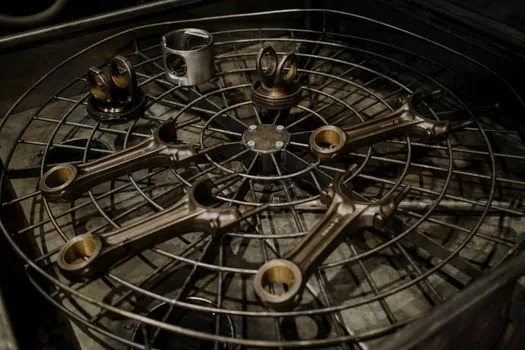
AM-series alloys (AM50A, AM60B, AZ91D) cover almost the full automotive magnesium die casting portfolio. AZ91D is the workhorse for powertrain housings and clutch brackets because of its higher tensile strength (around 230 MPa in the as-cast condition) and its good die-castability at thin walls above 2 mm. AM60B is preferred for seat frames and instrument-panel beams where ductility and energy absorption matter more than ultimate tensile strength, with elongation typically near 6-8% in the as-cast part. [S1]
Melt handling is the dominant cost driver on a magnesium cell. A 500-1000 kg holding furnace with SF6-free cover gas, a dosing pump with shot-weight accuracy of ±1.5%, and a steel-tube melt transfer system together account for a large share of the auxiliary equipment cost. The material is priced 1.5-2x above aluminum on a per-kg basis, so sprue and runner recycling through a chip melter with dross press is a hard requirement, and 100% recyclability is one of the engineering arguments that keeps the cost-per-part competitive in serial production [S1][S7].
Real Production Use Cases in Automotive
Steering wheel armatures, instrument-panel support beams, seat back frames, front-end module carriers, and transmission housings are the production parts that show up most often in magnesium die casting case studies. Wanfeng Auto Holdings, the parent group behind Meridian Lightweight Technologies, has been the most active supplier of these components to North American and Chinese OEMs over the last decade, and the company frames its pitch around helping automakers meet and exceed CAFE standards through mass reduction at the body-in-white level [S1].
For related part families in lower-melting metals, gravity die casting machine selection for hardware covers permanent-mold aluminum and zinc work, while aluminum die casting machine selection for telecom enclosures shows how a similar tonnage-versus-shot-weight envelope is solved on aluminum programs.
Machine Comparison: Hot-Chamber Mg vs Cold-Chamber Mg vs Cold-Chamber Al
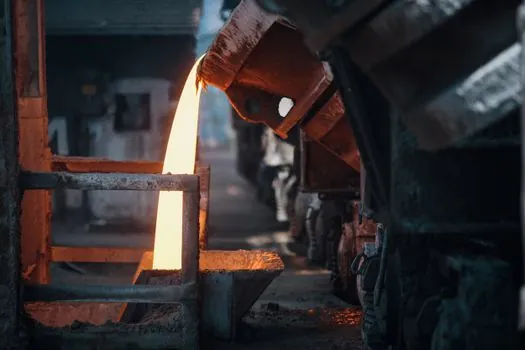
For the same bracket class, a hot-chamber magnesium cell runs 20-40% faster cycle time than a cold-chamber magnesium cell, but is limited to roughly 2 kg shot weight. Cold-chamber magnesium cells cover shot weights from about 2 kg to 10 kg and dominate the structural-parts market, while cold-chamber aluminum cells remain the cheaper option for parts where the 1.8 g/cm3 density advantage of magnesium is not needed. [S1]
On tonnage density, magnesium presses in the 400-800 t class handle roughly the same projected part area as aluminum presses in the 600-1100 t class, because magnesium's lower density reduces the injection pressure requirement for an equivalent flow length. On per-part cost, magnesium beats aluminum on the part-level weight reduction (each kilogram removed from the vehicle is worth more in fuel-economy credit than the per-kg material premium), but loses to aluminum on machine-hour cost because the auxiliary gas system, melt dosing, and chip recycling add fixed overhead. For non-automotive thin-wall programs in aluminum, aluminum die casting machine selection for electronics housings maps the same tonnage-versus-alloy trade-off on a different part family.
Process Monitoring, Vacuum, and Quality Controls
Production magnesium cells for automotive tier-1s run with closed-loop shot control: the slow-shot position, the fast-shot velocity, the intensification pressure, and the die-locking force are all measured on every cycle and stored against a part ID. A typical rejection mode for thin-wall magnesium parts is gas porosity from entrained shielding gas, which is mitigated by a vacuum die casting machine package that pulls the die cavity below 50 mbar before the fast shot starts. [S1]
Flashing and die wear are higher on magnesium than on aluminum at the same tonnage class, because magnesium's lower viscosity at injection temperature moves the metal into die-clearance gaps more aggressively. As a result, die maintenance intervals on magnesium tooling are typically 20-30% shorter than on an equivalent aluminum die, and the preventive-maintenance schedule is set by shot count rather than calendar time. For part inspection, automated X-ray and pressure-decay leak testing are the standard gates on safety-relevant magnesium castings, with sampling rates usually between 5% and 100% depending on the part's criticality class [S2][S5].
Supplier Landscape and Build Origin
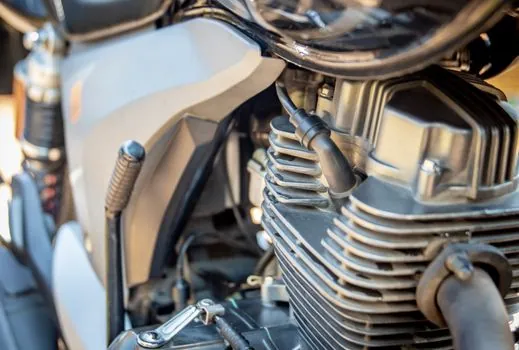
China-based magnesium die casting machine builders (Longhua, Shenghe, and a wider set of suppliers on made-in-china.com) cover the full 160-1600 t range and export magnesium cells into North American, European, and Southeast Asian tier-1 automotive supply chains [S2][S5][S6]. The available product line is dominated by cold-chamber horizontal machines, with hot-chamber magnesium cells built in smaller volumes and typically reserved for fastener and small bracket work.
On the part-maker side, Meridian Lightweight Technologies (a Wanfeng Auto Holdings subsidiary) and a network of Chinese diecasting mold suppliers serve the global automotive magnesium casting market, with tooling sourced from mold factories in Ningbo and other Zhejiang industrial clusters [S3][S6]. Africa remains a developing market for both aluminum and magnesium automotive castings, with the broader African automotive parts aluminum and magnesium die-casting outlook published back in 2015 marking the start of structured demand tracking in that region [S4].
Limitations, Safety, and Failure Modes
Magnesium melt reacts with water, so any coolant leak into the die cavity produces a hydrogen-driven event that operators must treat as a fire risk. Standard practice on automotive magnesium cells is a water-leak detection circuit on every cooling channel, a Class D fire extinguisher within 3 m of the furnace, and a magnesium-rated die-spray that does not contain water-based release agents above 5% by mass. [S1]
Corrosion resistance is the second hard constraint: magnesium corrodes readily in salt-spray exposure, so automotive structural castings need a chromate-free conversion coating (typically a zirconium or rare-earth based bath) plus a powder topcoat or e-coat. Without that surface package, a magnesium cross-car beam will fail salt-spray testing (typically 480-1000 h ASTM B117) within weeks rather than years, regardless of how clean the casting is. For these reasons, magnesium automotive parts are best matched to enclosed, coated, structural roles rather than to exterior visible trim or underbody components that see direct road-salt exposure [S7].
Trackable signals over the next two quarters: any new SF6 phase-down regulation in the EU or China that forces a switch to the new HFC-134a or fluoroketone cover gases, and any CAFE Phase 3 update from the U.S.