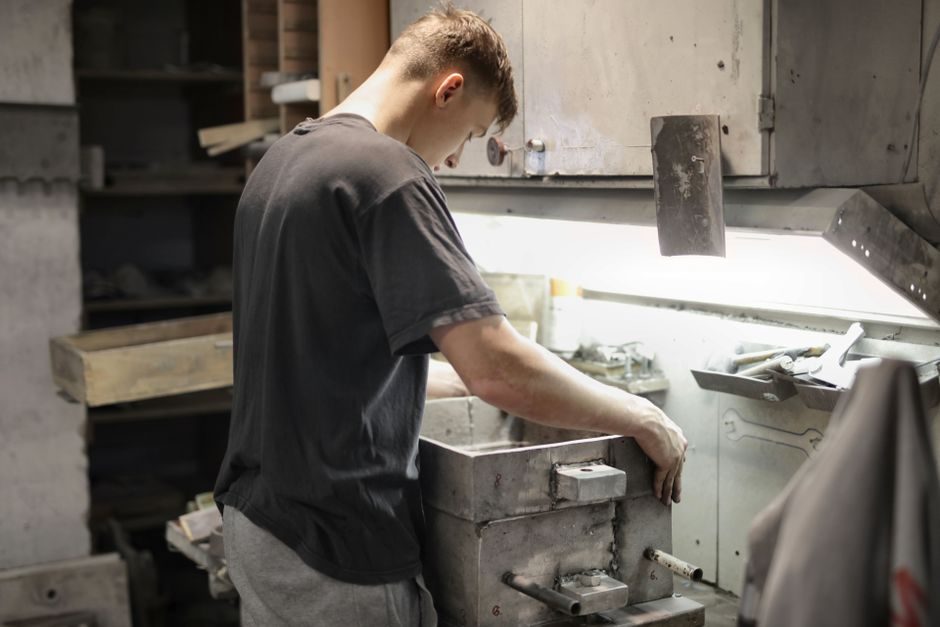
For buyers sourcing in mid-2026, magnesium die casting part pricing on the China- and Asia-export channel sits in a wide US$1–20 per-piece range at 1-piece MOQ, while tooling (the die casting die) typically runs US$1,000–20,000 per mold, with the final landed cost dominated by alloy grade, weight, tolerance class, and the choice between hot-chamber and cold-chamber cells [S5][S6].
The cost stack is built from four layers — raw magnesium alloy (AZ91D, AM60, AM50 are the workhorses), the die casting machine, the steel tooling, and post-processing — and each layer moves with the underlying magnesium LME price, energy tariffs, and order volume [S2][S4].
Why Magnesium Costs What It Does in 2026
Magnesium's defining property is its 1.8 g/cm³ density, the lightest of all structural materials, which is also the main economic lever: per-part pricing can look higher on the quote but lower per assembly once lightweighting is monetised [S4].
Mid-2026 factory quotes on Made-in-China and Alibaba list magnesium die casting parts starting at US$1.00 per piece for simple, thin-wall consumer or 3C electronic parts and reaching US$10–20 per piece for thicker, tolerance-tight, or auto-grade components, with most Tier-2 suppliers advertising 1-piece MOQ and 94.4% response rates on RFQ throughput [S5]. Tooling on the same channel is quoted at US$1,000–20,000 per mold with the same 1-piece MOQ, reflecting the 1,000-piece-per-year production-capacity bracket that small/medium magnesium foundries in Foshan, Dongguan, and Taiyuan typically operate at [S5][S6].
Process Selection and Machine Class
Cold-chamber magnesium die casting machine cells dominate the auto-part and structural-component segment because they handle shot weights above ~1 kg and avoid the iron-pickup corrosion risk that hot-chamber magnesium machines are still designed around; hot-chamber machines are reserved for small zinc-or-magnesium 3C parts where cycle time under 10 s matters more than shot size. [S1]
Selection hinges on four numbers: clamping tonnage (typically 160–1,600 t for magnesium structural parts), shot weight, platen size, and the energy-saving servo-motor package that has become a near-default upgrade on cells ordered since 2024; a useful cross-reference for buyers is the alloy-tonnage-cycle decision logic in our hot-chamber die casting machine selection guide, which applies to small magnesium 3C parts as well as zinc. For high-integrity safety parts (seat frames, instrument-panel beams), vacuum die casting cells add roughly 15–25% to machine cost but cut porosity, which is the dominant cost driver behind post-casting X-ray or CT inspection.
Alloy, Tolerance and Geometry Cost Drivers
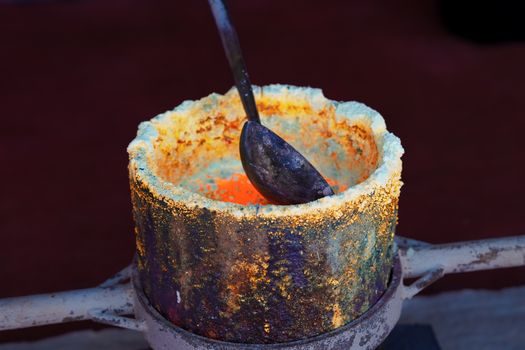
AZ91D is the default magnesium die casting alloy — accounting for the majority of commercial magnesium castings — and gives the best castability and corrosion resistance when paired with a chromate-free surface treatment; AM60 and AM50 are specified for higher-ductility safety parts such as instrument-panel supports and steering-wheel armatures, at a small per-kg alloy premium [S4].
Tolerance class is a more sensitive cost lever than alloy choice: a standard ±0.1 mm on a 100 mm magnesium part typically adds 0–8% to piece price, while ±0.05 mm and tighter GD&T on safety components adds 15–40% due to additional CNC touch-up, fixturing, and 100% inspection; buyers should confirm whether the quote is "as-cast" or "machined & inspected" before comparing offers [S5][S6]. Wall thickness below 2.0 mm is feasible in magnesium thin-wall die casting — one of its genuine advantages over aluminum — and parts below 1.5 mm wall require a high-pressure die casting cold-chamber cell plus vacuum assist, which is a process cost multiplier, not just a tooling one [S2][S4].
Mold Cost and Tooling Lifecycle
A single-cavity magnesium die cast die from a Tier-2 Foshan or Dongguan shop sits at US$3,000–8,000 for parts under 300 mm and rises to US$10,000–20,000 for multi-cavity or auto-grade tools with slides and conformal cooling channels; lead time is typically 25–40 days for T1 sample, with die life rated at 80,000–150,000 shots for H13 tool steel at magnesium operating temperatures [S6].
The cost-relevant tradeoff is cavity count vs. shot count: at 50,000 parts/year, a 1-cavity die at US$5,000 amortises to US$0.10/part, while a 2-cavity die at US$9,000 amortises to US$0.09/part, so the break-even for doubling cavities typically sits in the 30,000–60,000 parts/year band, depending on cycle time [S6]. For very low volumes (under 5,000 parts/year), a soft 3D-printed or aluminum prototype die plus gravity die casting bridge tooling is often the lower-cost path, and a zinc die casting cell is sometimes substituted for low-melt prototypes — the cost-band mechanics are laid out in the parallel zinc die casting selection guide on this site.
Supplier Map and Sourcing Channels

Mainland China's magnesium-die-casting supplier base is concentrated in clusters including Shanxi (Taiyuan) for raw-alloy and extrusion production and Guangdong (Foshan) for finished die-cast parts; major Chinese magnesium die-casting suppliers report top-three export markets of typically Domestic 30%, South America 15%, and North America 15%, with valve and pump part specialists reporting Western Europe 25% and North America 20% [S1][S5][S7].
Certification gap is a real cost driver: ISO 9001 is now table-stakes, IATF 16949 is the gate for any Tier-1 automotive RFQ, and a magnesium-specific line audit (chemistry controls, SF₆ cover-gas handling, fire-suppression) typically adds 3–6 weeks of supplier qualification work and 2–5% to the per-piece price for new programs [S2]. For buyers comparing offers, the realistic 2026 benchmark is to gate-quote at least three suppliers — one in Shanxi, one in Guangdong, one in Jiangsu — and to confirm that the magnesium furnace and shot-end, not the aluminum line, will actually run the job.
What Drives the Final Number
Trackable signals worth watching through the rest of 2026: any quarterly move in the LME magnesium price, the magnesium-vs-aluminum scrap spread (which gates recycled-content cost), and Chinese provincial policy on SF₆ emissions from magnesium foundries — each of these can move the per-piece band by 5–15% inside a quarter.